1. Capital Expenditure (CAPEX): Foundation of RO Technology
The initial investment in an reverse osmosis system—your CAPEX—is often where businesses try to cut corners. Still, in the water treatment world, a lower entry price often masks poor engineering that leads to catastrophic operational costs later.
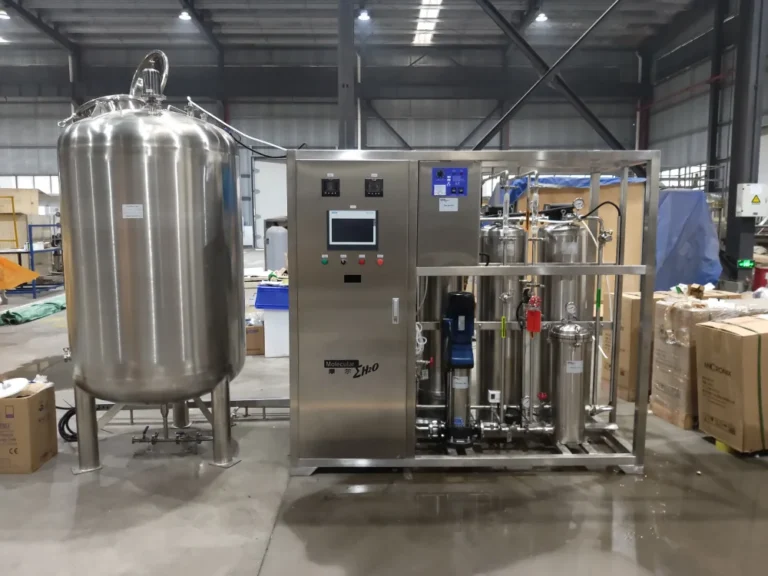
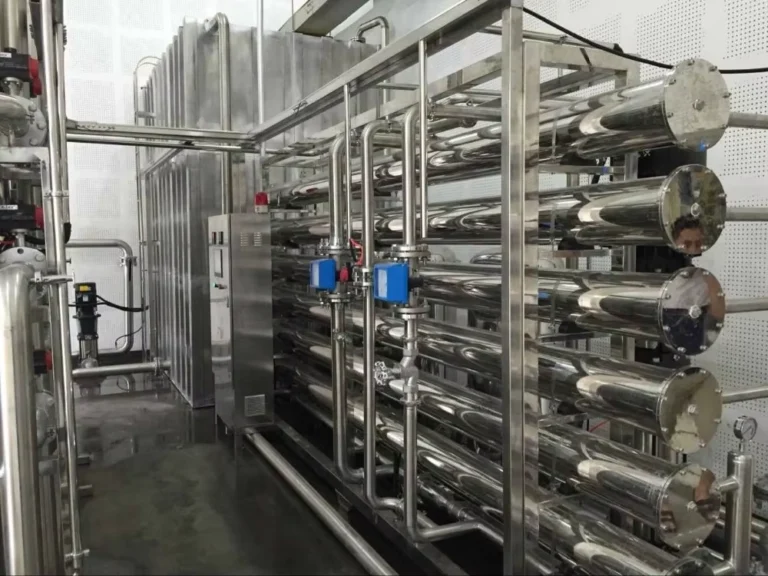
Core Membrane RO Technology
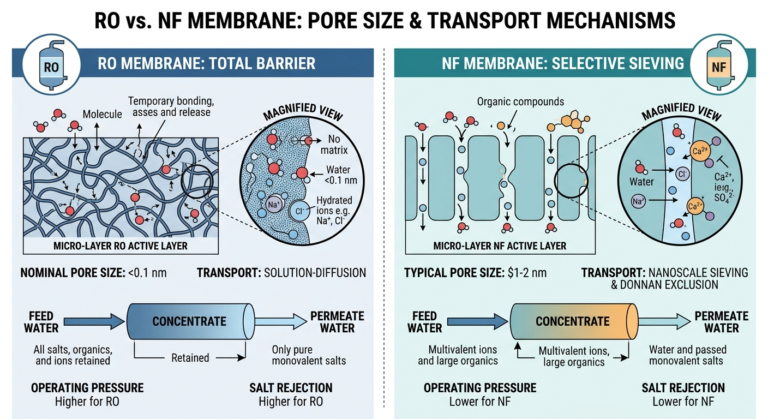
The heart of the system is the غشاء التناضح العكسي. In 2026, we have transitioned away from standard membranes toward Advanced Thin-Film Nanocomposite (TFN) membranes.
- Feature:These membranes incorporate high-permeability nanomaterials.
- Advantage:They provide a significantly higher flux rate at lower operating pressures while maintaining a salt rejection rate of 99.7% or higher.
- Benefit:You achieve the same volume of ultra-pure water with a smaller equipment footprint and lower mechanical stress.
High-Pressure Pump Systems
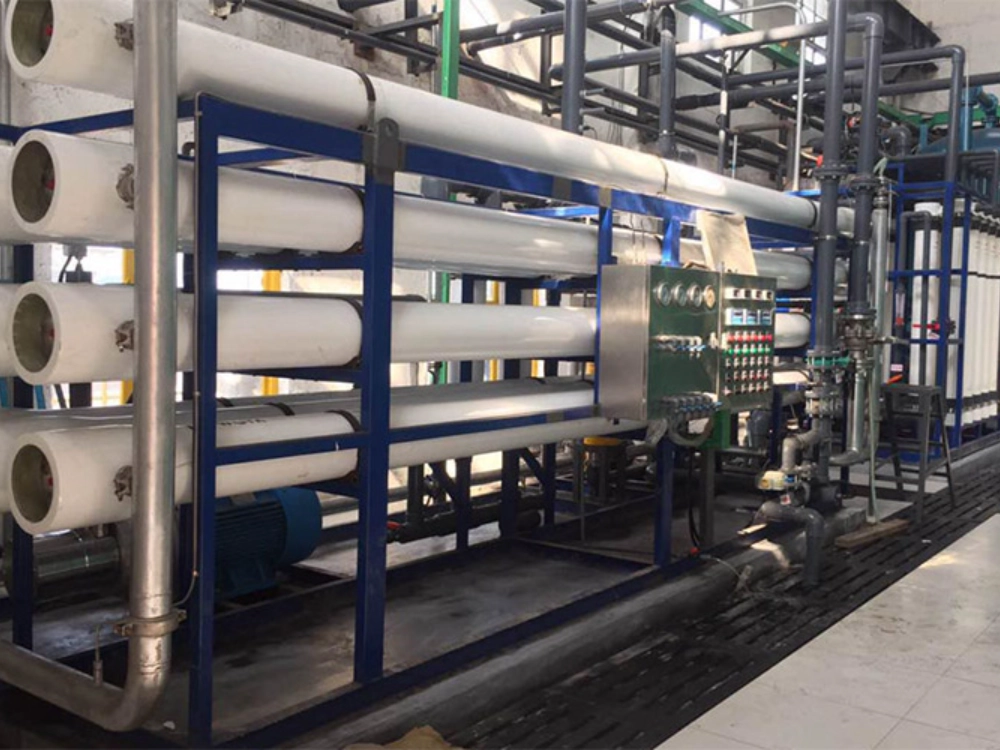
The pump is the “engine” of the RO technology process. We utilize Variable Frequency Drive (VFD) integrated pumps as a standard.
- Feature:Real-time pressure adjustment based on feed water salinity and temperature.
- Advantage:The system avoids the “hammer effect” and eliminates energy waste during low-demand periods.
- Benefit:This precision extends the mechanical lifespan of the entire system by up to 40%, drastically reducing the frequency of capital reinvestment.
Pre-filtration Infrastructure
Evidence suggests that approximately 70% of premature RO membrane failures are caused by inadequate pre-treatment. By investing in high-quality Ultrafiltration (UF) أو Multi-Media Filters (MMF) as part of your CAPEX, you are essentially buying insurance. High-ranking industry data confirms that robust pre-treatment can extend the life of your RO membranes from the industry average of three years to over five years, yielding a massive long-term saving.
2. Operational Expenditure (OPEX): The Real Cost of Water
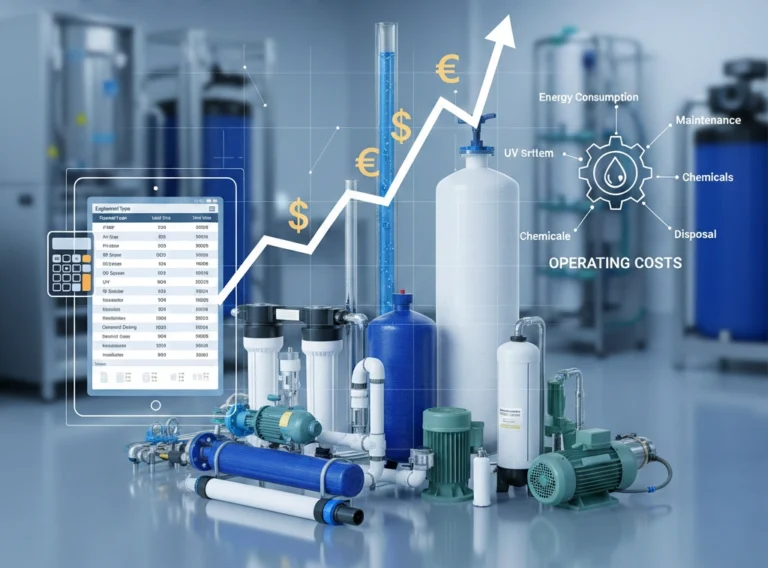
While CAPEX is a one-time hit, OPEX is the heartbeat of your facility’s budget. On average, the operational cost represents 75% of the total lifecycle cost of an RO plant.
The Energy Component
Electricity remains the largest variable expense. The physics of reverse osmosis requires pushing water through a semi-permeable membrane at pressures exceeding its natural osmotic pressure.
- Feature:Integration of Energy Recovery Devices (ERDs) like isobaric chambers.
- Advantage:These devices capture the high-pressure energy from the brine (waste) stream and transfer it back to the incoming feed water.
- Benefit:In seawater applications, this reduces electricity consumption by up to 60%, bringing the energy cost per cubic meter down to record lows.
Chemical Management and Consumables
To prevent scaling and biofouling, specialized chemicals—antiscalants and biocides—are required.
- Feature:Automated, sensor-driven chemical dosing systems.
- Advantage:Unlike manual dosing, which often leads to “over-dosing” to be safe, smart sensors deliver the exact milligram required based on real-time water chemistry.
- Benefit:Our clients have documented a 22% reduction in annual chemical spend, while simultaneously protecting the membranes from fouling-related damage.
3. Key Drivers Influencing Your RO Technology Cost
To provide a realistic budget, you must consider the “raw material”—your feed water. The salinity (measured as Total Dissolved Solids or TDS) determines the pressure required and, consequently, the cost.
| Water Source | Typical TDS (ppm) | Estimated 2026 OPEX ($/m³)* |
| Brackish/Well Water | 1,500 – 5,000 | $0.20 – $0.45 |
| High Salinity Industrial Water | 5,000 – 15,000 | $0.55 – $0.85 |
| تحلية مياه البحر | 35,000+ | $0.95 – $1.55 |
| *Estimates include power at $0.12/kWh, chemicals, maintenance, and membrane replacement reserves. |
4. Why Smart Monitoring is the Best Cost-Saving Feature
The “hidden” cost of RO Technology is downtime. If a system scales up and needs an unscheduled acid wash, production stops.
- Feature:AI-Driven Predictive Analytics.
- Advantage: Our systems monitor the “Normalized Permeate Flow.” When the AI detects a 5% deviation from the baseline, it alerts the operator before scaling becomes irreversible.
- Benefit:This shifts your maintenance model from reactive (expensive) to predictive (economical), ensuring 99% uptime for your facility.
5. Evidence-Based Performance: A 2026 Case Study
In a recent installation for a major electronics manufacturer in Texas, we replaced a legacy RO system with a modern, high-efficiency unit.
- Initial Challenge:High energy costs and membrane replacement every 18 months.
- Solution:Integrated TFN membranes and ERD technology.
- Result:Within the first 12 months, the client reported a 31% decrease in total water production costs. The energy savings alone covered the cost difference between our high-efficiency model and a standard competitor’s model in just 14 months.
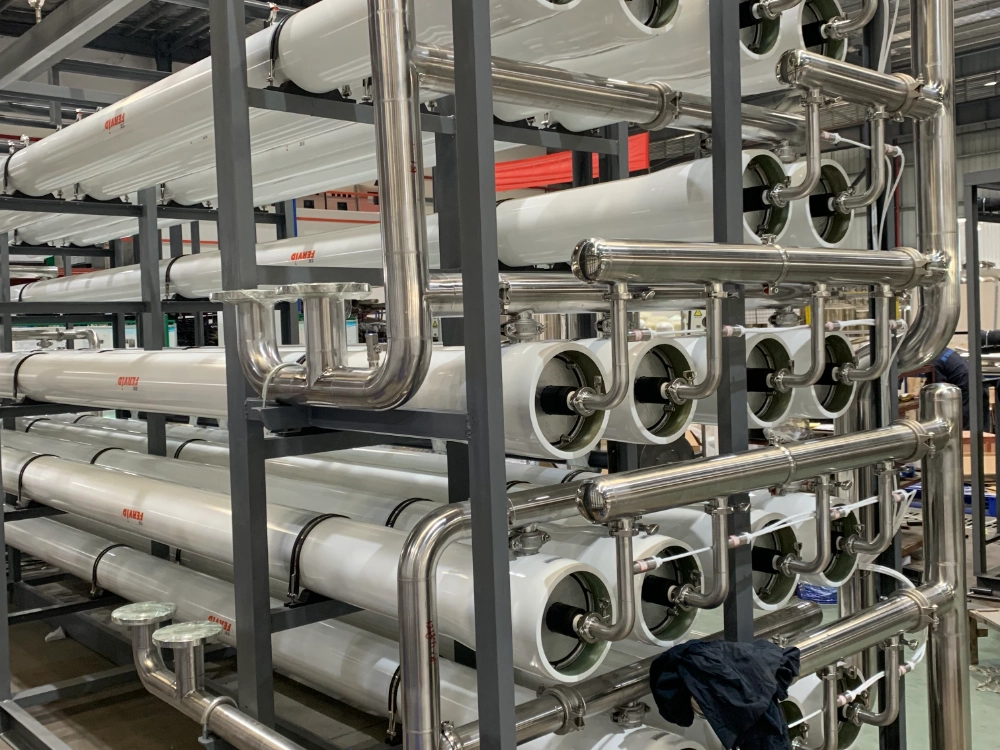
Choosing Value Over Price
The cost of RO Technology is a dynamic equation. While the market is flooded with low-cost components, the savvy operator knows that efficiency is the ultimate discount. By focusing on high-recovery designs, energy-efficient pumping, and smart monitoring, you don’t just treat water—you protect your bottom line.
Whether you are designing a new facility or upgrading an existing one, understanding these cost drivers is the first step toward sustainable, high-purity water production.