Storage and Distribution System for PW WFI
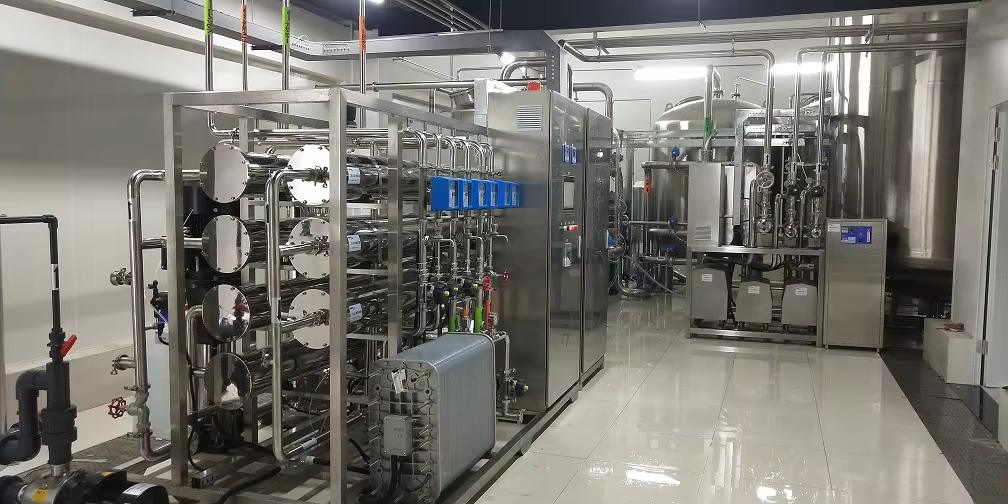
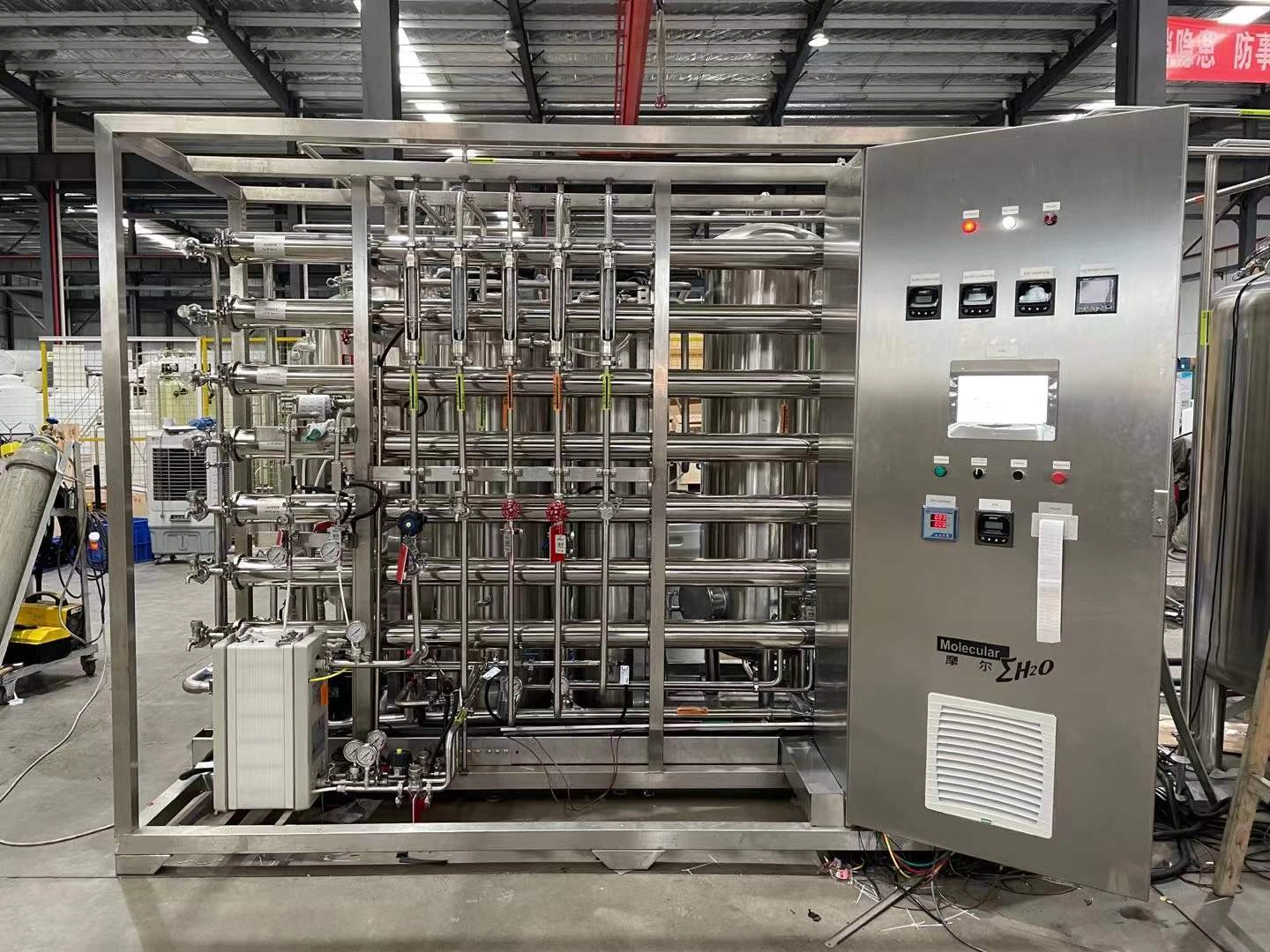
In demanding industries such as pharmaceuticals, biotechnology, medical devices and microelectronics, purified water (PW) is an indispensable key medium in the production process. Its quality is directly related to the safety, effectiveness and final quality of the product. Therefore, a purified water storage and distribution circulation system that is well designed, efficient and complies with strict regulations is essential.
This page will provide an in-depth look at the core elements of a PW storage and distribution circulation system, including its design principles, key components, validation requirements, and how to optimize the system to ensure consistent water quality and regulatory compliance, helping you avoid potential product contamination and compliance risks.
Why choose Molewater solutions?
As an expert in high purity water, Molewater is committed to providing excellent purified water storage and distribution circulation systems to ensure that your production process meets the most stringent industry standards. We are fully aware of the importance of water quality to your products, so our systems are meticulously designed, material selected, and operated.
Excellent tank design
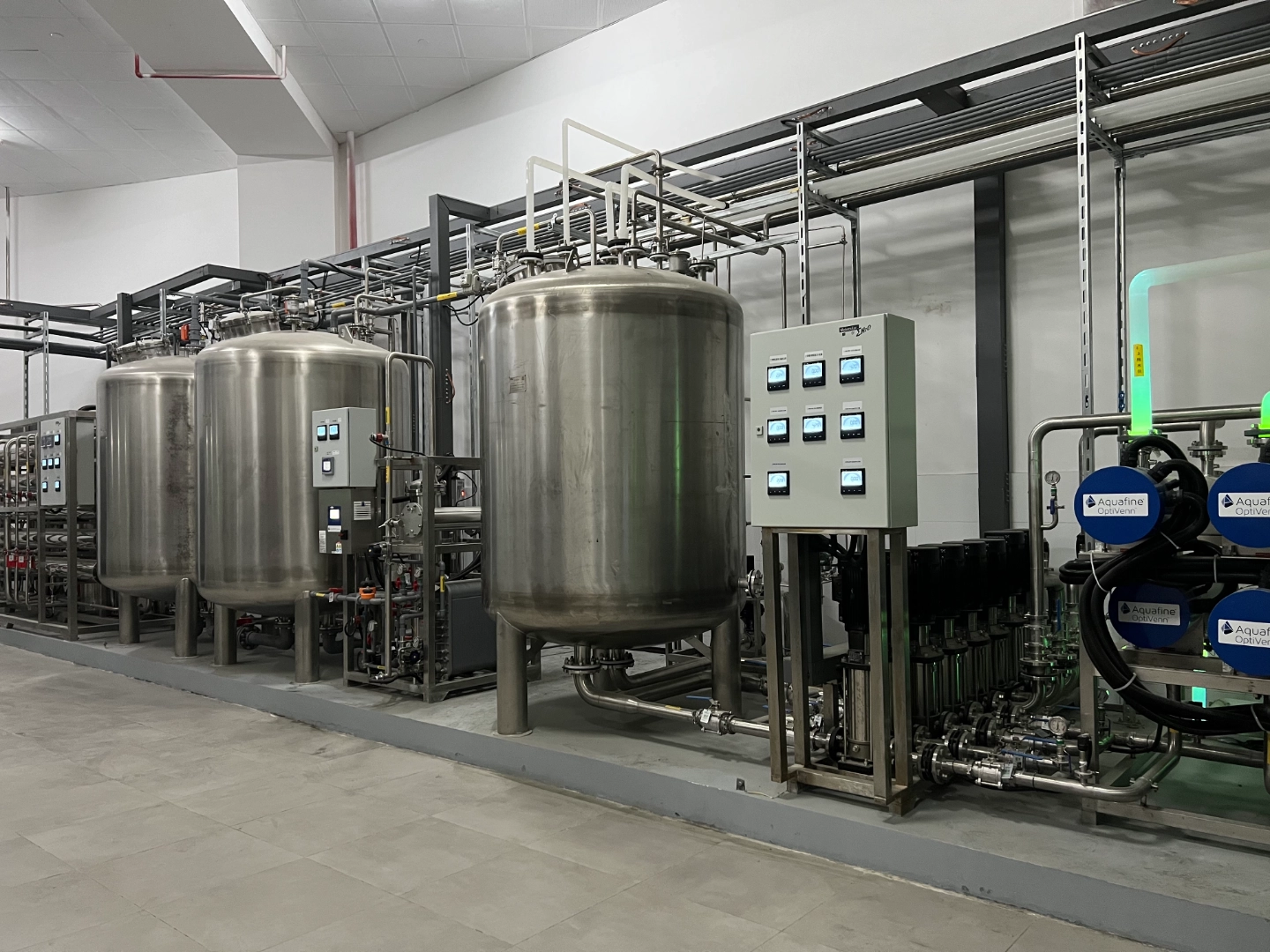
Vertical stainless steel tanks are used, with an inner surface polishing roughness of Ra<0.6 μm, which effectively avoids biofilm formation and ensures pure water quality from the source.
Intelligent breathing valve system
Equipped with air breathing valve or electric heated air breathing valve, it can accurately adjust the air pressure balance, protect the structural integrity of the water tank, and effectively prevent external contamination.
Complete natural drainage capability
The tank and piping system have excellent natural drainage capability, which minimizes the risk of microbial growth and ensures system hygiene.
Dynamic water quality maintenance
The advanced circulation design is adopted to maintain the dynamic flow of water quality, completely eliminate stagnant water areas, and continuously stabilize the water quality.
Multiple disinfection guarantees
Provide multiple periodic disinfection solutions such as ozone, ultraviolet (UV) or pasteurization to ensure that the microbial load is always within the controllable range.
Accurate water quality monitoring
Integrate advanced online water quality monitoring system to grasp key parameters such as conductivity and TOC in real time to ensure that water quality meets regulatory requirements.
Get a customized solution
We provide tailor-made solutions based on your specific needs and industry regulations (e.g. cGMP, USP, etc.) and ensure that the system is fully compliant.
Purified water storage and distribution system applications
Pharmaceutical industry
Production of drugs such as oral solutions, tablets, capsules, equipment cleaning, preparation of buffer solutions and culture media, etc.

Biotechnology industry
Cell culture, fermentation, protein purification, diagnostic reagent production, etc.

Medical device industry
Used for cleaning, sterilization and production processes of medical devices, etc.

Laboratory
Used for pharmaceutical laboratory reagent preparation, instrument cleaning, etc.

Microelectronics industry
Used for cleaning and cooling during chip manufacturing (usually requires higher grade ultrapure water, but PW is the basis).

Photovoltaic Industry
Polysilicon purification, silicon wafer cleaning in PV, and wafer fabrication in semiconductors, cooling water circulation etc.

الشهادة
Take action now to optimize your purified water system!
MoerWater provides expert solutions for pure water storage and distribution systems, whether you’re starting a new project or upgrading an existing one.
What is a purified water storage and distribution circulation system?
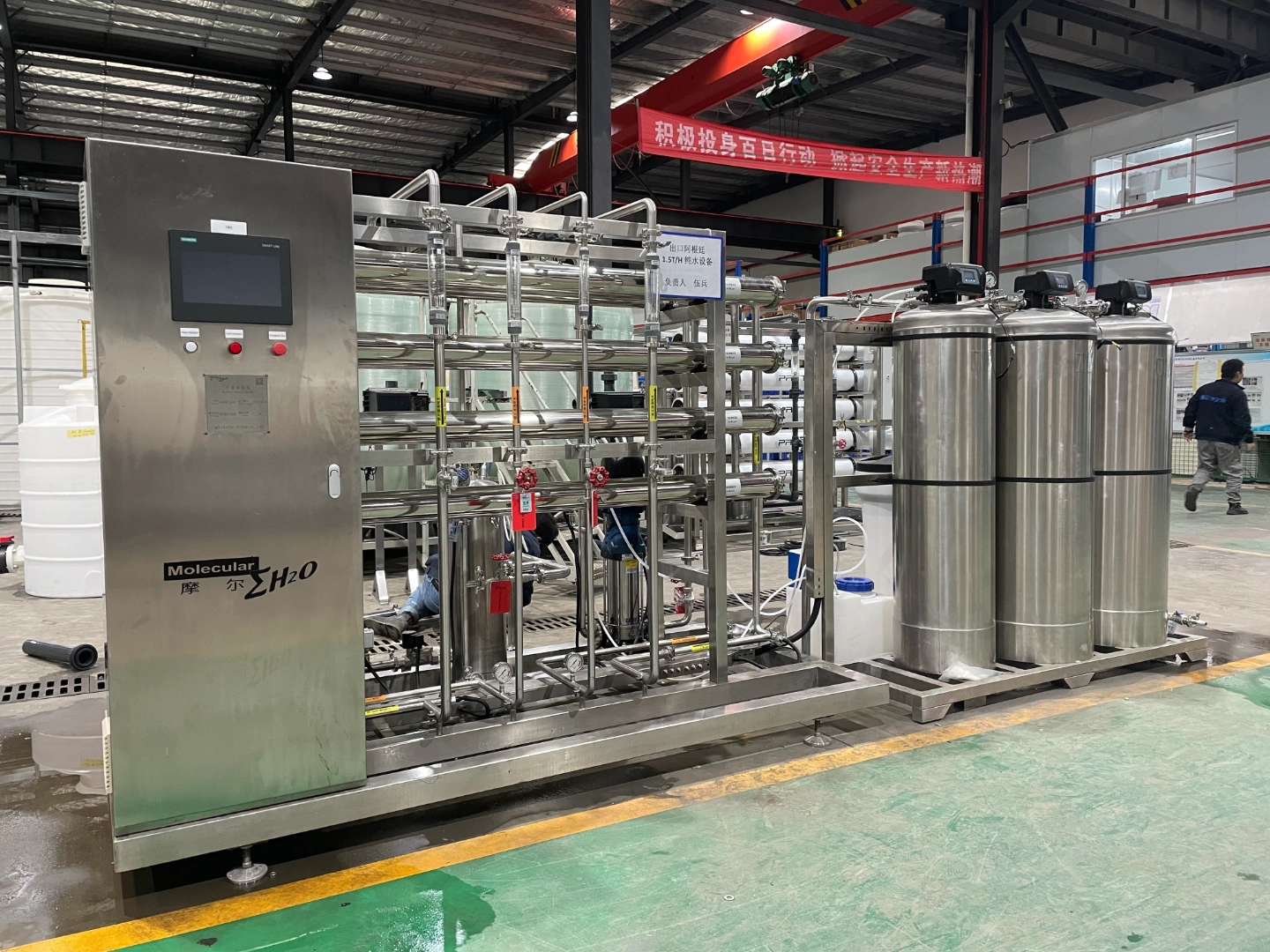
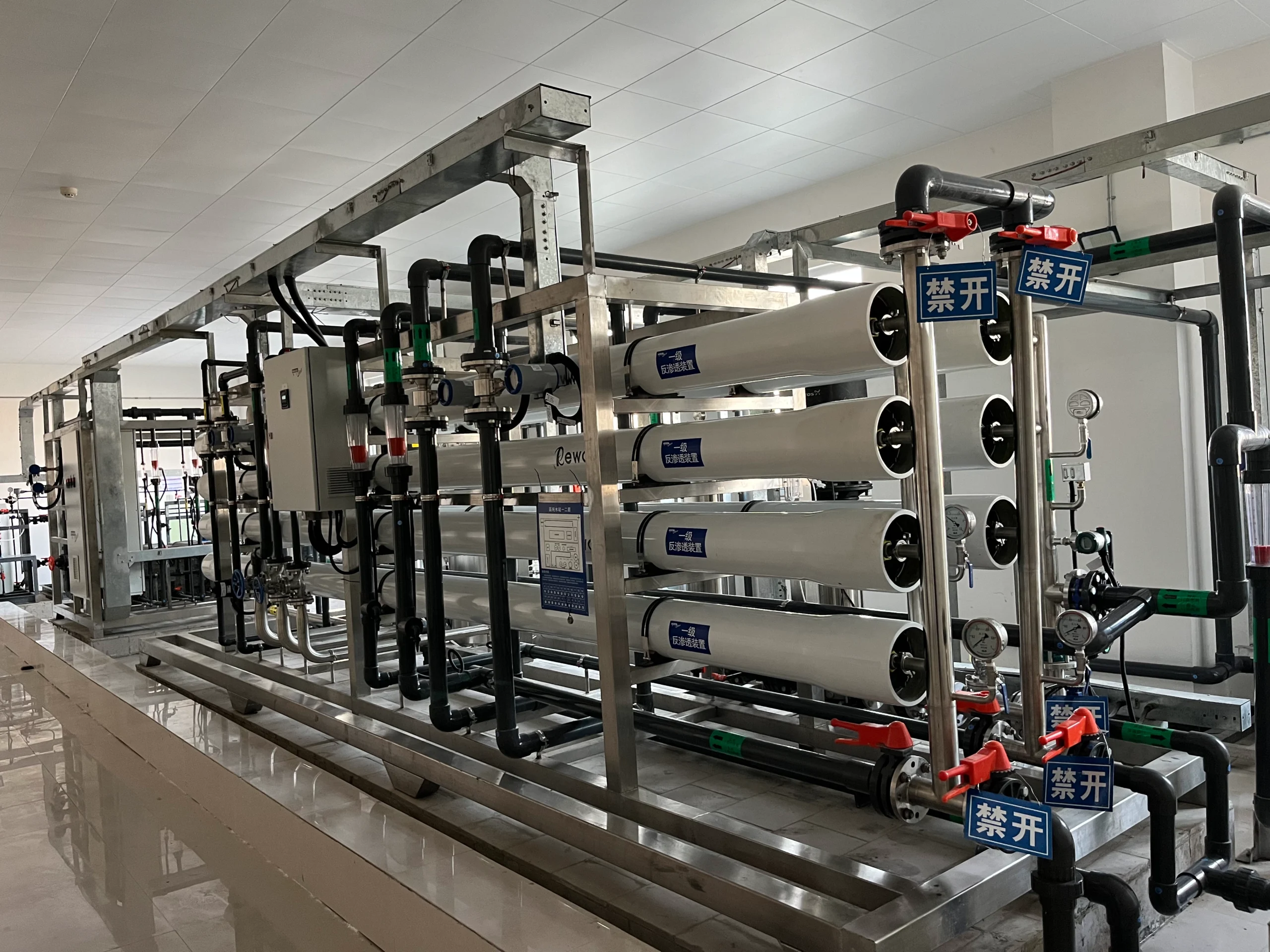
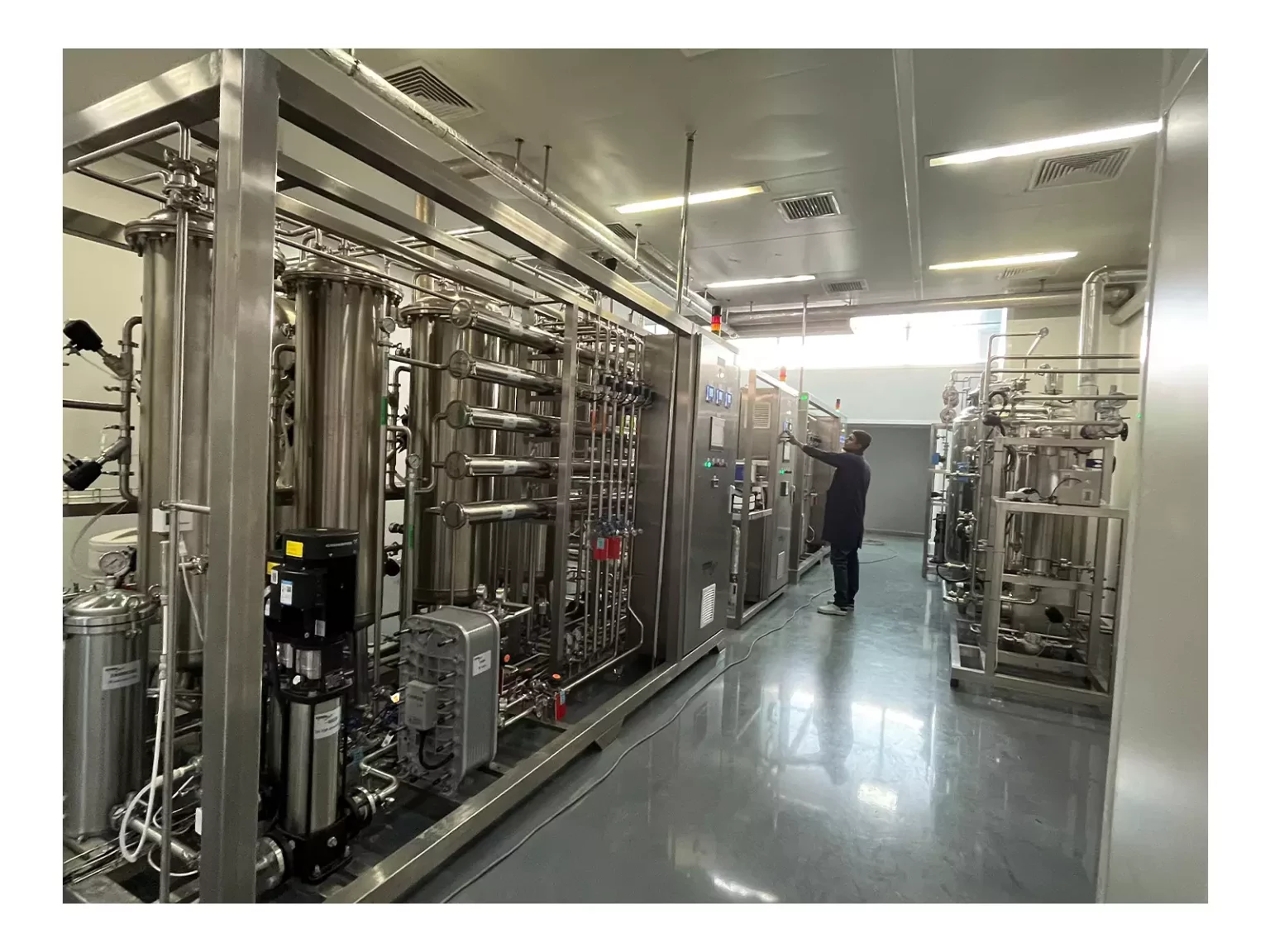
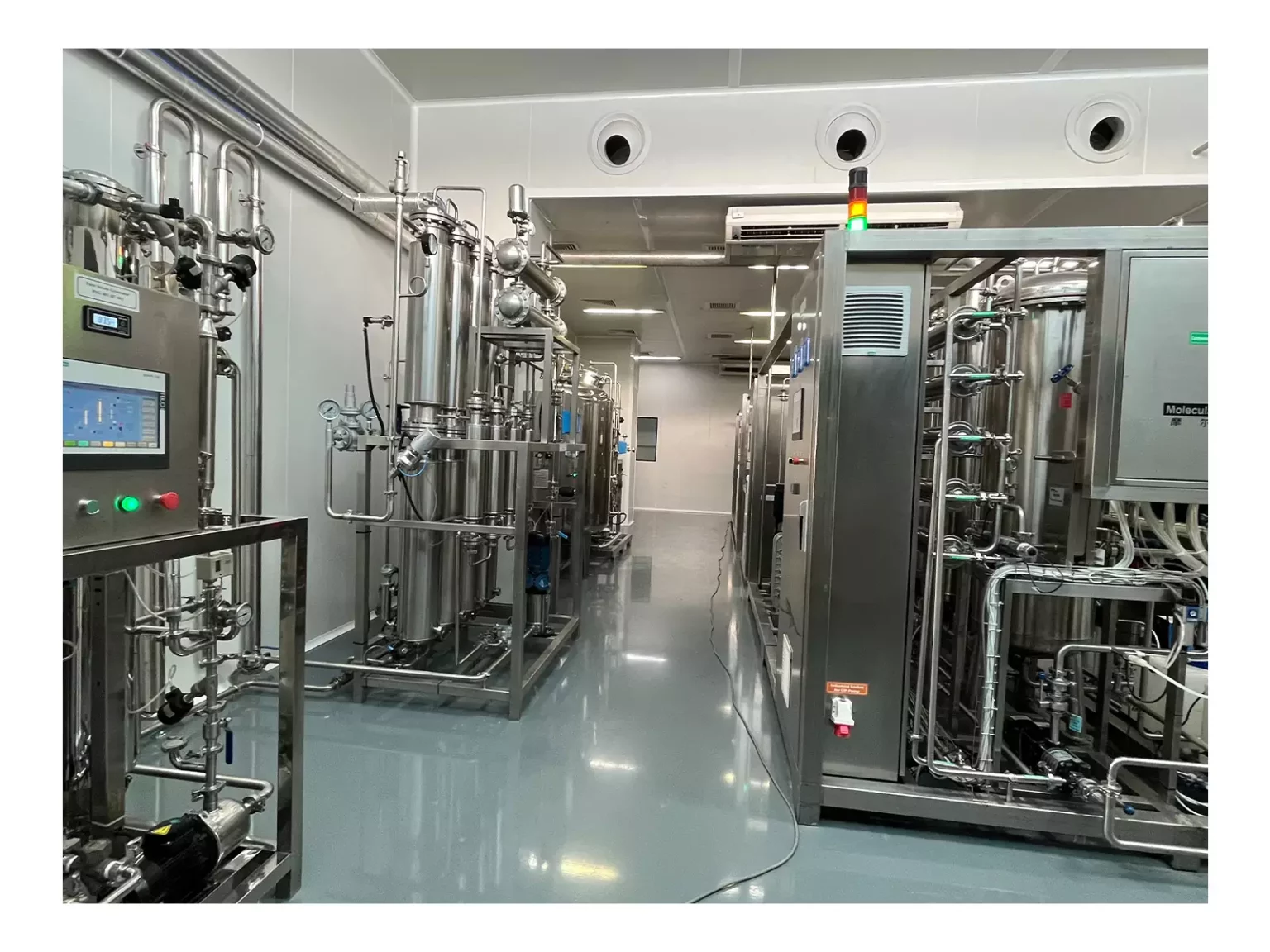
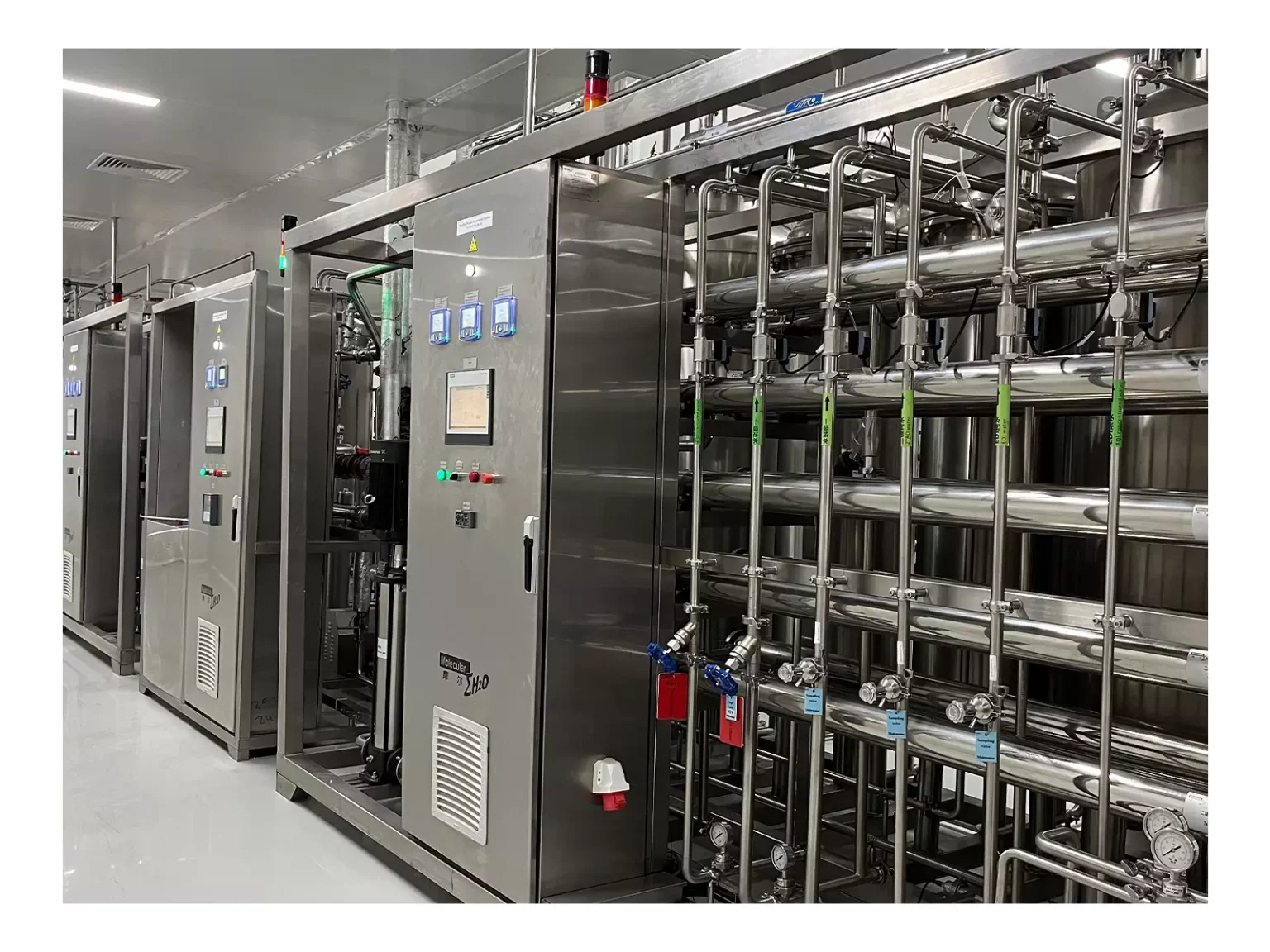
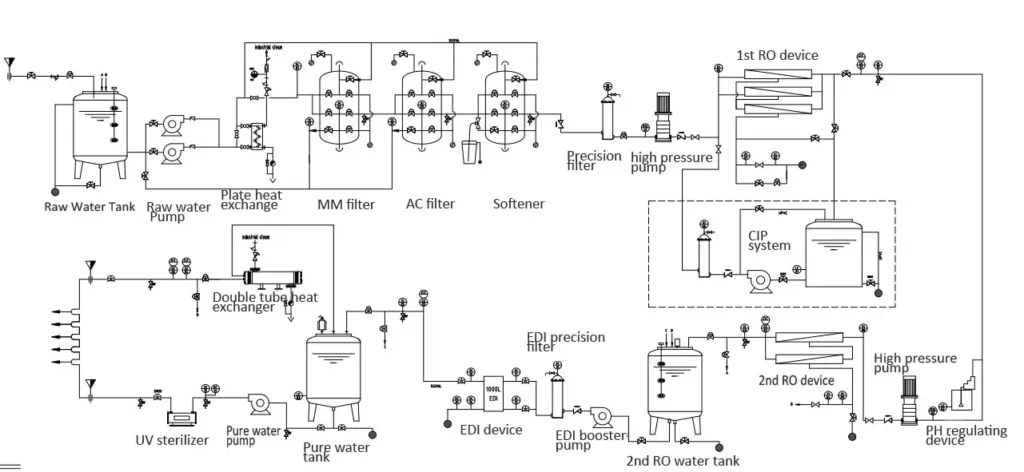
The purified water storage and distribution circulation system is a closed-loop system designed to store and deliver purified water that has been pretreated and purified (usually through reverse osmosis, EDI and other technologies) to various points of use in the production site while maintaining its established quality standards.
Core Components
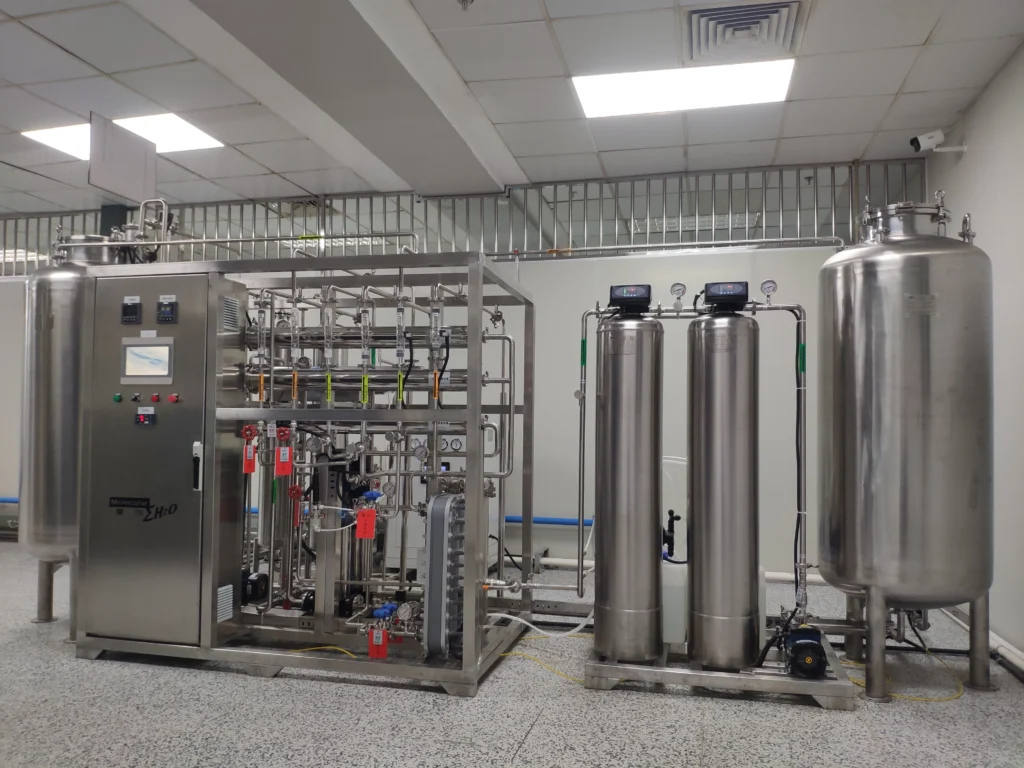
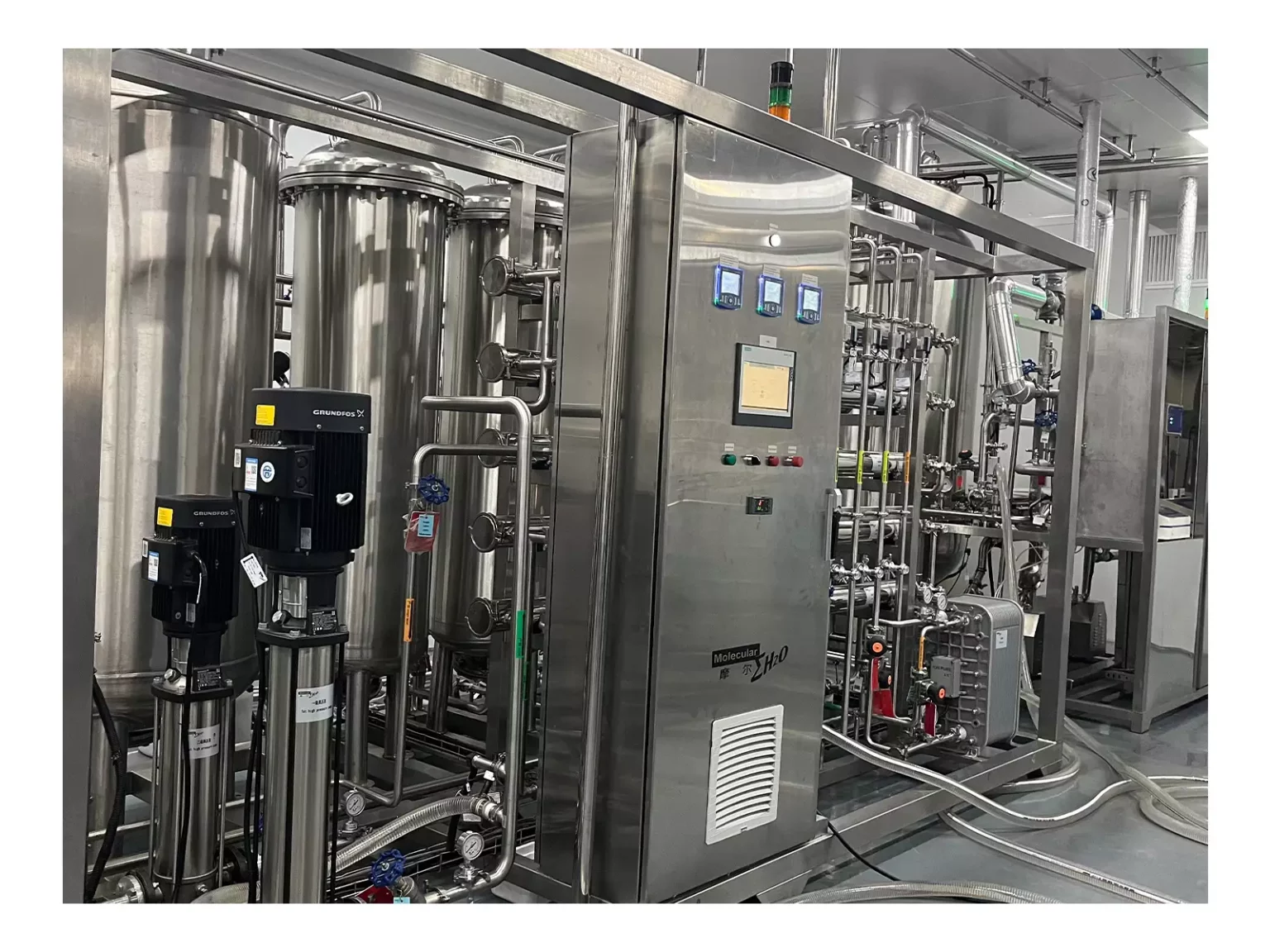
- PW tank: used to store purified water, usually made of sanitary stainless steel, equipped with respirator, level gauge, spray ball, etc.
- Circulation pump: maintains continuous circulation of water in the system, ensures flow rate and pressure, prevents water retention and microbial growth. Usually adopts a redundant configuration of one for use and one for backup.
- Pipeline system: connects the storage tank and each use point to form a closed loop. High material requirements, usually sanitary 316L stainless steel.
- Valves and connectors: sanitary diaphragm valves, ball valves, etc., connected by clamps or orbital welding to ensure no leakage and dead corners.
- Online monitoring instruments: real-time monitoring of key water quality parameters such as conductivity, total organic carbon (TOC), temperature, flow and pressure.
- Ultraviolet (UV) sterilizer: usually installed on the return and/or supply pipelines to inhibit microbial growth.
- Heat exchanger (optional): used to adjust water temperature, especially when hot water disinfection or specific temperature requirements are required.
How it works?
Purified water enters the PW tank from the preparation system and is then transported to the entire distribution pipeline through a circulation pump. The water circulates continuously at high speed in the pipeline, passes through each use point, and then returns to the tank. The purpose of this continuous circulation is to:
- Maintain stable water quality: Prevent microbial growth and water quality deterioration caused by water retention.
- Ensure immediate supply: Ensure that each use point has a supply of water that meets the requirements at any time.
- Realize online monitoring: Real-time monitoring of water quality parameters, timely detection and handling of abnormalities.
The difference between PW and WFI:
Purified water (PW) and water for injection (WFI) differ significantly in quality requirements and system design. WFI has much higher requirements for microorganisms and endotoxins than PW, and is usually prepared by distillation or ultrafiltration. Its distribution system usually uses high temperature circulation (>80°C) or regular high temperature disinfection. To learn more about WFI systems, please click here.
الأسئلة الشائعة حول أنظمة تنقية المياه
تشمل الاستراتيجيات الرئيسية للوقاية من تكوّن الأغشية الحيوية ما يلي: استخدام مواد من الفولاذ المقاوم للصدأ من النوع 316L المخصص للأغراض الصحية مع أسطح داخلية مصقولة كهربائيًا؛ وتصميم خطوط الأنابيب بحيث لا تحتوي على أجزاء ميتة والحفاظ على انحدار مستمر؛ وضمان تدفق دوران كافٍ (تدفق مضطرب)؛ وإجراء عمليات تنظيف وتطهير منتظمة وفعالة (مثل التعقيم الحراري، أو التطهير الكيميائي، أو التعقيم بالأشعة فوق البنفسجية). تتميز خزانات التخزين من MoerWater بخشونة سطح داخلية Ra < 0.6 ميكرومتر وقدرات تصريف طبيعية ممتازة، مما يمنع بشكل فعال تكوين الأغشية الحيوية.
عادةً ما تتألف عملية تأهيل الأداء (PQ) لنظام معالجة المياه من ثلاث مراحل. تستغرق كل من المرحلة الأولى والمرحلة الثانية ما بين 2 إلى 4 أسابيع، يتم خلالها إجراء عمليات أخذ عينات واختبارات مكثفة. أما المرحلة الثالثة فهي مرحلة التشغيل الروتيني، حيث يتم تحديد وتيرة المراقبة بناءً على تقييم المخاطر. وقد تستغرق عملية التحقق من الصحة بأكملها عدة أشهر. وتقدم شركة «مور ووتر» خدمات دعم شاملة في مجال التحقق من الصحة.
تشمل العوامل التي يجب أخذها في الاعتبار خبرة المورد في هذا المجال، وقدراته التقنية، وفهمه لمعايير الامتثال، وقدراته في تصميم الحلول المخصصة، وجودة المعدات، ومستوى الأتمتة، وخدمة ما بعد البيع، ودراسات الحالة الناجحة. وتتميز شركة «مور ووتر» بمزايا بارزة في جميع هذه الجوانب.
تُعرف "المناطق الميتة" بأنها المناطق التي يتوقف فيها تدفق المياه، مما يؤدي بسهولة إلى تكاثر الميكروبات وتكوين الأغشية الحيوية، وبالتالي تلوث المياه النقية. وقد يؤدي ذلك إلى عدم استيفاء المياه للمعايير المطلوبة، مما يؤثر بشكل خطير على جودة المنتج وامتثال عملية الإنتاج للمعايير. ولذلك، يجب التحكم في "المناطق الميتة" بشكل صارم أثناء مرحلة التصميم. وتلتزم تصاميم أنظمة شركة "مور ووتر" التزامًا صارمًا بمبدأ عدم وجود "مناطق ميتة".
يعتمد تواتر عمليات التعقيم لنظام معالجة المياه على عدة عوامل، منها تصميم النظام، والمعايير التشغيلية، وجودة المياه الخام، ونتائج مراقبة جودة المياه المحددة. عادةً ما يتم إجراء التعقيم الدوري (على سبيل المثال، أسبوعيًا أو كل أسبوعين أو شهريًا) باستخدام الحرارة (الماء الساخن أو البخار) أو العوامل الكيميائية (مثل الأوزون أو حمض البيرأسيتيك) للسيطرة على نمو الميكروبات. يعد وجود برنامج مراقبة قوي يشمل قياسات العدد الإجمالي للكائنات الحية (TVC) وقياسات الموصلية أمرًا بالغ الأهمية لتحديد الجدول الزمني الأمثل للتعقيم وضمان الامتثال.
Upgrading a PW system to produce WFI quality water is complex and often requires significant modifications. While both systems use similar initial purification steps (like RO and deionization), WFI requires additional purification stages (e.g., multi-effect distillation, vapor compression distillation, or ultrafiltration with very tight membranes) and much stricter control over microbial and endotoxin levels, often necessitating hot storage and distribution loops. It's usually more cost-effective and compliant to design a dedicated WFI system rather than attempting a full conversion of a standard PW system.
تواصل معنا
لا تدع مشاكل جودة المياه تقف عائقًا أمامك. سيساعدك جهاز تنقية المياه من MoerWater على حل جميع مشاكل جودة المياه التي تواجهك، وتحسين الكفاءة التشغيلية، وضمان وصول منتجاتك أو نتائج تجاربك إلى أفضل مستوى.
*سيقوم فريقنا بالرد على استفساراتك في غضون 24 ساعة.
*ستُحفظ معلوماتك بسرية تامة.