

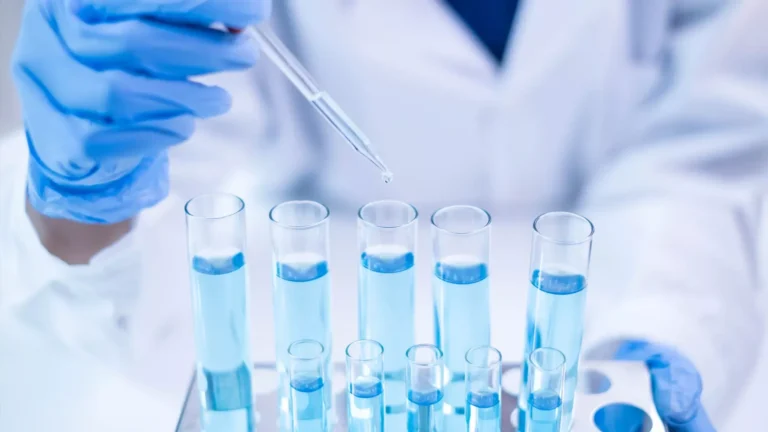
Introducción: El reactivo que más utilizas podría ser tu mayor variable
En el entorno de un laboratorio clínico o de investigación, donde la precisión es fundamental, el agua nunca es “solo agua”. Es el disolvente universal, la referencia de control y un posible vector de contaminación. El rendimiento de su sistema de agua para laboratorios médicos determina directamente la fiabilidad de los resultados diagnósticos, el éxito de los ensayos sensibles y la vida útil de los costosos equipos.
Elegir un sistema de purificación de agua para laboratorios basarse únicamente en el precio o la marca supone un riesgo considerable. Una evaluación adecuada exige un análisis técnico en profundidad de las especificaciones. Esta guía describe los cinco especificaciones clave Debes verificar para asegurarte de que tu sistema de agua para laboratorios médicos es un pilar de la precisión, no una fuente de error.

Especificación 1: Clasificación de los tipos de agua y rendimiento constante (Tipo I, II, III)
El objetivo fundamental de cualquier sistema de agua para laboratorios médicos es suministrar el tipo de agua adecuado, cuando se necesite y sin fluctuaciones.
-
Tipo I (agua ultrapura): Imprescindible para técnicas como HPLC, GC-MS, ICP-MS y biología molecular. Tu sistema de purificación de agua para laboratorios debe producir agua con una resistividad constante >18,2 MΩ·cm y carbono orgánico total (COT) <5 ppb en el punto de uso. La falta de coherencia en este aspecto se traduce en líneas de base ruidosas y datos poco fiables.
-
Tipo II (agua pura): Se utiliza para la preparación de tampones y medios, en química general y como fuente de datos para analizadores clínicos. Un sistema robusto sistema de agua para laboratorios médicos mantendrá la pureza iónica y bacteriana necesaria para estas aplicaciones.
-
Tipo III (Grado primario): Producida mediante ósmosis inversa (RO), apta para el enjuague de material de vidrio, baños de calentamiento y como agua de alimentación para el sistema de purificación de agua para laboratorios en sí mismo.
Pregunte a su proveedor: “¿Podrían ofrecer una garantía de rendimiento en la que se especifique la calidad de salida en estado estable para cada tipo de agua que necesita mi laboratorio?”
Especificación 2: Capacidad de reducción del carbono orgánico total
El TOC es un indicador general de la presencia de moléculas orgánicas en el agua. Incluso en concentraciones bajas, puede interferir en los análisis, favorecer el crecimiento microbiano y arruinar experimentos sensibles.
-
Por qué es importante: Un nivel elevado de TOC puede provocar un ruido de fondo elevado en la espectrofotometría, inhibir las reacciones enzimáticas y comprometer la viabilidad de los cultivos celulares.
-
Requisitos del sistema: De alta calidad sistema de agua para laboratorios médicos integra tecnologías especializadas, tales como Lámparas de fotooxidación UV de 185 nm—dentro de su ciclo de pulido para reducir drásticamente el TOC a niveles que a menudo por debajo de 1 ppb para aplicaciones críticas.
Pregunte a su proveedor: “¿Cuál es la capacidad de reducción de TOC documentada de la unidad de pulido y cuál es el nivel de TOC previsto en la salida?”
Especificación 3: Control integrado de microorganismos y endotoxinas
El agua es un caldo de cultivo perfecto. A sistema de agua para laboratorios médicos debe estar diseñado para inhibir el crecimiento microbiano durante toda la producción, el almacenamiento y la distribución.
-
Enfoque de barreras múltiples: Los sistemas eficaces combinan Esterilización UV a 254 nm (para inactivar los microorganismos) en el tanque de almacenamiento o en el circuito con Ultrafiltración final de 0,2 µm o 0,1 µm en el punto de dispensación. Este enfoque doble controla tanto las bacterias planctónicas como las endotoxinas.
-
Diseño de bucles: El circuito de recirculación debe estar diseñado para permitir una desinfección periódica y sencilla (por ejemplo, con agua caliente o productos químicos) a fin de evitar la formación de biopelículas, que constituyen la principal fuente de contaminación persistente.
Pregunte a su proveedor: “¿Cuál es el protocolo de desinfección para el circuito de almacenamiento y distribución, y cuáles son los intervalos de mantenimiento recomendados para controlar la carga microbiana?”

Especificación 4: Índice de recuperación del sistema y eficiencia operativa
La eficiencia de un sistema de purificación de agua para laboratorios afecta tanto a tu huella ambiental como a los costos operativos a largo plazo.
-
Tasa de recuperación: Esta es la relación entre el agua de producto y el agua de alimentación consumida. Un sistema con un Tasa de recuperación del 75% consume mucha menos agua y genera menos aguas residuales que uno con una tasa de 50%. Esto se traduce en menores gastos de agua y alcantarillado.
-
Funcionamiento inteligente: Los sistemas modernos cuentan con modos de ahorro de energía y sistemas de monitoreo inteligente que reducen el consumo de electricidad y agua durante los periodos de menor uso.
Pregunte a su proveedor: “¿Cuál es la tasa de recuperación habitual de este sistema con las condiciones de mi agua de alimentación, y qué características se han incorporado para minimizar los costos operativos?”
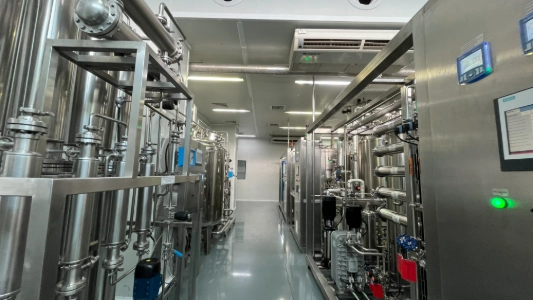
Especificación 5: Documentación exhaustiva de validación y cumplimiento
En el caso de los laboratorios acreditados, el sistema de agua para laboratorios médicos es un equipo fundamental que debe someterse a una validación formal.
-
Paquete de documentación: Un proveedor de confianza ofrece un servicio completo Calificación de instalación, funcionamiento y rendimiento (IQ/OQ/PQ) expediente. Esto es esencial para cumplir con CAP, CLIA o ISO 17025 requisitos.
-
Asistencia continua: El socio debe ofrecer protocolos para pruebas de rendimiento rutinarias y alertas que le ayuden a mantener el cumplimiento normativo sin esfuerzo.
Opinión de un experto: “El descuido más común es analizar la calidad del agua únicamente en la salida de la unidad de purificación. Compruébela siempre en la punto de uso. La longitud de los tubos y los filtros finales influyen en la calidad. Tu sistema de purificación de agua para laboratorios ”El proveedor debería ayudarte a planificar y validar esta última etapa, que es fundamental». – [Nombre de su empresa] Especialista en agua.
Conclusión: Más allá de las especificaciones técnicas, hacia una colaboración de confianza
Evaluación de estos cinco especificaciones clave transforma su proceso de selección de una simple compra de productos básicos a una inversión estratégica en la integridad del laboratorio. La elección correcta sistema de agua para laboratorios médicos ofrece una calidad inquebrantable, ahorros operativos y la seguridad de estar preparado para cualquier auditoría.
En Sistema Molewater, diseñamos sistemas de purificación de agua para laboratorios tomando como base estas especificaciones innegociables. Trabajamos contigo desde el análisis inicial del agua hasta el diseño del sistema, la validación y el soporte técnico durante toda la vida útil del sistema.
¿Listo para especificar con confianza?
Descargue nuestra “Lista de verificación de especificaciones para sistemas de agua de laboratorio” para comparar los sistemas desde el punto de vista técnico.
Póngase en contacto con nuestros expertos para obtener un análisis gratuito de las necesidades de agua de su laboratorio y una proyección de su rendimiento.