
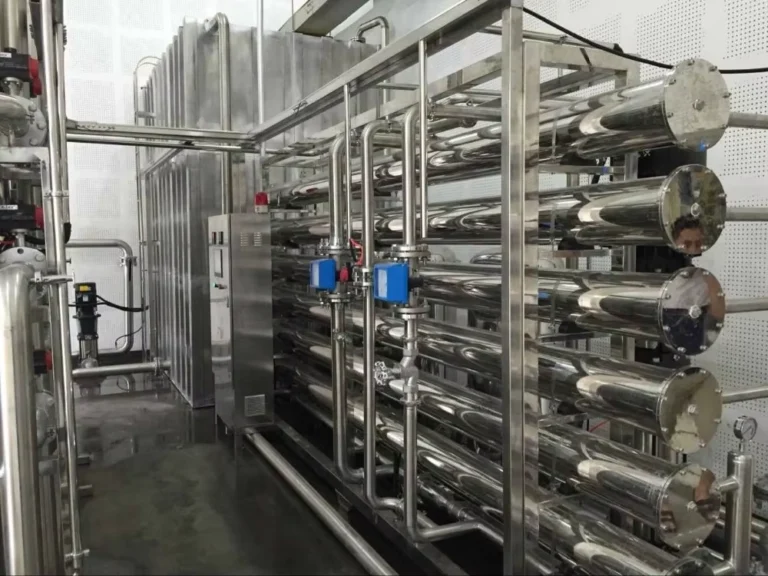

Introduction: Your Most Used Reagent Could Be Your Biggest Variable
In the precision-driven environment of a clinical or research laboratory, water is never “just water.” It is the universal solvent, the blank baseline, and a potential vector of contamination. The performance of your medical laboratory water system directly dictates the reliability of diagnostic results, the success of sensitive assays, and the longevity of expensive instrumentation.
Choosing a lab water purification system based on price or brand alone is a significant risk. True evaluation demands a technical deep dive into specifications. This guide outlines the five critical specs you must verify to ensure your medical laboratory water system is a pillar of accuracy, not a source of error.

Spec 1: Water Type Classification & Consistent Output (Type I, II, III)
The fundamental purpose of any medical laboratory water system is to deliver the correct water grade—on demand and without fluctuation.
-
Type I (Ultrapure Water): Required for techniques like HPLC, GC-MS, ICP-MS, and molecular biology. Your lab water purification system must consistently produce water with a resistivity >18.2 MΩ·cm and Total Organic Carbon (TOC) <5 ppb at the point of use. Inconsistency here means noisy baselines and unreliable data.
-
Type II (Pure Water): Used for buffer and media preparation, general chemistry, and as feed for clinical analyzers. A robust medical laboratory water system will maintain the required ionic and bacterial purity for these applications.
-
Type III (Primary Grade): Produced by reverse osmosis (RO), suitable for glassware rinsing, heating baths, and as feed water for the lab water purification system itself.
Ask Your Supplier: “Can you provide a performance guarantee specifying the steady-state output quality for each water type my lab requires?”
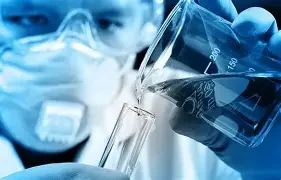
Spec 2: Total Organic Carbon Reduction Capability
TOC is a broad measure of organic molecules in water. Even at low levels, it can interfere with assays, promote microbial growth, and ruin sensitive experiments.
-
Why It Matters: Elevated TOC can cause high background noise in spectrophotometry, inhibit enzyme reactions, and compromise cell culture viability.
-
System Requirement: A high-quality medical laboratory water system integrates specialized technologies—such as 185nm UV photo-oxidation lamps—within its polishing loop to aggressively reduce TOC to levels often below 1 ppb for critical applications.
Ask Your Supplier: “What is the documented TOC reduction capability of the polishing unit, and what is the expected output TOC level?”
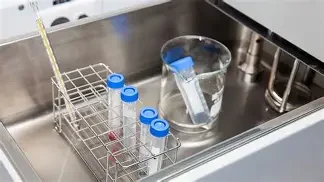
Spec 3: Integrated Microbial & Endotoxin Control
Water is a perfect breeding ground. A medical laboratory water system must be designed to inhibit microbial growth throughout production, storage, and distribution.
-
Multi-Barrier Approach: Effective systems combine 254nm UV sterilization (to inactivate microorganisms) in the storage tank or loop with final 0.2 µm or 0.1 µm ultrafiltration at the point of dispense. This dual approach controls both planktonic bacteria and endotoxins.
-
Loop Design: The recirculation loop must be designed for regular and easy sanitization (e.g., hot water or chemical) to prevent biofilm formation, which is the primary source of persistent contamination.
Ask Your Supplier: “What is the sanitization protocol for the storage and distribution loop, and what are the recommended maintenance intervals to control bioburden?”

Spec 4: System Recovery Rate & Operational Efficiency
The efficiency of a lab water purification system impacts both your environmental footprint and long-term operating costs.
-
Recovery Rate: This is the ratio of product water to feed water consumed. A system with a 75% recovery rate wastes significantly less water and produces less wastewater than one with a 50% rate. This translates to lower water and sewer charges.
-
Smart Operation: Modern systems feature energy-saving modes and intelligent monitoring that reduce power and water consumption during low-usage periods.
Ask Your Supplier: “What is the typical recovery rate for this system with my feed water conditions, and what features are in place to minimize operational costs?”
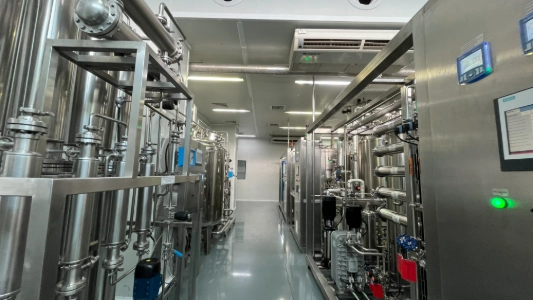
Spec 5: Comprehensive Validation & Compliance Documentation
For accredited labs, the medical laboratory water system is a key piece of equipment that must be formally validated.
-
Documentation Package: A reputable supplier provides a complete Installation/Operational/Performance Qualification (IQ/OQ/PQ) dossier. This is essential for meeting CAP, CLIA, or ISO 17025 requirements.
-
Ongoing Support: The partner should offer protocols for routine performance testing and alerts to help you maintain compliance effortlessly.
Expert Insight: “The most common oversight is testing water quality only at the purification unit’s outlet. Always validate at the point of use. tubing length and final filters impact quality. Your lab water purification system vendor should help you map and validate this critical last mile.” – [Your Company Name] Water Specialist.
Conclusion: Beyond the Spec Sheet to a Trusted Partnership
Evaluating these five critical specs transforms your selection process from a commodity purchase to a strategic investment in lab integrity. The right medical laboratory water system delivers unwavering quality, operational savings, and audit-ready confidence.
At Molewater System, we engineer lab water purification systems with these non-negotiable specs as our foundation. We partner with you from initial water analysis through system design, validation, and lifetime support.
Ready to specify with confidence?
Download our “Laboratory Water System Specification Checklist” to compare systems technically.
Contact our experts for a complimentary review of your lab’s water needs and a performance projection.