Introduction to Reverse Osmosis Systems in Water Treatment
In industrial water treatment, efficiency and reliability are non-negotiable. Whether you’re managing a factory or a large-scale manufacturing facility, you’ll face the choice between a single-stage RO system and a dual-stage RO system. But here’s a critical point you may overlook:Choosing the wrong number of RO stages can turn into a major drag on your operational costs.
Many plant operators find this decision tricky—and far too often, they ignore how system configuration impacts scaling, the No.1 enemy of reverse osmosis membranes.This article breaks down the key differences between the two systems and reveals 4 proven strategies to control scaling for a high-performance water treatment setup.
What is a Single Stage RO System?
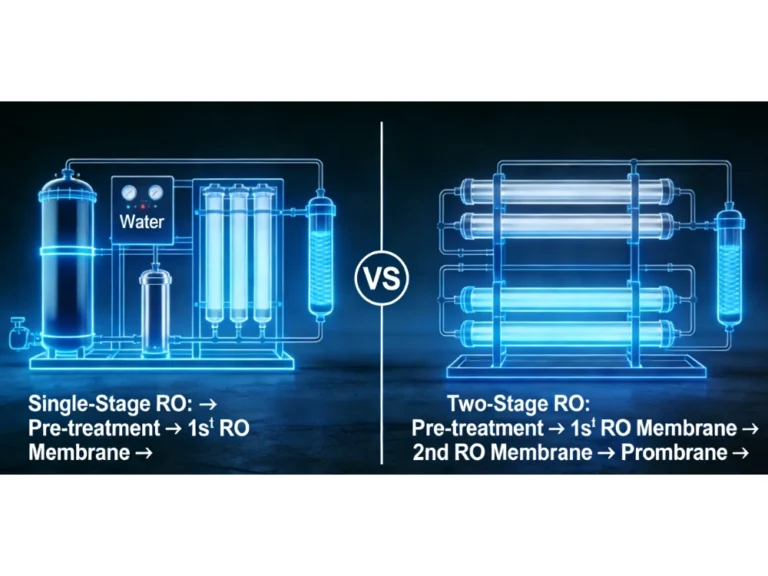
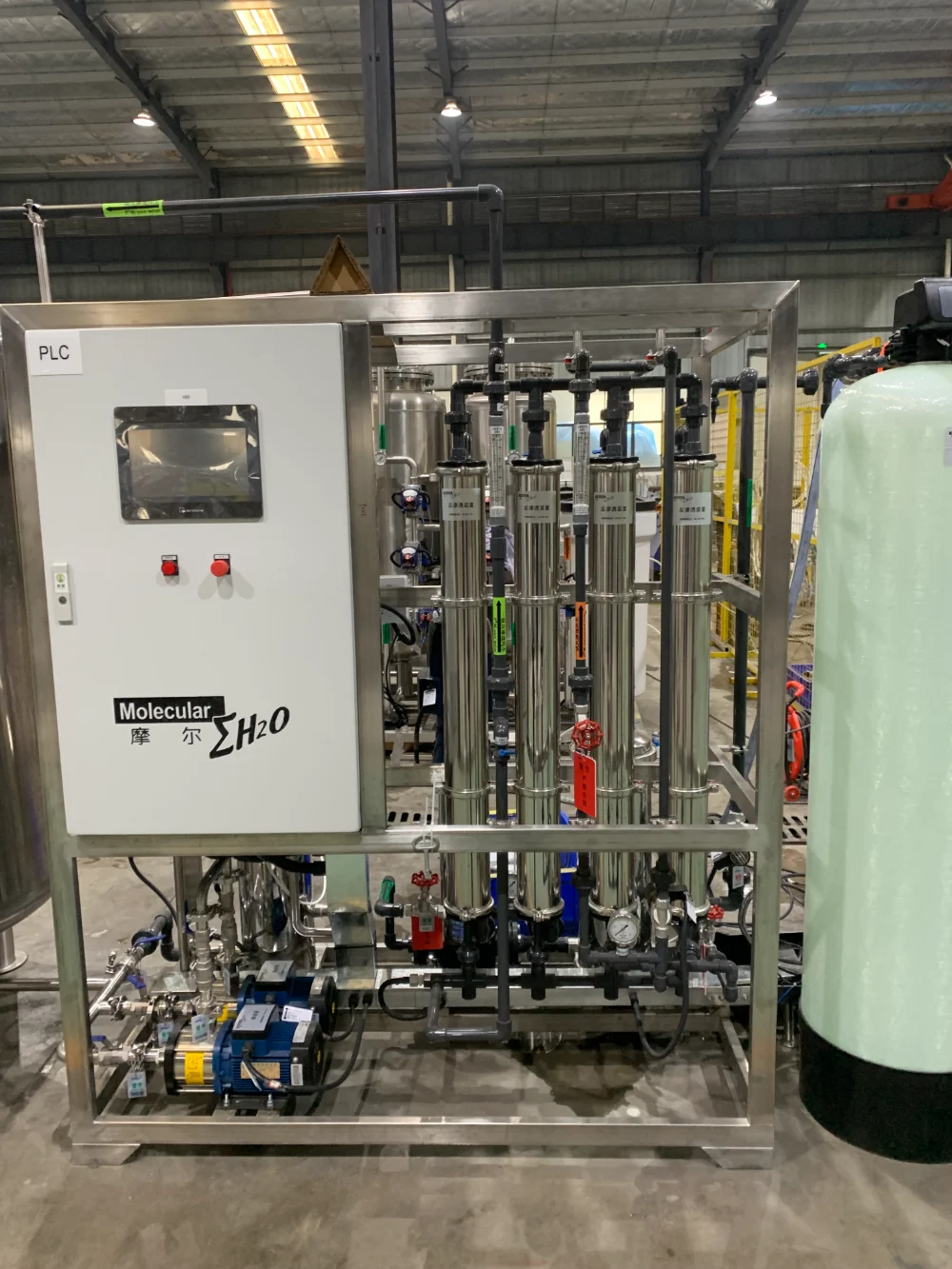
In industrial water treatment, a single-stage reverse osmosis (RO) system refers to a basic water purification setup where raw water passes through a reverse osmosis membrane assembly only once to produce two streams: permeate (purified water) and concentrate (wastewater). It’s the simplest configuration for RO-based water treatment processes.
Advantages of Single Stage RO
-
Simplicity: Fewer components make it easier to install and maintain.
-
Lower CAPEX: The initial investment is significantly lower due to fewer membranes and pumps.
-
Diseño compacto: Ideal for facilities with limited floor space.
Disadvantages of Single Stage RO
-
Lower Recovery Rate: Typically, these systems waste more water compared to multi-stage setups.
-
High Water Costs: Over time, the cost of raw water and wastewater discharge can exceed the initial savings.
Cost of Single Stage RO
While the purchase price is attractive, the Total Cost of Ownership (TCO) is influenced heavily by local water prices and sewer discharge fees.
Applications of Single Stage RO
Best suited for small-scale operations, boiler feed water for small plants, or areas where water is abundant and cheap.
What is a Double Stage RO System?
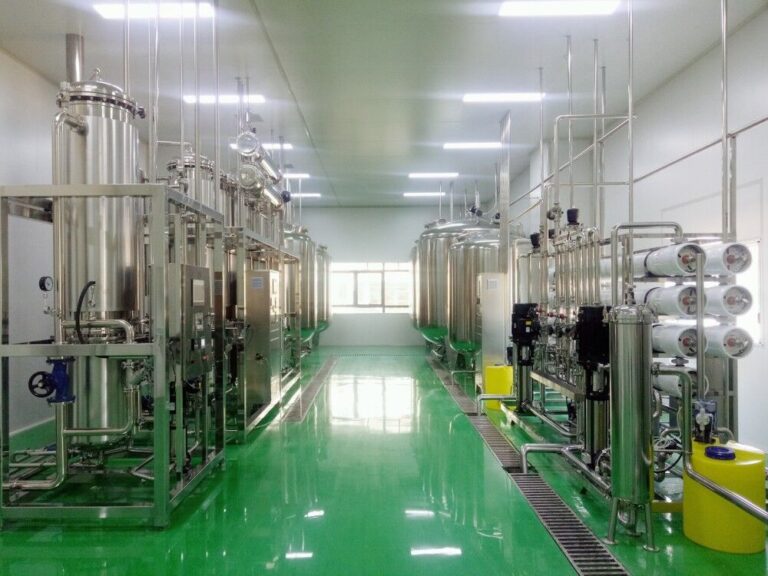
In industrial water treatment, a two-stage or dual-stage reverse osmosis (RO) system is a water purification process where the permeate (purified output) from the first RO stage is fed directly into a second RO stage for re-filtration. The end goal is to achieve deeper purification and produce higher-purity water and this allows for much higher recovery rates.
Advantages of Double Stage RO
-
High Recovery: These systems can achieve recovery rates of 75% to 85%, significantly reducing waste.
-
Sustainability: Lower water footprint helps companies meet environmental goals.
-
ROI: Despite higher initial costs, the savings in water bills provide a fast return on investment.
Disadvantages of Double Stage RO
-
Increased Scaling Risk: Because the second stage processes highly concentrated water, the risk of mineral precipitation is much higher.
-
Complexity: One more high-pressure pump increases the overall energy consumption by 15%–25%; it is necessary to monitor parameters of both stages, and membrane cleaning and replacement are more cumbersome, leading to an increase in labor costs.
Cost of Double Stage RO
The initial capital expenditure is higher, but it is often the more economical choice for large-scale industrial users.
Applications of Double Stage RO
Essential for large industrial plants, seawater desalination, and regions with high water scarcity or expensive wastewater treatment fees.
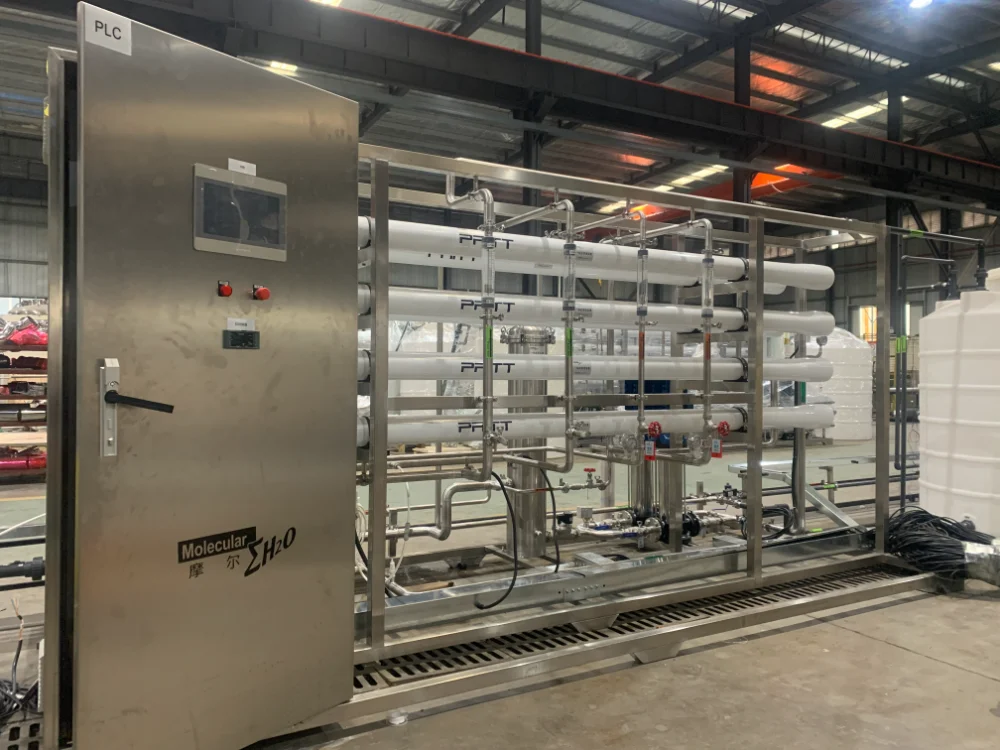
4 Critical Scaling Secrets for Your Two Stage RO System
Scaling is the crystallization of minerals like calcium carbonate or silica on the membrane surface. In a two stage RO system, managing this is a science. Here are the 4 secrets:
-
Secret 1: Precise Antiscalant Stratification Don’t treat both stages the same. The second stage requires a higher concentration or a different blend of antiscalants because the Langelier Saturation Index (LSI) is much higher in the second-stage feed.
-
Secret 2: Optimized Flux Rates The biggest mistake is over-pressurizing the second stage. By maintaining a lower “flux” (gallons per square foot of membrane) in the second stage, you can prevent minerals from being forced into the membrane pores.
-
Secret 3: The Power of Intermediate Cleaning Implementing a short, low-pressure flush with permeate water every time the system cycles off can prevent the concentrated salts from settling and forming hard scale.
-
Secret 4: Real-Time Normalized Data Monitoring Don’t just watch the flow meters. You must track “Normalized Permeate Flow.” If this drops by 10%, scaling has started. Catching it early allows for a mild chemical clean (CIP) rather than a permanent membrane loss.
Single vs. Double Stage RO (Comparison Table)
| Característica | Single Stage RO | Double Stage RO (Two Stage) |
| Recovery Rate | 50% – 60% | 75% – 85% |
| Scaling Potential | Bajo | High (Second Stage) |
| Equipment Cost | Bajo | Alto |
| Membrane Life | Long | Requires Expert Maintenance |
| Sustainability | Moderado | Excelente |
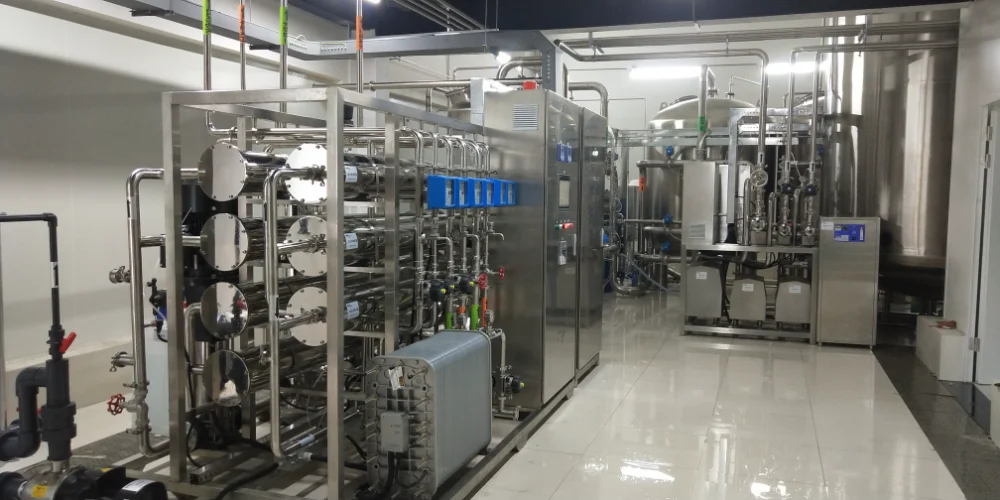
Conclusion: Which One Scales Better?
If you are running a small, budget-conscious operation with decent source water, a Single Stage RO is a solid starting point. However, if your facility is scaling for high-precision laboratory work or medical diagnostics, a Double Stage RO system is the only way to ensure long-term stability and ROI.eering water systems that grow with you. We don’t just sell equipment; we provide the purity and uptime your facility demands.
En [Molewater], we don’t just sell filters; we engineer uptime. We specialize in water systems that grow alongside your ambitions, ensuring that as you scale up, your water quality never lets you down.