The Technical Foundation: How RO and EDI Solution Work
To select the right system, one must understand the synergy between these two technologies.
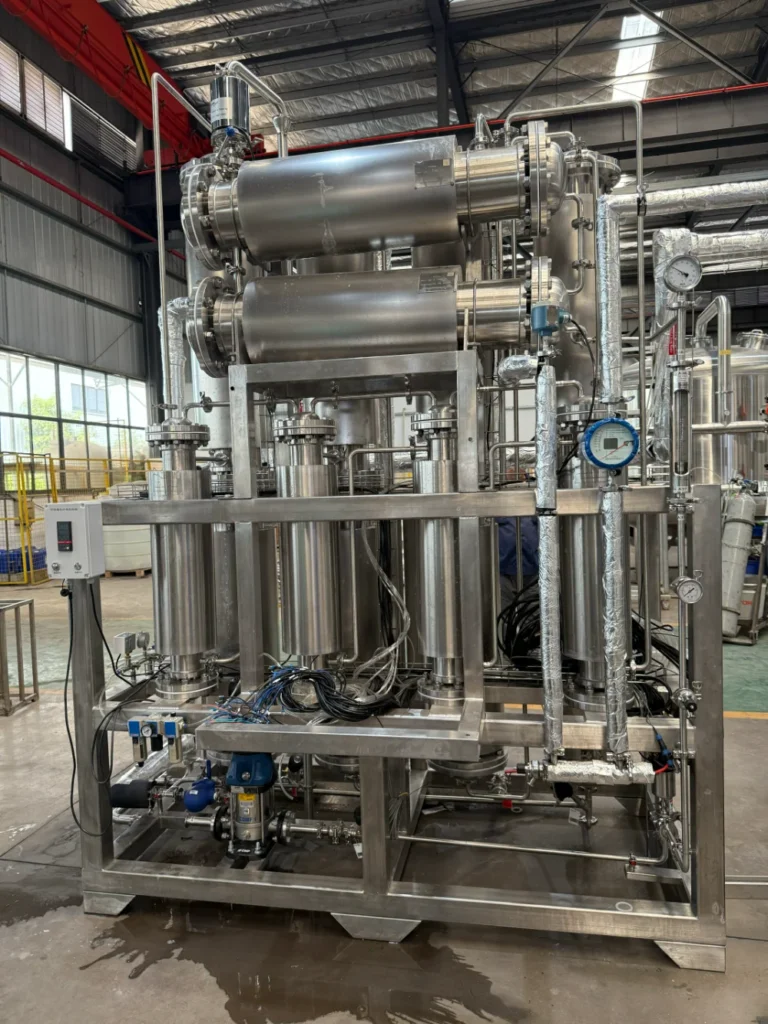
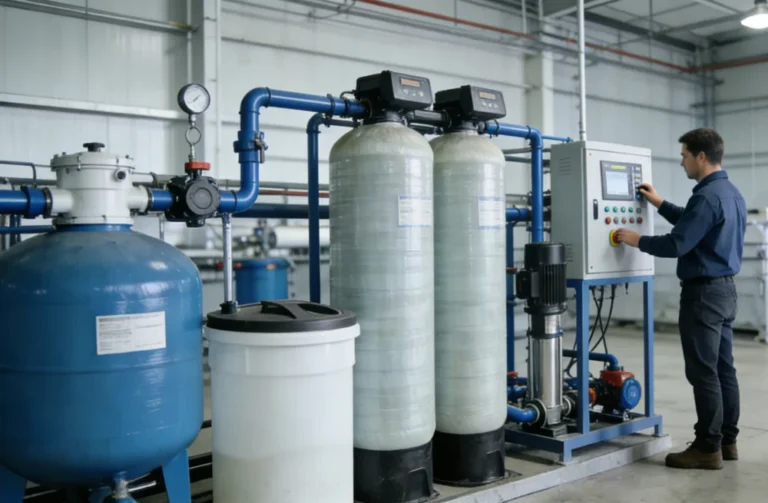
Reverse Osmosis (RO) serves as the essential primary purification stage. By using high-pressure pumps to force water through semi-permeable membranes, it effectively rejects up to 99% of dissolved salts, organics, and bacteria. It is the industry’s “heavy lifter” for bulk demineralization.
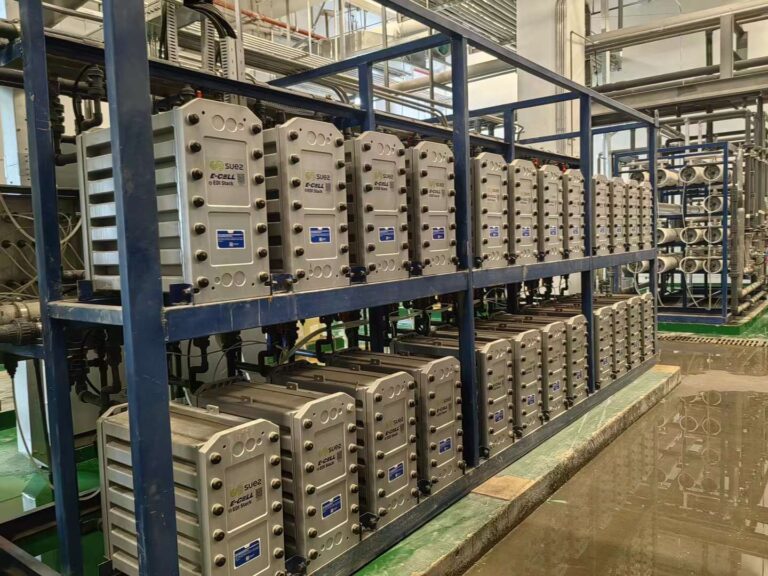
However, for laboratories requiring superior purity, a standalone RO system is often not enough. This is where an EDI solution (Electrodeionization) becomes indispensable. Unlike traditional methods, an EDI solution utilizes an electric field to continuously move ions across selective membranes and into a waste stream. Because the ion-exchange resins within the module are constantly regenerated by the electric current, the system never needs to be shut down for chemical cleaning or resin replacement.
Why an Integrated EDI Solution is the New Gold Standard
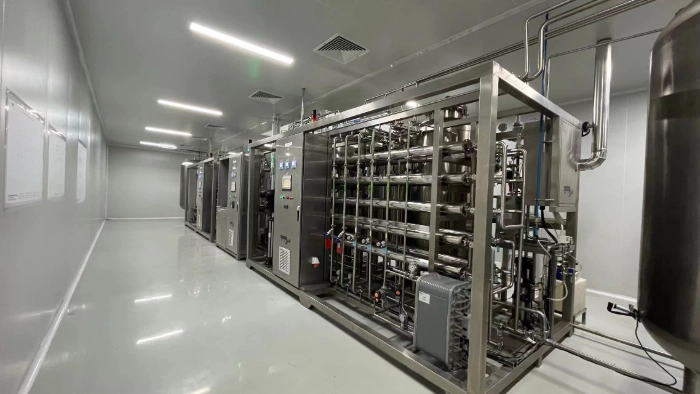
In the past, many labs relied on RO followed by replaceable DI resin canisters. However, modern pharmaceutical labs are increasingly adopting a dedicated EDI solution as their primary polishing stage. This shift is driven by the need for higher reliability and lower operational risks.
1. Unwavering Consistency and Data Integrity
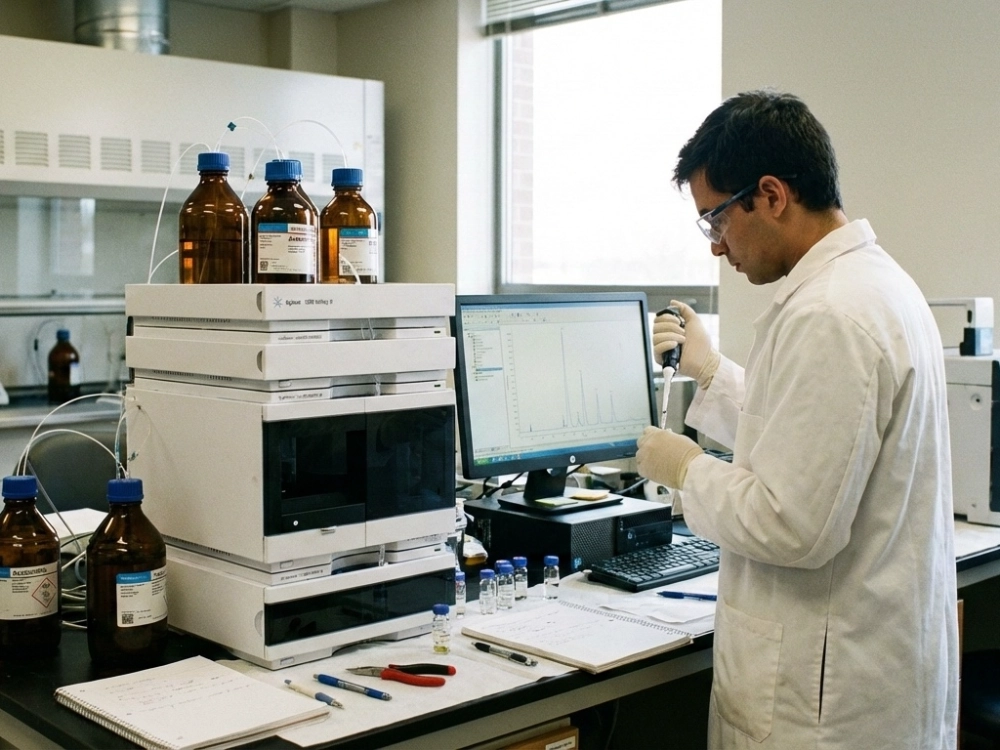
In a pharmaceutical setting, variability is the enemy of progress. A standalone RO system’s output can fluctuate based on seasonal changes in municipal water or membrane scaling. Such fluctuations can introduce trace ionic interference into sensitive equipment like HPLC, LC-MS, or ICP-MS, leading to baseline drift, ghost peaks, and unreliable results that can delay drug approvals.
An EDI solution acts as a precision stabilizer. It consistently delivers water with a resistivity of 10 to 18.2 MΩ·cm, even if the feed water quality varies slightly. This stability is the “evidence” that auditors look for during a GMP (Good Manufacturing Practice) inspection. It proves that your water—and by extension, your experimental results—is produced under controlled, reproducible conditions. When your lab can prove its water resistivity hasn’t budged in six months, you win the trust of regulatory bodies.
2. Superior Operational Efficiency and Workplace Safety
One of the most immediate benefits of switching to an EDI-based system is the total elimination of hazardous chemicals. Traditional ion-exchange systems require periodic regeneration using concentrated hydrochloric acid and sodium hydroxide. This process involves significant labor, specialized storage for corrosive materials, and the constant risk of chemical exposure for lab personnel.
By contrast, an EDI solution is entirely chemical-free. Because it regenerates itself electrically, you eliminate the logistics of tank exchanges and the hidden costs associated with purchasing, handling, and disposing of hazardous chemicals. This not only lowers your Total Cost of Ownership (TCO) over the system’s lifecycle but also significantly enhances workplace safety. In a modern American lab, reducing liability and improving the safety profile of the facility is a high-priority benefit that resonates with stakeholders.
3. Sustainability and “Green Lab” Alignment
The global pharmaceutical industry is under increasing pressure to reduce its environmental footprint. Traditional deionization creates a massive amount of chemical wastewater that must be neutralized before discharge, straining local water treatment facilities. An EDI solution aligns perfectly with corporate sustainability initiatives.
These systems have a high water recovery rate and produce zero hazardous waste. Furthermore, because the modules are designed for longevity—often lasting 5 to 10 years with proper RO pretreatment—the volume of plastic and resin waste is drastically reduced compared to disposable resin cartridges. Choosing an EDI solution is a powerful statement of environmental responsibility.
Comparison Matrix: Finding Your Perfect Fit
| Performance Metric | Single-Pass RO | Two-Pass RO | Integrated EDI Solution |
| Product Water Quality | 0.2 – 1.0 MΩ·cm | 1.0 – 5.0 MΩ·cm | 10 – 18.2 MΩ·cm |
| Maintenance Frequency | Moderate | Moderate | Very Low (Self-Regenerating) |
| Chemical Handling | Periodic Cleaning | Periodic Cleaning | Zero Chemicals |
| Audit Compliance | Basic | Moderate | Superior/Pharmaceutical Grade |
Choosing the Right System for Your Application
The “best” system depends entirely on your lab’s specific sensitivity:
General Lab Support: For glassware washing or autoclave feed water, a robust RO system is a cost-effective choice that provides reliable bulk purification.
Precision Research: For molecular biology or trace element analysis, the stability of an EDI solution is mandatory to prevent ionic contamination from skewing your data.
Production and Scale-up: For GMP-regulated manufacturing, a Two-Pass RO + EDI solution is the industry standard, providing a double-layered defense that ensures your water quality remains compliant even if your municipal feed water quality drops.
Conclusion: Investing in Reliability
Transitioning to an automated EDI solution is more than just a technical upgrade; it is an investment in your lab’s data integrity. By combining the filtration power of RO with the continuous, chemical-free polishing of EDI, you secure a future-proof water supply that satisfies both the most rigorous auditor and the most meticulous scientist.