Introduction and The Core Definition
What is a Reverse Osmosis System?
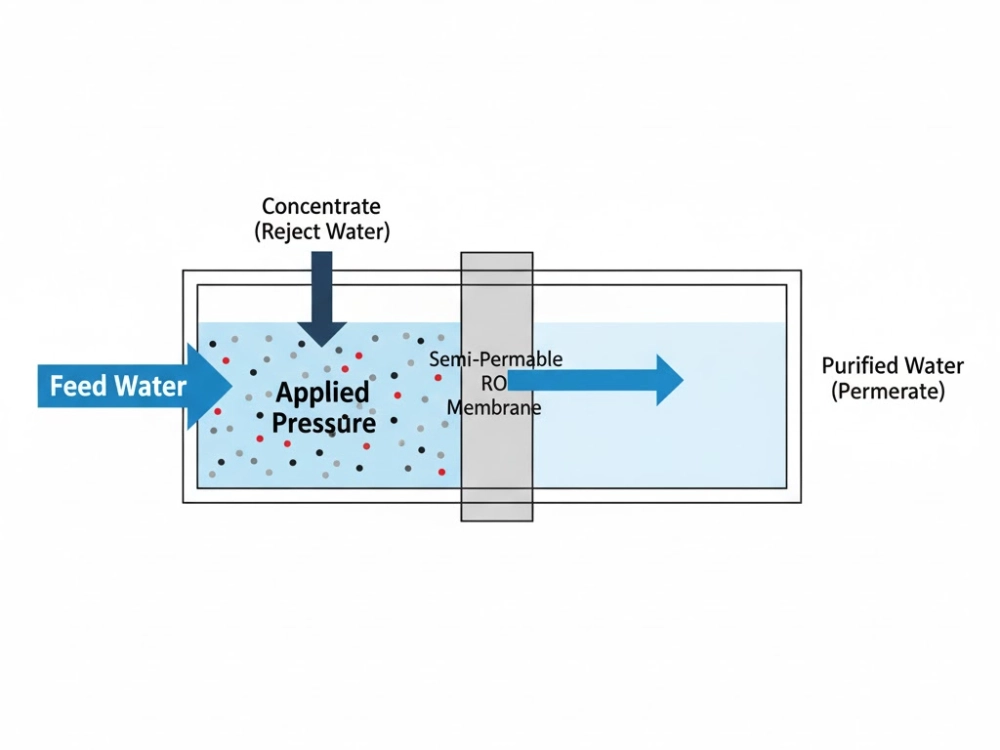
Reverse Osmosis is a process that reverses a natural phenomenon called Osmosis. In nature, water (solvent) moves through a semi-permeable membrane from a low solute concentration to a high solute concentration. The reverse process requires external pressure—specifically, pressure greater than the naturally occurring osmotic pressure—to force the water through the membrane in the opposite direction. The result is pure water, known as “permeate,” while the trapped contaminants, measured as Total Dissolved Solids (TDS), are flushed away.
How Does a RO Water Purifier Work?
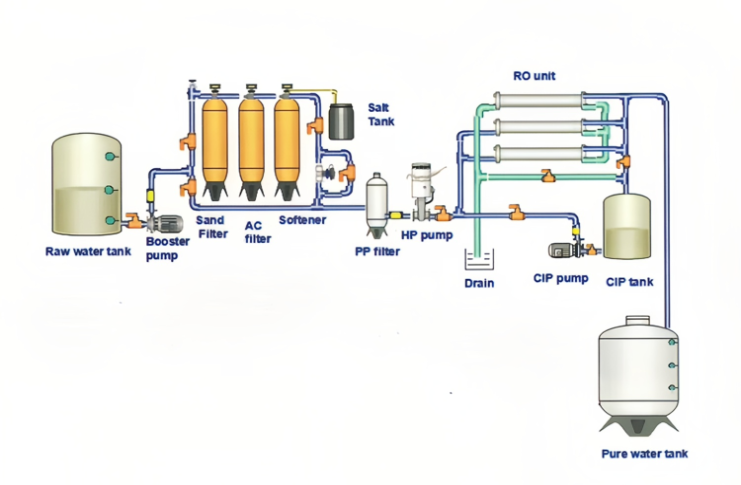
Understanding the process of a RO Water Purifier is simpler than you might think. Unlike basic single-stage filters, an RO system operates in multiple phases, ensuring both the longevity of the critical components and the highest level of purification. This comprehensive RO Filtration typically involves three key functional stages:
- Pretreatment Filters (The Protection Phase).This initial phase often comprises two distinct elements: the Sediment Filter and the first Carbon Filter. The primary role of pretreatment is protection. The Sediment Filter removes large particles like dirt and rust. Following this, the Carbon Filter performs adsorption, aggressively removing chlorine, chloramines, and Volatile Organic Compounds (VOCs). This carbon stage is absolutely critical because chlorine is highly corrosive and would otherwise destroy the fine structure of the main membrane.
- Precision Filter (The Second Barrier).The precision filter stage typically involves a high-quality, often denser, PP Block. This filter acts as an additional safeguard, capturing any trace chemicals or small particles that may have bypassed the initial pretreatment. It ensures the water entering the core stage is as clean as possible, maximizing the efficiency and lifespan of the RO membrane itself.
- RO Membrane (The Purification Phase).This is the ultimate stage of purification and the defining feature of a Reverse Osmosis System. The semi-permeable membrane is wound tightly and features microscopic pores measuring approximately 0.0001µm. This incredibly fine filtration allows only water molecules to pass through while physically blocking almost all inorganic dissolved solids, including heavy metals like Lead and Arsenic, nitrates, fluorides, and even some bacteria and viruses. The purified water, known as “permeate,” is sent to the storage tank, while the concentrated waste is flushed to the drain.
The Competitive Edge
Why an RO Water Filter System is Superior?
The Reverse Osmosis Water Filter System stands out from all competitors by delivering verified performance through advanced engineering.
- Unmatched Technical Capability and Precision
The fundamental difference between an RO System and conventional filtration lies in its core technical ability. RO is the only household technology capable of reliably and efficiently reducing Total Dissolved Solids (TDS), ions, and complex molecules from the water stream. This makes the system effective against challenging contaminants like nitrates, fluoride, and salinity that carbon alone cannot touch.
- The Health and Lifestyle Payoff
The high-tech engineering of the RO system translates directly into significant benefits for your health and lifestyle. First and foremost, you gain peace of mind, knowing that high-risk, invisible contaminants—including heavy metals like Lead and Arsenic, and emerging pollutants like PFAS—have been virtually eliminated. Beyond safety, the water’s taste is incomparably clean, enhancing the flavor of your coffee, tea, and cooking ingredients.
- Verified Purity: Certifications and Data
When making a decision about water quality, proof is essential. Quality Reverse Osmosis Water Filters rarely rely on vague promises; their performance is backed by authoritative evidence. Many leading models are rigorously tested and certified by independent bodies like NSF International, often earning the NSF/ANSI Standard 58 certification. This certification guarantees their stated effectiveness in reducing specific contaminants.
Comparison and Clarification
RO Water vs. The Alternatives
|
Water Type |
Key Mechanism | Contaminant Removal Focus | TDS Removal |
|
Tap Water |
Chemical disinfection (Chlorine) | Pathogens, Bacteria |
Poor/None |
|
Filtered Water |
Activated Carbon Adsorption | Chlorine, Taste, Odor | Minimal |
| Distilled Water | Boiling and Condensation | All minerals, most contaminants |
Excellent |
| RO Water | Pressure through Membrane | TDS, Lead, Arsenic, Fluoride, Nitrates |
95-99% |
Addressing Common Concerns About Your RO Filter System
Two primary concerns often arise when considering a RO Filter System: mineral depletion and water waste. These issues, however, have been largely mitigated by modern technology.
- The Mineral Question: Nutritionists agree that the human body obtains essential minerals primarily through a balanced diet, not through drinking water. For those who prefer the taste or health benefits of alkaline water, the market now offers Re-mineralization (Alkaline) Filters that can be added as a final stage to safely inject beneficial minerals back into the purified water.
- The Water Waste Myth: Modern, High-Efficiency RO Systems have dramatically improved performance, with many certified models achieving a 1:1 or even better waste-to-pure ratio. This advancement ensures you can enjoy pure water with a clear conscience about your environmental footprint.
Conclusion and Next Steps
The Final Verdict on Choosing a Reverse Osmosis Water Filtration System
Ultimately, investing in a Reverse Osmosis Water Filtration System is a proactive step toward better health, better tasting food, and greater peace of mind. It is a robust, scientifically proven technology that provides protection against the contaminants that other filtration methods simply cannot handle. If you prioritize the absolute highest standard of purity for your family, an RO Machine is the definitive choice.
Ready to find the perfect system? Click here to explore our expert reviews of the top-rated RO Filter Systems available today, or contact us for a personalized water consultation.