With escalating global water scarcity, rising municipal tariffs, and the mandatory push toward corporate ESG (Environmental, Social, and Governance) compliance, rainwater harvesting has evolved. It is no longer just a sustainable trend for eco-conscious homeowners; it is now a critical, cost-slashing strategy for modern commercial buildings, manufacturing plants, agricultural complexes, and research laboratories.
However, as facilities scale up their rainwater utilization, project engineers and facilities managers must confront a foundational health and operational question: Is raw, untreated rainwater safe to drink or integrate into sensitive process lines?
The scientific consensus from global regulatory bodies is absolute: No Raw rainwater is structurally unsafe for human consumption and commercial processing without a multi-stage, engineered purification system.
While rainwater is naturally soft and pristine at the moment of condensation high in the atmosphere, it acts as a highly efficient chemical scavenger as it falls. By the time it channels through your facility's roof and into your holding tanks, it has accumulated a toxic cocktail of atmospheric pollutants, microbiological pathogens, and heavy metals.
The Hidden Science of Rainwater Contamination
To outrank basic consumer blogs, we must look past visible debris like leaves and twigs. The real operational and biological threats in rainwater occur at the microscopic and molecular levels.
When rain falls, it systematically breaches international safety standards through three distinct contamination pathways:
1. The Global Atmospheric PFAS Crisis
For decades, it was assumed that rain falling in remote or non-industrial areas was safe. However, recent global environmental studies have confirmed a harsh reality: rainwater everywhere on Earth—from Antarctica to the US Midwest—now contains hazardous levels of PFAS (Per- and Polyfluoroalkyl Substances), commonly known as "forever chemicals."
Because these synthetic chemicals do not break down in the environment, they cycle continuously through the water vapor loop. The U.S. Environmental Protection Agency (EPA) has set legally enforceable Maximum Contaminant Levels (MCLs) for major PFAS strains (such as PFOA and PFOS) at a razor-thin 4.0 parts per trillion (ppt). Raw rainwater routinely violates this safety threshold. Because PFAS cannot be boiled out of water or captured by standard carbon mesh filters, advanced membrane separation is mandatory.
2. Microbiological Pathogens & Biofouling Agents
Rooftops and open catchments are highly active biological zones. They accumulate bird droppings, rodent feces, decaying insects, and windblown organic dust. When rain flushes these surfaces, it introduces dangerous microorganisms into your storage tanks:
Target Safe Metric: WHO guidelines mandate a strict 0 CFU/100mL for E. coli in any water intended for human contact or consumption.
3. Heavy Metal Leaching and Low pH Corrosivity
Pure water is an incredibly powerful solvent. Because rainwater lacks dissolved minerals like calcium and magnesium, it is naturally "hungry" and aggressive. Furthermore, as rain falls through the atmosphere, it reacts with ambient carbon dioxide (CO₂) to form mild carbonic acid, driving its pH down to 5.6 or lower (acid rain).
When this acidic, mineral-free water makes contact with commercial roofing materials, industrial gutters, or flashing, it aggressively leaches heavy metals out of the structures. Harvested rainwater frequently exhibits elevated levels of:
- Lead (Pb): Leached from old flashings, soldered joints, and architectural paints.
- Zinc (Zn) & Copper (Cu): Leached from galvanized steel sheets, plumbing fixtures, and anti-algae roof coatings.
Technical Benchmarks: Raw Rainwater vs. Target Applications
To build a commercially viable filtration strategy, your system must treat the water to match the exact regulatory standards of your specific sector. Treating water to a higher purity than necessary wastes energy, while under-treating introduces regulatory risks.
| Application Sector | Primary Contaminant Concern | Target Regulatory Standard |
|---|---|---|
| Commercial Potable / Facility Drinking | E. coli, Heavy Metals, PFAS Compounds | WHO Guidelines / US EPA MCLs |
| Commercial Agriculture & Hydroponics | Phytopathogens, Sodium, Heavy Metals, Unstable pH | FAO Irrigation Standards |
| Industrial Processing & Boiler Feed | Hardness Ions, Silica (SiO₂), Corrosive Dissolved Gases | ASME Boiler Water Guidelines |
| Laboratory, Medical & Biotech | Total Organic Carbon (TOC), Endotoxins, Ionic Purity | ASTM Type I / ISO 3696 Specifications |
Deep Dive: People Also Ask (PAA) & Common Misconceptions
Can you boil rainwater to make it safe to drink?
Only partially. Boiling water is an excellent emergency method to kill biological pathogens like bacteria, viruses, and parasites. However, boiling does absolutely nothing to remove chemical pollutants. In fact, boiling acidic rainwater causes a percentage of the water to evaporate, which actually concentrates the remaining heavy metals (like lead and copper) and PFAS chemicals, making the water more toxic than it was before heating.
Is rainwater considered "Soft Water" or "Hard Water"?
Rainwater is the ultimate form of soft water because it contains virtually zero calcium or magnesium ions (Ca²⁺ and Mg²⁺). While this is highly advantageous for preventing limescale buildup in industrial boilers and washing systems, its lack of mineral buffering makes it highly corrosive to concrete tanks and metal piping networks.
Why is municipal tap water safer than rainwater?
Municipal water plants utilize a strict, continuous multi-barrier process involving coagulation, sedimentation, deep-bed sand filtration, and continuous residual disinfection (usually via chlorine or chloramines). This ensures that the water arriving at a facility is constantly monitored, whereas private rainwater harvesting systems are completely vulnerable to sudden environmental spikes, such as a localized chemical spill or sudden avian migrations over the catchment area.
The Complete Engineered Treatment Train for Commercial Rainwater
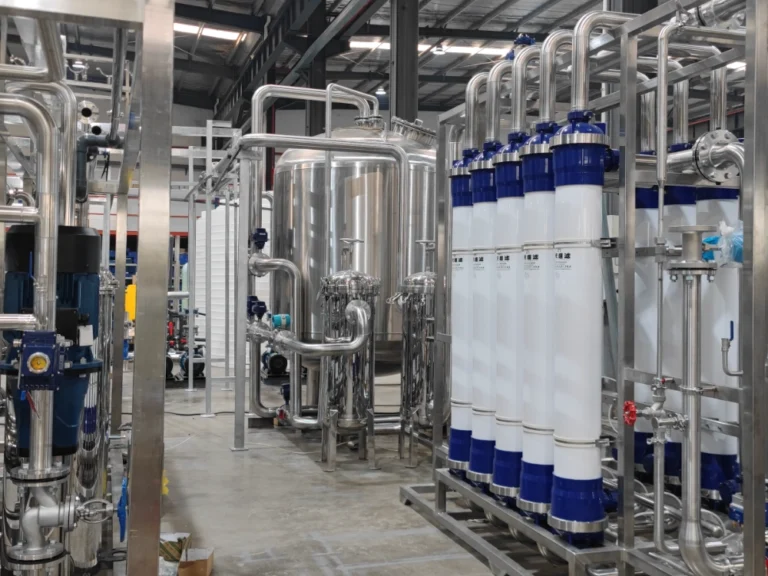
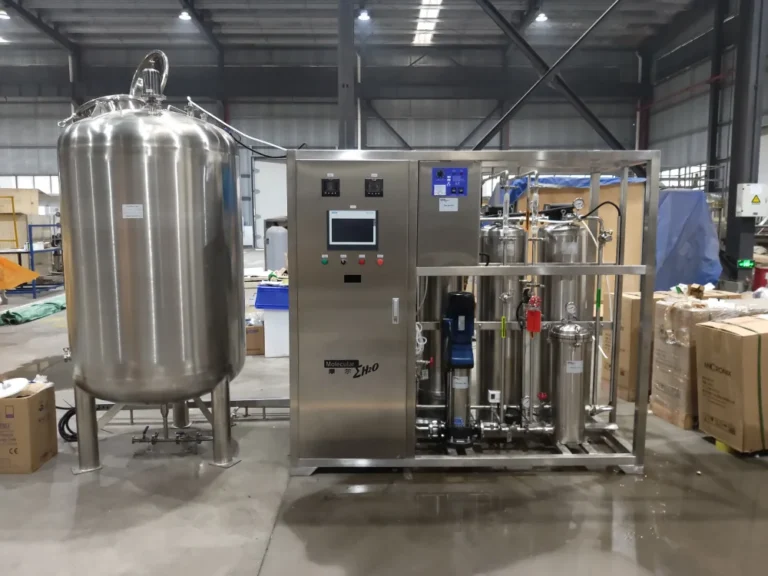
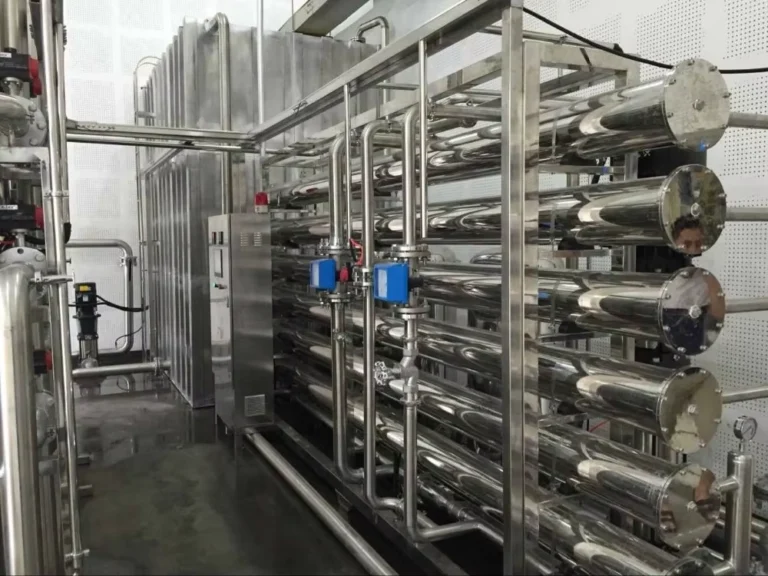
To reliably convert high-volume rainwater into pure, drinking-grade or laboratory-grade water, engineers rely on a Multi-Barrier Treatment Train. Relying on a single sediment filter is an operational risk. The following sequence demonstrates the professional standard for rainwater remediation: