

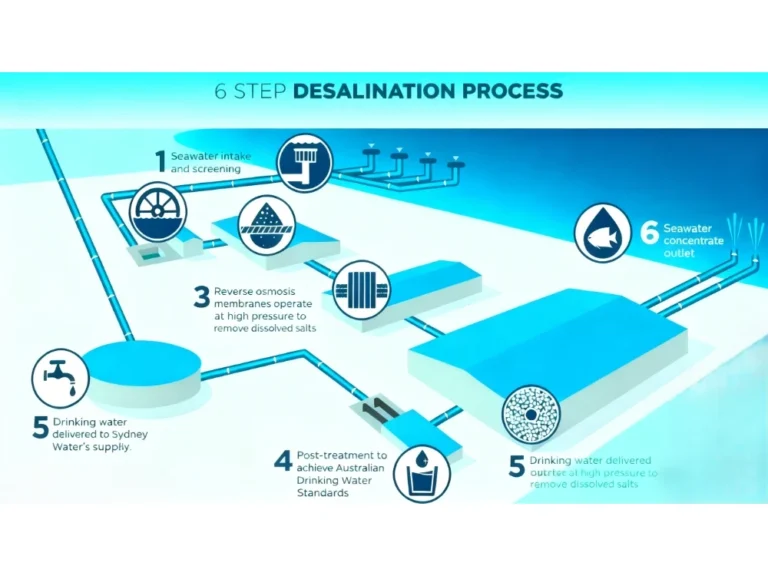
Introduction: Why Desalination Pretreatment is Critical
In the water treatment industry, desalination technologies—whether Reverse Osmosis (RO), Nanofiltration (NF), or Electrodeionization (EDI)—play an increasingly vital role. While highly efficient, these membrane separation technologies demand extremely high standards for feedwater quality. If the incoming water quality is inadequate, the membrane surfaces are prone to scaling, fouling, and clogging. This not only rapidly reduces the quality and flux of the permeate water but also significantly shortens the lifespan of expensive membrane elements.
Therefore, a robust and reliable desalination pretreatment system is the foundation for ensuring the long-term, stable, and efficient operation of the subsequent membrane system. Ignoring pretreatment is akin to fueling a sports car with low-grade gasoline—the consequences are dire. This article will detail the 6 crucial pretreatment steps you must master for the successful operation of your desalination system.
I. Total Suspended Solids (TSS) Removal: The First Line of Defense
Suspended Solids (TSS) in water are the number one cause of membrane fouling. These tiny particles settle on the membrane surface, forming a stubborn “mud cake” that severely impedes water flow.
-
Goal: Control the Silt Density Index (SDI) to below 5, ideally less than 3.
-
Key Steps:
-
Coagulation/Flocculation: Adding chemical agents to the raw water to aggregate small particles into larger flocs.
-
Clarification/Sedimentation: Using gravity to allow the aggregated large particles to settle out.
-
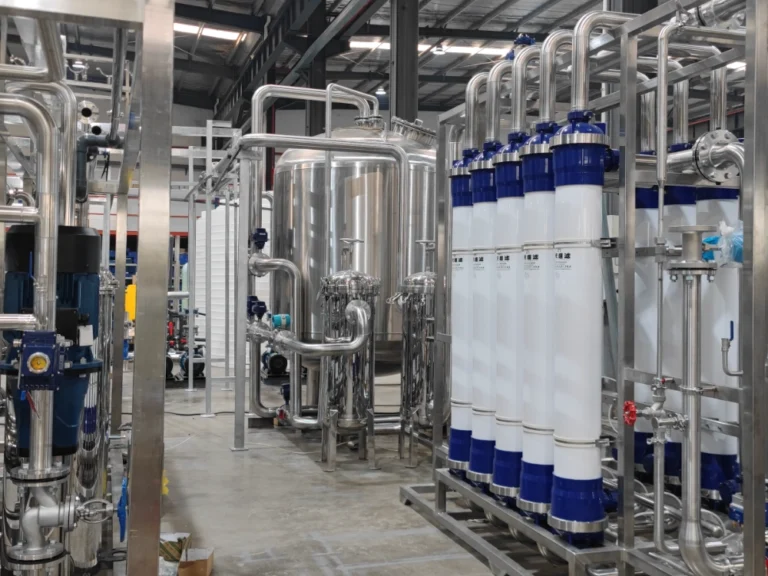
Multi-Media Filtration (MMF) / Ultrafiltration (UF): This is the most important step. MMF is primarily used to remove larger particles, while Ultrafiltration, due to its smaller pore size (typically less than 0.1 µm, can effectively replace traditional sand filters, providing a more stable effluent quality.
-
II. Organic Matter Removal: Protecting the Membrane Material
Natural Organic Matter (NOM) and synthetic organic compounds can adsorb onto the membrane material, causing irreversible fouling. Furthermore, organic matter is often a breeding ground for microbial growth.
-
Key Steps:
-
Activated Carbon Filtration (ACF): Activated carbon is very efficient at removing small-molecule organic matter, residual chlorine, and some color-causing substances.
-
Specialty Adsorption Resins: For high-molecular-weight organic matter or specific pollutants, specialty adsorption resins may be considered.
-
III. Hardness Removal: Preventing Catastrophic Scaling
Calcium(Ca2+ )and magnesium (Mg2+ )ions in water are the culprits behind membrane scaling. This is particularly true during the concentration process in RO systems, where solubility drops sharply, leading to the formation of hard scales like calcium sulfate and calcium carbonate.
-
Key Steps:
-
Chemical Antiscalant Dosing: Injecting an effective antiscalant into the pretreated water. Antiscalants work by interfering with crystal growth, keeping the salts in a dissolved state.
-
Softening Treatment (Ion Exchange): For sources with extremely high hardness, lime softening or ion exchange resins may be required to drastically reduce the hardness level.
-
IV.Microbial Control: Suppressing Biofouling
Biofouling is one of the most challenging forms of contamination in membrane systems. Bacteria, algae, and other microorganisms form a slimy biofilm on the membrane surface, which not only decreases flux but also alters hydraulic conditions.
-
Key Steps:
-
Sterilization: Typically using chlorine gas, sodium hypochlorite, or Ultraviolet (UV) irradiation for pre-sterilization.
-
Post-Chlorine Removal: Crucially, most RO membranes are highly sensitive to residual chlorine! Therefore, before the water enters the RO membrane, sodium metabisulfite (SMBS) or Activated Carbon Filters (ACF) must be used to completely remove any free chlorine.
-
V. pH and Temperature Adjustment: Optimizing Operating Conditions
While not a direct contaminant removal step, controlling the pH and temperature is vital for the overall performance of the desalination system.
-
pH Adjustment: Adjusting the pH can change the solubility of certain substances in the water (e.g., silica is more soluble under alkaline conditions) and can also optimize the effectiveness of the antiscalant.
-
Temperature: Increased temperature leads to higher membrane flux, but concurrently increases the risk of scaling and fouling. Ensure the feedwater temperature remains within the membrane manufacturer’s recommended operating range.
VI. Cartridge Filter (Guard Filter): The Final Insurance
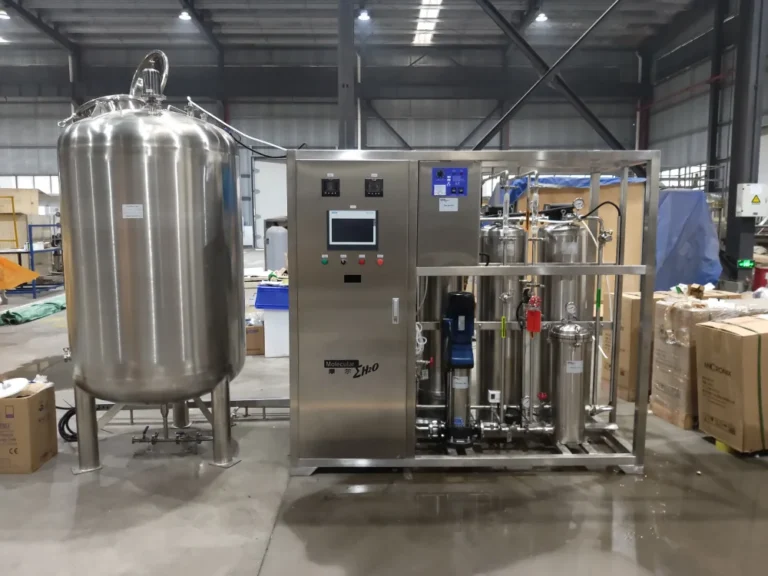
The cartridge filter is typically the last line of defense in the pretreatment system. It is a precision filter with a rating of 5µm or 1µm, primarily intended to intercept any large particles (such as media from sand filters or resin fragments) that may have leaked or sloughed off from the upstream pretreatment system.
-
Function: It is not designed to remove the main bulk of contaminants but serves as the ultimate protector of the membrane elements. Regular inspection and replacement of these cartridges are essential.
Conclusion
The success of a desalination system is 80% dependent on its pretreatment. Only by strictly implementing these 6 key steps—TSS removal, softening, microbial control, organic matter removal, pH/temperature adjustment, and cartridge filtration—can you ensure your membrane system resists fouling and scaling, achieving long-term, stable, and economical operation.