Stop Wasting Money: Choosing the Right Water Treatment Technology
As a key player in industries like pharmaceuticals, power generation, and microelectronics, you know that ultra-pure water is non-negotiable. The two dominant technologies for achieving this purity are traditional Resin Ion-Exchange (IX) and the advanced Electrodeionization (EDI). Understanding the crucial differences between them is the ultimate key to optimizing your operational costs and water quality.
Traditional Ion-Exchange (IX): The Reliable Workhorse
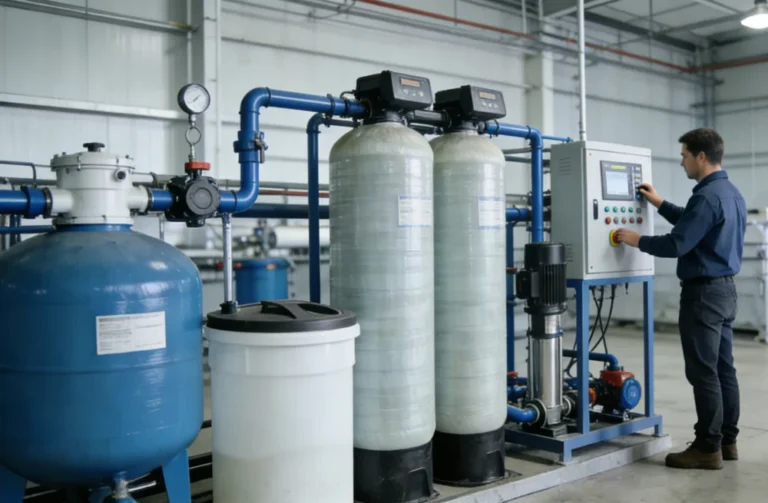
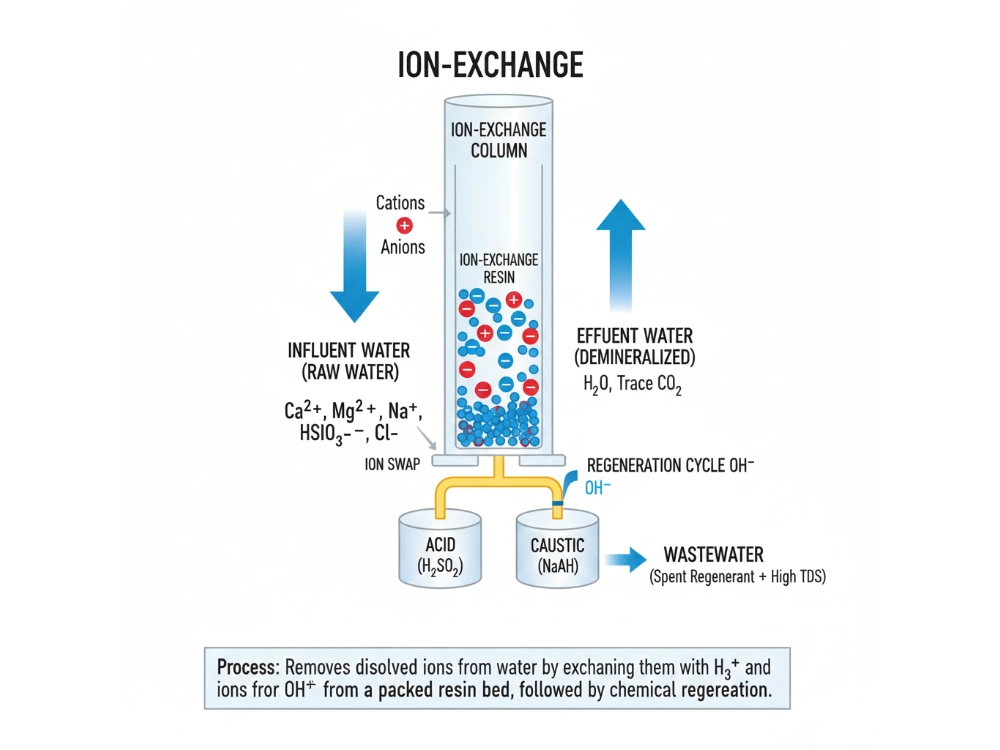
Resin ion-exchange systems use synthetic polymer beads to capture and trade ions. For example, a cation-exchange resin swaps hydrogen ions for positively charged impurities like calcium and sodium. It’s a proven and effective method for demineralization, but it requires frequent chemical regeneration.
| Feature | Details |
| Mechanism |
Chemical batch process using resin beads.
|
| Key Challenge |
Requires caustic chemicals (acid/base) for regeneration.
|
| Operational Cost |
High chemical and labor costs; high wastewater volume.
|
Electrodeionization (EDI): The Revolutionary Upgrade
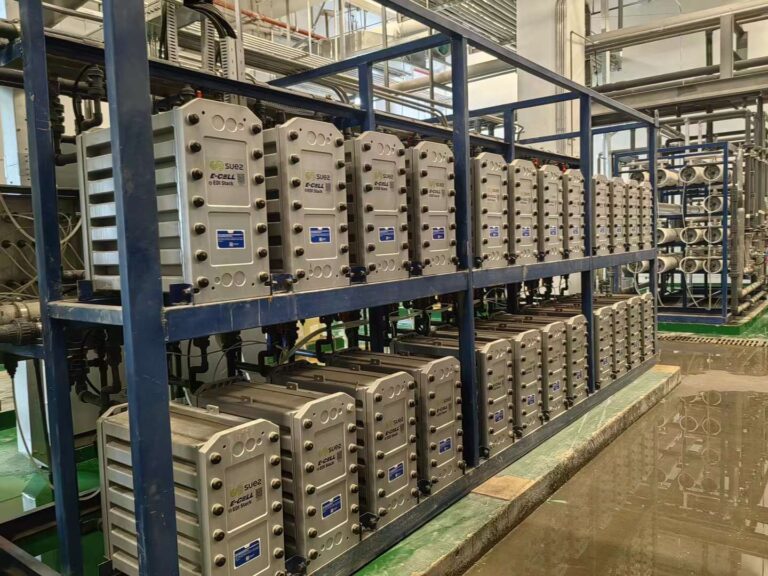
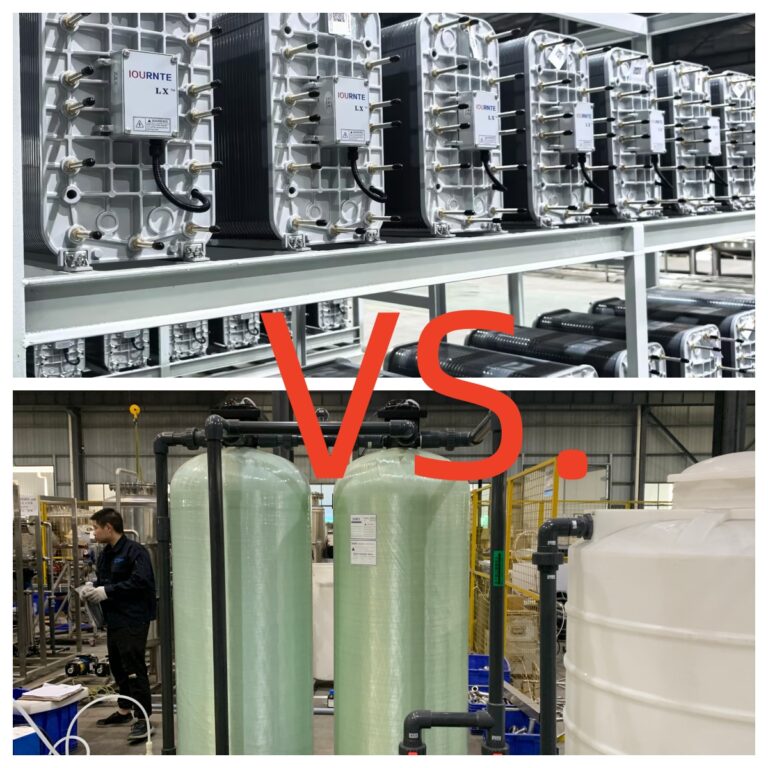
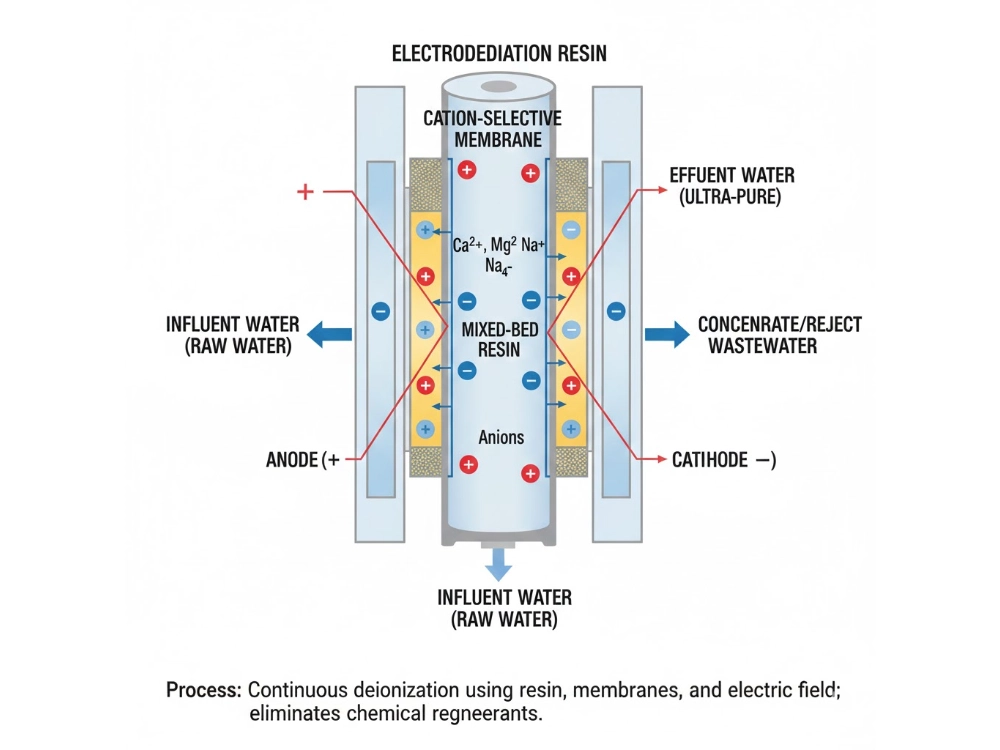
Electrodeionization is a game-changer. It combines ion-exchange resin, ion-selective membranes, and a continuous direct current. The electric field continuously forces dissolved ions across the membranes, eliminating the need for periodic chemical regeneration. This not only dramatically reduces chemical waste but also ensures consistent, high-purity water quality, making it a powerful choice for demanding applications.
Ion-Exchange (IX) and Electrodeionization (EDI): A Deep Dive
Ion-Exchange (IX) systems have long been the industry standard for reliable water demineralization. This technology relies on porous, synthetic resins that chemically swap undesirable ions (like calcium, magnesium, sodium, and chloride) with non-contaminant ions (typically H+ and OH-). The primary benefit is the ability to achieve very high purity levels. However, IX operation demands frequent, mandatory chemical regeneration using strong acids and bases (HCl or NaOH). These batch processes lead to unavoidable downtime and generate significant volumes of hazardous, concentrated wastewater, which increases both disposal costs and environmental compliance challenges.
Electrodeionization (EDI) represents a powerful evolution in water treatment, seamlessly integrating ion-exchange resin, ion-selective membranes, and a continuous direct current. Unlike IX, EDI requires zero chemical regenerants. The electric potential continuously drives the captured ions across the membranes, essentially regenerating the resin in situ. This results in a continuous flow of consistent, high-purity water, eliminating the quality “rollercoaster” seen between IX cycles. EDI is highly favored for its reduced labor and maintenance needs, smaller operational footprint, superior safety profile (no hazardous chemicals), and dramatically lower wastewater discharge. For industrial applications requiring continuous, ultra-pure water with minimized operating expenses, EDI is the definitive, forward-looking choice.
4 Critical Differences: IX vs. EDI
When considering an upgrade or new system, four factors are essential.
-
Chemical Handling (Warning!): IX systems require the transport, storage, and handling of hazardous regeneration chemicals. EDI systems completely remove this risk, offering a safer and simpler operation.
-
Water Quality Consistency: IX systems produce varying water quality, peaking right after regeneration and declining until the next cycle. EDI delivers stable, ultra-pure water quality continuously.
-
Wastewater Volume: IX generates significant volumes of highly concentrated acidic and basic wastewater. EDI produces minimal waste, leading to a much smaller environmental footprint and unbelievable savings on disposal costs.
-
Footprint & Automation: EDI modules are compact and fully automated, requiring less labor and floor space than complex, large-scale IX systems.
The Final Verdict: Why 80% of New Plants Choose EDI
Choosing between traditional Ion-Exchange (IX) and advanced Electrodeionization (EDI) is a critical strategic decision for industrial water purity. While IX offers reliable demineralization through chemical resin regeneration, it carries the burden of high chemical handling costs and hazardous wastewater disposal. Conversely, EDI provides a superior, continuous, and safer solution, eliminating the need for caustic chemicals and delivering consistently ultra-pure water with a minimal environmental footprint, making it the revolutionary choice for modern, efficient operations.
While traditional ion-exchange remains a viable option for low-flow or specific pre-treatment needs, Electrodeionization is the must-read choice for continuous, high-volume industrial operations seeking reliability, safety, and a lower environmental impact. Revolutionize your water treatment process today by exploring the long-term cost benefits of a switch to EDI technology.