
One Particle, One ION, One Failure: Why Your UPW System is Your Most Critical Production Asset.
In the precision-driven worlds of semiconductor fabrication and pharmaceutical manufacturing, ordinary purified water is not enough. Your process demands Ultrapure Water (UPW) — a resource so clean that a single impurity at the molecular level can halt production, scrap entire batches, and cost millions.
This definitive guide is for engineers, plant managers, and procurement specialists. We cut through the complexity to explain what UPW truly is, how a modern UPW system is engineered, and the critical factors in selecting a partner who can guarantee the purity your production line depends on.
What is Ultrapure Water (UPW)? Beyond “Pure” to Molecular Perfection
Ultrapure Water is water that has been purified to exceptionally stringent specifications, removing not only suspended solids and microbes but also dissolved gases, ions, and organic compounds down to parts-per-trillion (ppt) levels. Its quality is defined by extreme parameters:
-
Resistivity: >18.2 MΩ·cm at 25°C (the theoretical maximum for pure water).
-
Total Organic Carbon (TOC): Often <5 ppb, with advanced systems achieving ≤1 ppb.
-
Microbial Control: Typically <1 CFU/mL and with strict endotoxin limits for pharmaceutical applications.
-
Particle Count: Controlled at sub-micron levels, critical for chip manufacturing.
The precise specifications vary by industry. For instance, semiconductor plants require massive volumes of UPW for wafer cleaning and etching, while pharmaceutical facilities need pyrogen-free UPW for injectable drug formulation and final rinse of primary packaging materials.
 The High-Stakes Cost of UPW Failure: Risks of an Inadequate System
An unreliable or substandard UPW system directly threatens your bottom line and regulatory standing.
-
Catastrophic Yield Loss: In semiconductor fabs, particle contamination from water can ruin entire batches of chips.
-
Product Recall & Regulatory Action: In pharmaceuticals, failure to meet Water for Injection (WFI) or pure steam standards can lead to batch rejection and FDA citations.
-
Unplanned Downtime & High Operating Costs: Inefficient systems with low recovery rates waste water and energy, while frequent maintenance interrupts production.
-
Supply Chain Vulnerability: Dependence on a single, poorly supported technology partner poses a significant operational risk.
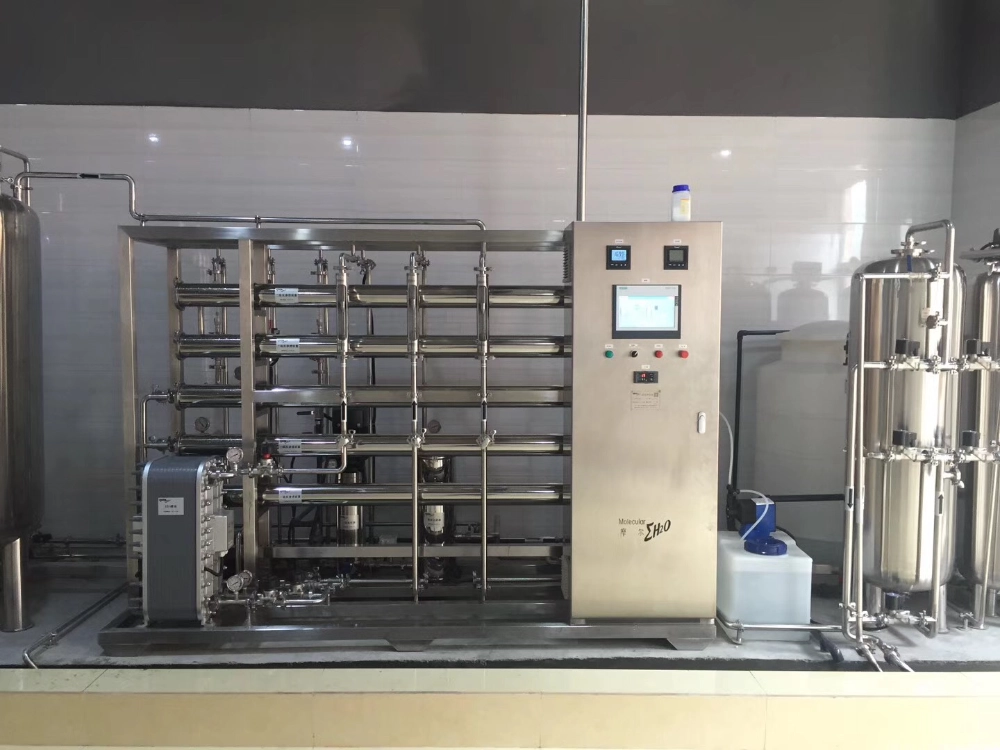
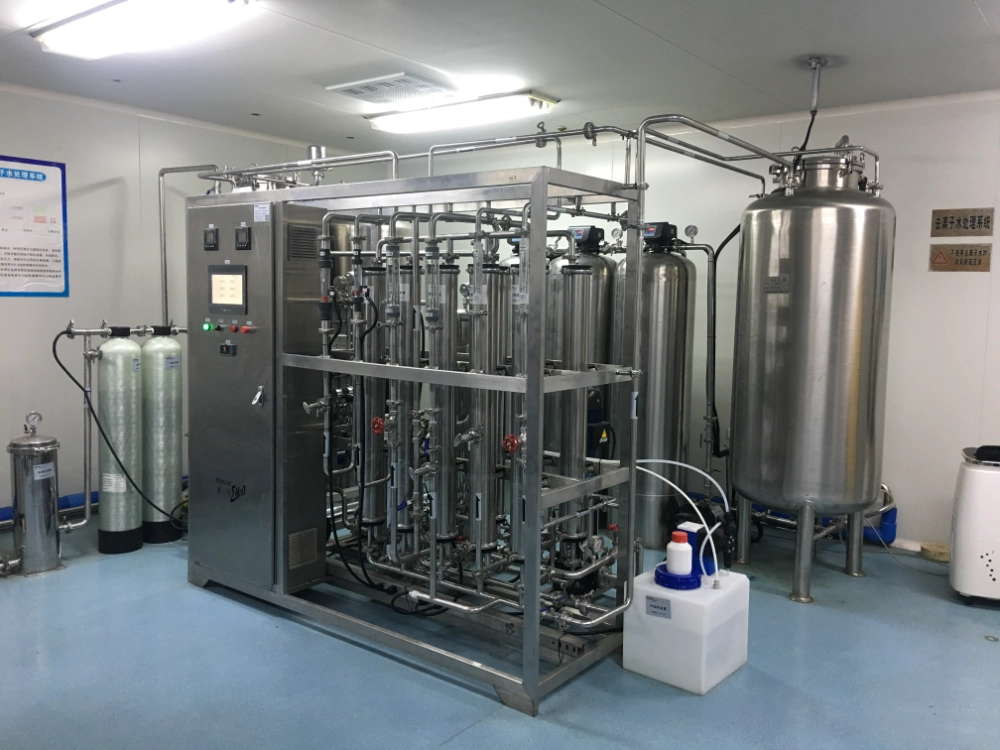
Anatomy of a Modern Ultrapure Water System: A Multi-Stage Purification Train
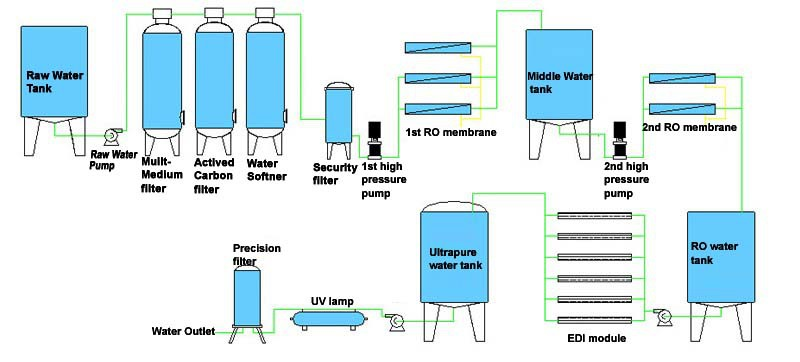
Producing UPW is not a single-step process but a cascading series of treatment barriers, each removing a specific class of contaminants.
1. Pretreatment & Primary Demineralization
This stage prepares feed water (often potable or softened water) and removes the bulk of dissolved solids.
-
Reverse Osmosis (RO): The workhorse for initial demineralization. Innovations like machine learning-optimized RO membranes are pushing the boundaries of contaminant removal and energy efficiency.
-
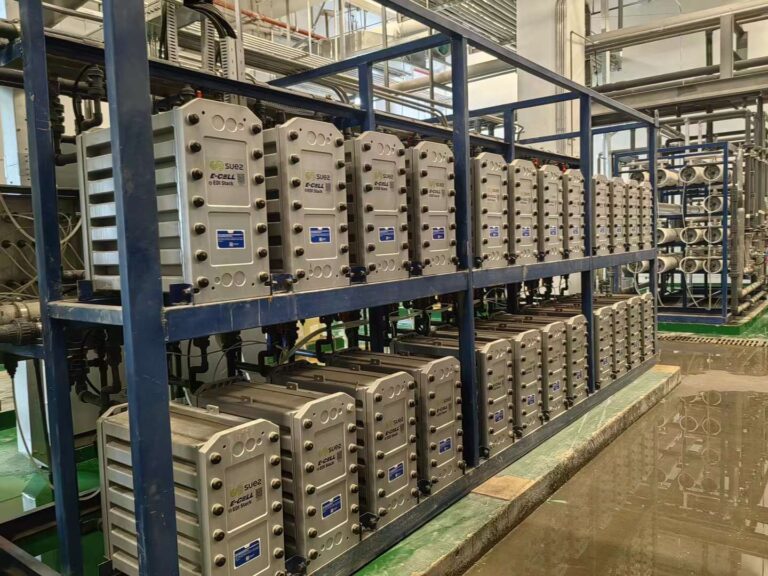
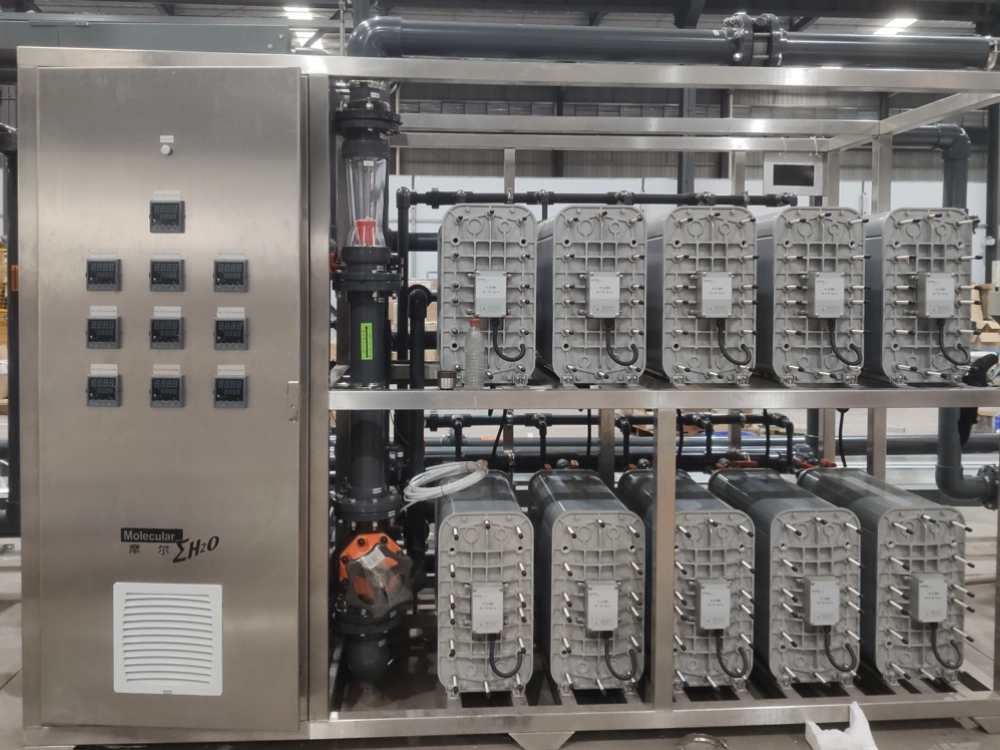
Electrodeionization (EDI): A chemical-free, continuous process that polishes RO permeate by removing residual ions, often used in “make-up” or primary loop systems.
2. Polishing & Final Purification
This stage achieves the final, extreme purity levels required at the point-of-use.
-
Ion Exchange (IX) Polishers: Mixed-bed or separate-bed polishers provide the final ion exchange capacity to reach 18.2 MΩ·cm.
-
Ultrafiltration (UF) & UV Technologies: A final UF membrane barrier removes particles and microbes, while UV light at 185nm (for TOC reduction) and 254nm (for sterilization) is critical for controlling organics and bacteria.
3. Distribution & Recirculation: The Critical “Last Mile”
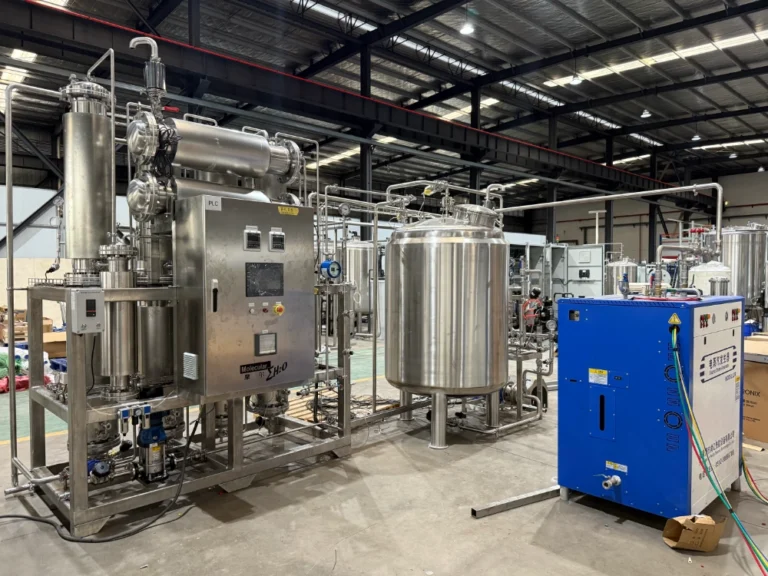
A sanitizable, continuously circulating 316L stainless steel loop is essential. It maintains water quality by preventing stagnation and microbial regrowth, ensuring specification-compliant water is delivered instantly to every point of use.
5 Critical Factors for Selecting Your UPW System Partner
Choosing a vendor is a strategic decision. Look beyond the initial quote and evaluate:
-
Proven Technology & Innovation: Do they offer proprietary, high-efficiency technologies like advanced RO or enhanced EDI modules that maximize water recovery and minimize waste? Are they investing in next-generation solutions, like those integrating AI for system optimization?
-
Industry-Specific Expertise: Experience in your sector is non-negotiable. A partner who understands the unique needs of a semiconductor fab will differ from one serving a biotech lab.
-
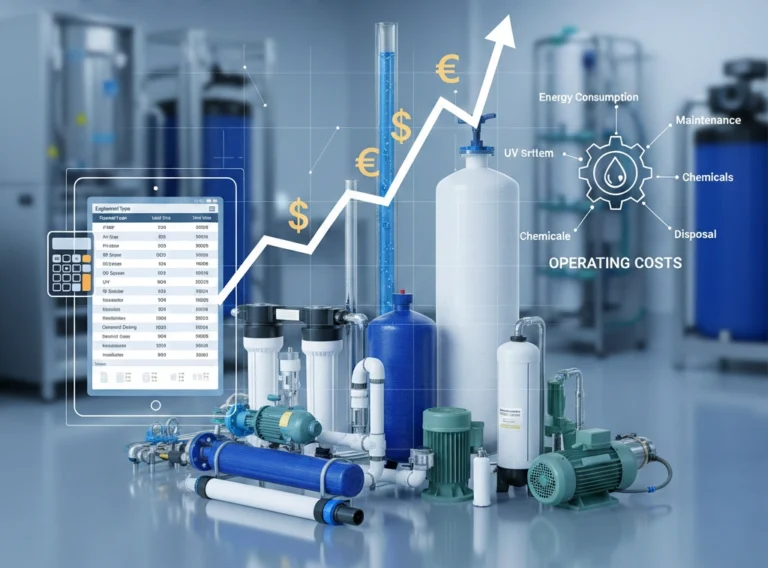
Total Cost of Ownership (TCO): Evaluate energy consumption, chemical use, waste stream volume, and expected membrane/pack life. A system with a higher recovery rate can save millions in water and wastewater costs over its lifespan.
-
Validation & Documentation Support: The partner must provide comprehensive IQ/OQ/PQ protocols, SOPs, and ongoing support to ensure regulatory compliance (e.g., cGMP, SEMI standards).
-
Service & Global Support: Ensure they have the technical service network and spare parts logistics to support your operation 24/7, minimizing downtime risk.
Expert Insight: The trend is toward smarter, more integrated systems. The future of UPW lies in digital ecosystems that use IoT sensors and AI to predict maintenance needs, optimize chemical dosing, and ensure real-time compliance—transforming UPW from a utility into a data-driven, strategic asset.
 FAQs: Ultrapure Water Questions Answered
Q: What’s the difference between UPW and Deionized (DI) Water?
A: DI water has had ions removed, achieving high resistivity. UPW takes this much further, also rigorously controlling TOC, particles, bacteria, and silica to parts-per-billion or trillion levels. All UPW is DI, but not all DI water is ultrapure.
Q: Can we use our existing RO system to produce UPW?
A: A standard industrial RO is an excellent starting point as a pretreatment step. However, producing true UPW requires additional, specialized polishing and distribution technologies (like EDI, IX polishers, and UF) after the RO stage.
Q: How do I justify the investment in a new UPW system?
A: Frame it as a risk mitigation and yield assurance strategy. Calculate the cost of a single contamination-related production shutdown or product batch loss versus the investment in a reliable system. Factor in savings from reduced water/energy use and lower maintenance with a modern, efficient design.
The Molewater Advantage: Engineering Purity, Ensuring Yield
At Molewater System, we are more than a equipment supplier; we are your partner in securing flawless production. Our approach combines:
-
Custom-Engineered Solutions: We design UPW systems tailored to your specific feed water, volume requirements, and application purity standards.
-
Focus on Operational Excellence: Our systems are engineered for high recovery rates, low energy consumption, and operational simplicity to minimize your lifetime costs.
-
End-to-End Partnership: From initial pilot testing and system design to commissioning, validation, and lifelong service support, we ensure your UPW system performs reliably, day after day.
Is Your Current UPW System a Hidden Risk to Your Production?
-
Are you struggling with inconsistent resistivity or TOC spikes?
-
Is your water recovery rate too low, driving up operational costs?
-
Are you facing a capacity expansion or a new, more stringent production requirement?
Take the First Step Towards Uncompromising Water Quality.
Schedule a complimentary consultation with our UPW experts for a preliminary assessment of your system’s performance and risks.