
La base de la qualité pharmaceutique
Eau purifiée de qualité pharmaceutique n'est pas simplement de l'eau hautement filtrée ; il s'agit d'une matière première essentielle qui fait l'objet d'un traitement rigoureux et validé et d'un contrôle constant afin de répondre aux normes exceptionnellement élevées fixées par les pharmacopées mondiales, telles que l'USP (pharmacopée américaine), l'EP (pharmacopée européenne) et la JP (pharmacopée japonaise).
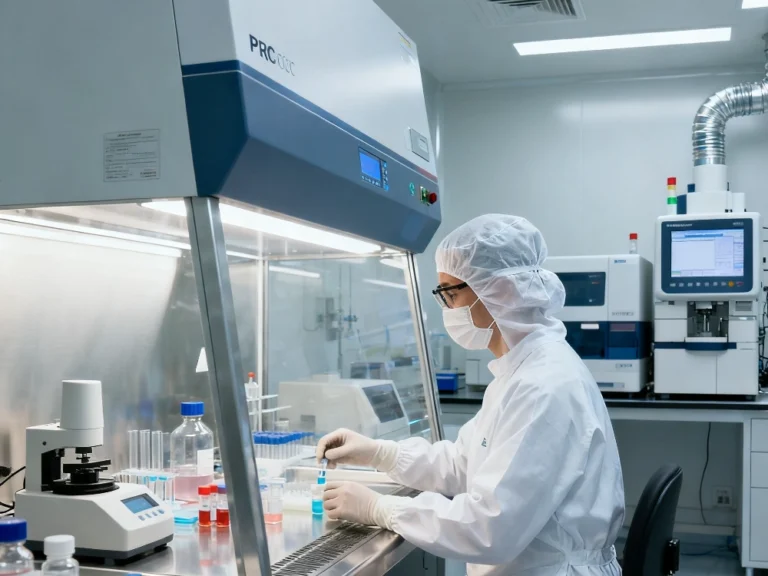
La nécessité de cette pureté extrême est évidente : l'eau est le principal solvant et ingrédient brut utilisé dans la fabrication des médicaments. Sa qualité élevée garantit la stabilité, l'efficacité et, surtout, la sécurité du produit final, en empêchant toute interférence chimique ou microbienne au niveau moléculaire. Ce niveau d'investissement et de surveillance fait du système d'approvisionnement en eau l'actif le plus intensément audité de toute installation de fabrication. Ce guide définit les exigences réglementaires exactes pour eau purifiée de qualité pharmaceutique, Il est également possible de distinguer les qualités critiques et de détailler les technologies de pointe nécessaires à une production fiable.
L'eau pharmaceutique : La hiérarchie des normes réglementaires
Les exigences en matière de qualité de l'eau sont rigoureusement classées en fonction de la voie d'administration prévue du médicament. Il est essentiel de comprendre ces classifications pour maintenir la qualité de l'eau. Normes USP la conformité.
Eau purifiée (EP) : La norme non injectable
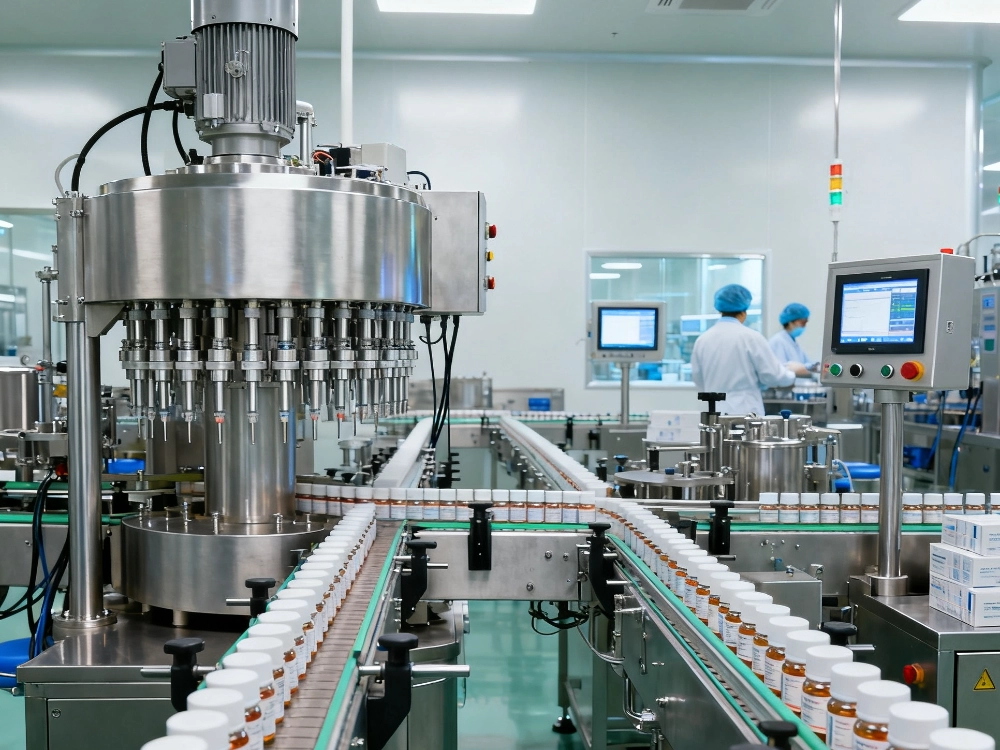
Eau purifiée (PW) est la qualité requise pour la fabrication de médicaments non parentéraux, y compris les comprimés, les gélules, les liquides oraux et les crèmes topiques, et est également utilisée pour le nettoyage des équipements n'entrant pas en contact avec les produits. Le PW doit respecter des limites chimiques strictes en matière de conductivité, de pH et d'humidité. Carbone organique total (COT), L'eau stérile, dont la pureté intrinsèque est garantie, n'entraîne pas de réactions chimiques indésirables ni d'instabilité dans le produit final. Cette eau fiable et de faible pureté est essentielle pour obtenir la qualité uniforme exigée pour chaque lot de médicaments non stériles.
Eau pour injection (WFI) : La qualité critique
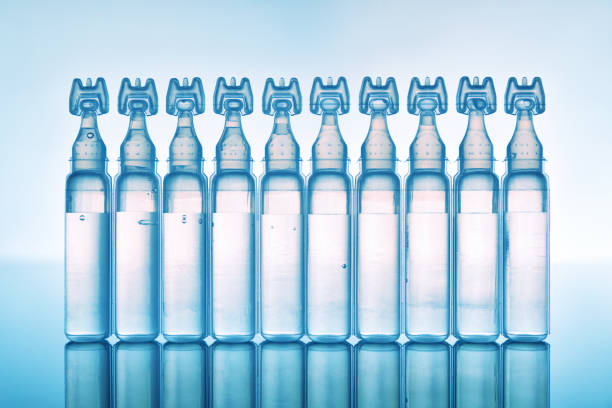
Eau pour injection (WFI) doit satisfaire à toutes les exigences de la PW, mais avec une amélioration essentielle : elle doit atteindre un niveau de qualité de service de Limite exceptionnellement stricte pour les endotoxines bactériennes (pyrogènes). Ce contrôle microbien suprême est obligatoire car le WFI est utilisé pour toutes les préparations injectables, les solutions intraveineuses (IV) et les produits biologiques qui entrent directement en contact avec la circulation sanguine. Le faible niveau d'endotoxines est une exigence absolue pour éviter une réaction fébrile potentiellement fatale lors de l'administration. L'assurance qualité WFI représente le mandat de sécurité le plus élevé pour les médicaments parentéraux au niveau mondial.
| Indicateur | Eau purifiée (PW) | Eau pour injection (WFI) |
| Endotoxines | Pas d'exigence spécifique | ≤0,25 EU/ml |
| Application | Comprimés, liquides oraux | Fluides intraveineux, injections |
Production avancée d'eau purifiée à usage pharmaceutique
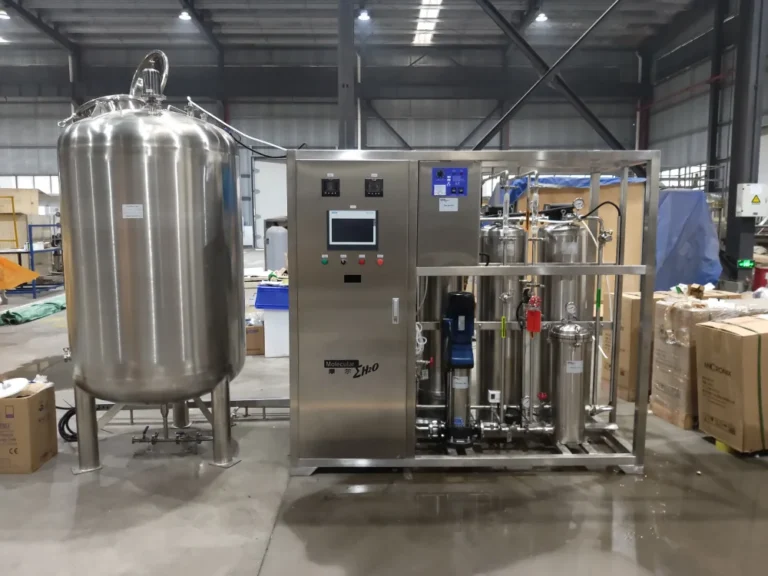
Une fiabilité production d'eau de qualité pharmaceutique est un processus de protection barrière en plusieurs étapes, méticuleusement conçu pour éliminer systématiquement les impuretés et garantir que l'eau est toujours conforme aux spécifications du WFI ou du PW.
Prétraitement et purification du noyau
L'étape initiale, le prétraitement, est une étape fondamentale qui protège les composants délicats de l'épuration en éliminant les grosses particules, le chlore (via la filtration au charbon) et les minéraux de dureté (via les adoucisseurs).
Les Purification du noyau se concentre ensuite sur l'élimination des ions et des impuretés non volatiles :
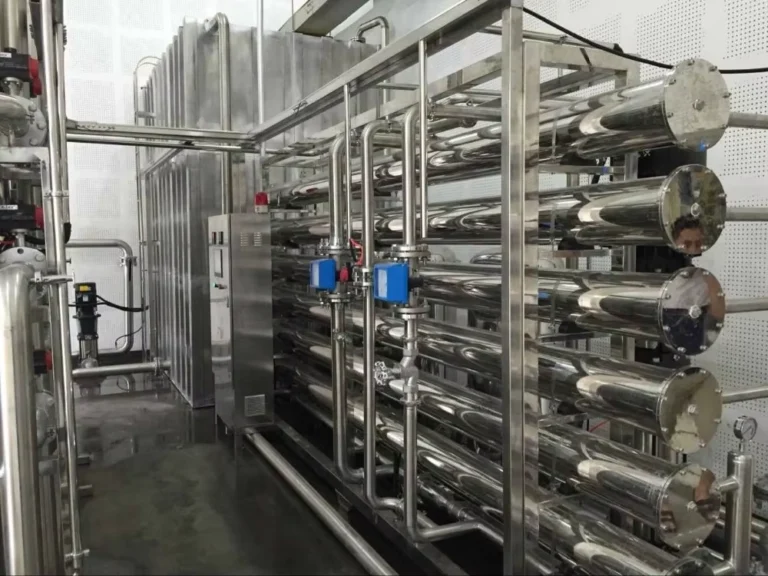
Osmose inverse à double passage (RO) : En utilisant deux étapes séquentielles de membranes, cette méthode permet de rejeter plus de 99% de contaminants ioniques et organiques, tout en réduisant considérablement la conductivité de l'eau. Cette méthode est reconnue comme étant la plus rentable et la plus acceptée pour la purification primaire de grands volumes.
Électrodéionisation (EDI) : Placé après l'unité d'osmose inverse, l'EDI élimine en continu les dernières traces d'ions grâce à l'électricité et à des résines spécialisées. L'EDI est la technologie préférée des eau purifiée pharmaceutique car il fonctionne sans régénération chimique discontinue, ce qui garantit une production régulière et fiable.
Polissage et contrôle des endotoxines
Pour les applications de qualité supérieure, l'eau subit une stérilisation finale et un polissage :
Assainissement par UV: Une lumière UV à double longueur d'onde est utilisée : la longueur d'onde de 185nm décompose et réduit l'effet de la lumière UV. Carbone organique total (COT), La longueur d'onde de 254 nm agit comme un puissant tueur microbien non chimique.
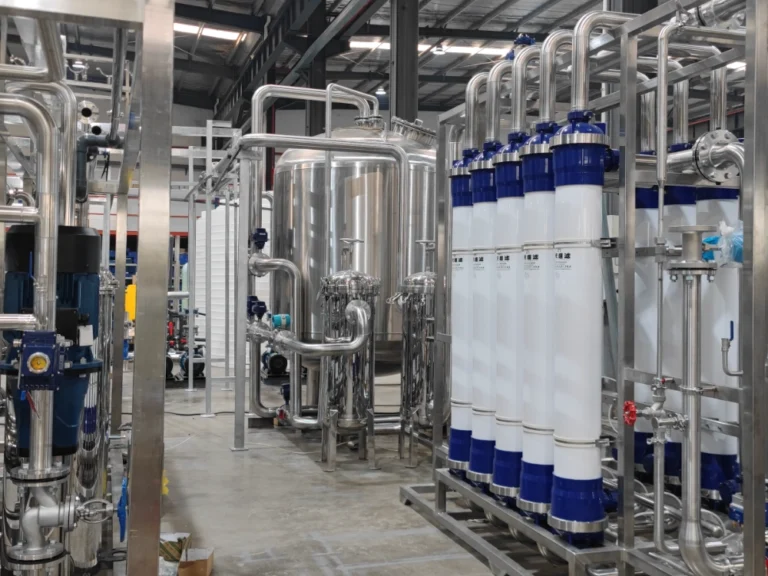
Ultrafiltration (UF) : Ce système utilise des membranes spécialisées dotées de pores de taille nanométrique pour bloquer physiquement les grosses molécules et, de manière cruciale, la quasi-totalité des molécules d'origine humaine. Endotoxines bactériennes. Cette capacité a fait de l'UF une méthode largement acceptée et validée pour la préparation de WFI, souvent utilisée en conjonction ou en remplacement de la méthode thermique. distillation des méthodes.
Contrôle continu de la qualité dans les systèmes d'eau pharmaceutique
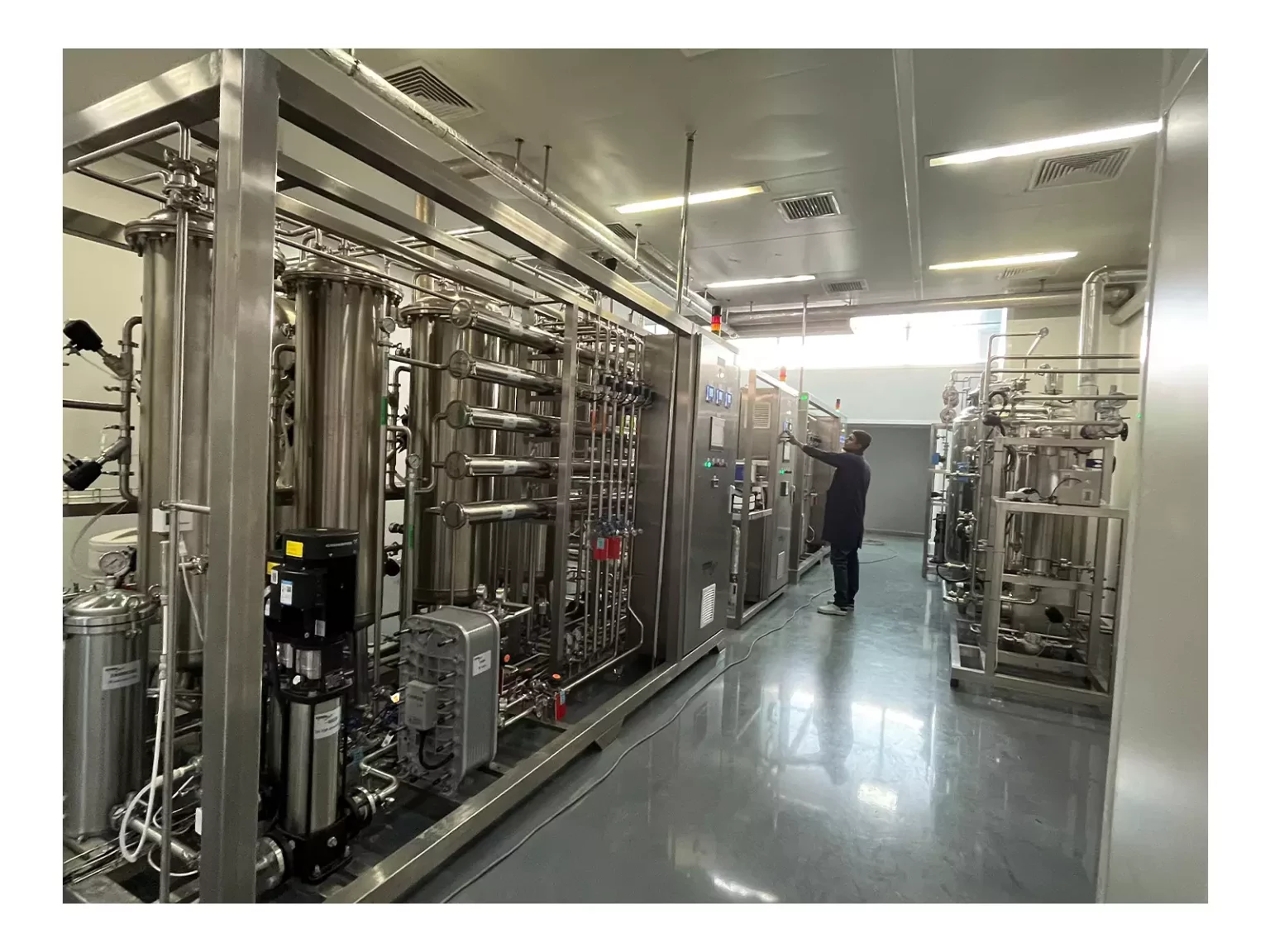
La mise en conformité est un effort continu. Contrôle de la qualité de l'eau pharmaceutique exige que le système ne produise pas seulement de l'eau pure, mais qu'il maintienne activement cette pureté jusqu'au point d'utilisation.
Intégrité et conception des boucles de distribution
Le réseau de distribution doit être construit à partir acier inoxydable 316L de haute pureté avec des soudures lisses et électropolies. Ce matériau non réactif minimise le lessivage chimique et inhibe l'adhésion microbienne. La conception incorpore recirculation continue et minimise les “jambes mortes” - les sections stagnantes de la conduite - car ce sont des endroits privilégiés pour les colonies microbiennes et les bactéries. biofilm peuvent s'établir rapidement.
Stratégies de gestion des biofilms
Prévenir biofilm est la pierre angulaire de la conformité réglementaire. Les établissements utilisent des stratégies d'assainissement proactives :
Snitization à chaud : Les systèmes WFI reposent souvent sur la circulation d'eau à des températures supérieures à 80℃ pour tuer thermiquement les microbes dans l'ensemble de la boucle et empêcher leur formation.
Assainissement à froid : Les systèmes PW utilisent généralement des moyens chimiques, tels que l'ozone, ou une exposition continue aux UV pour supprimer la croissance microbienne sans la consommation d'énergie élevée associée au chauffage de l'ensemble de la boucle.
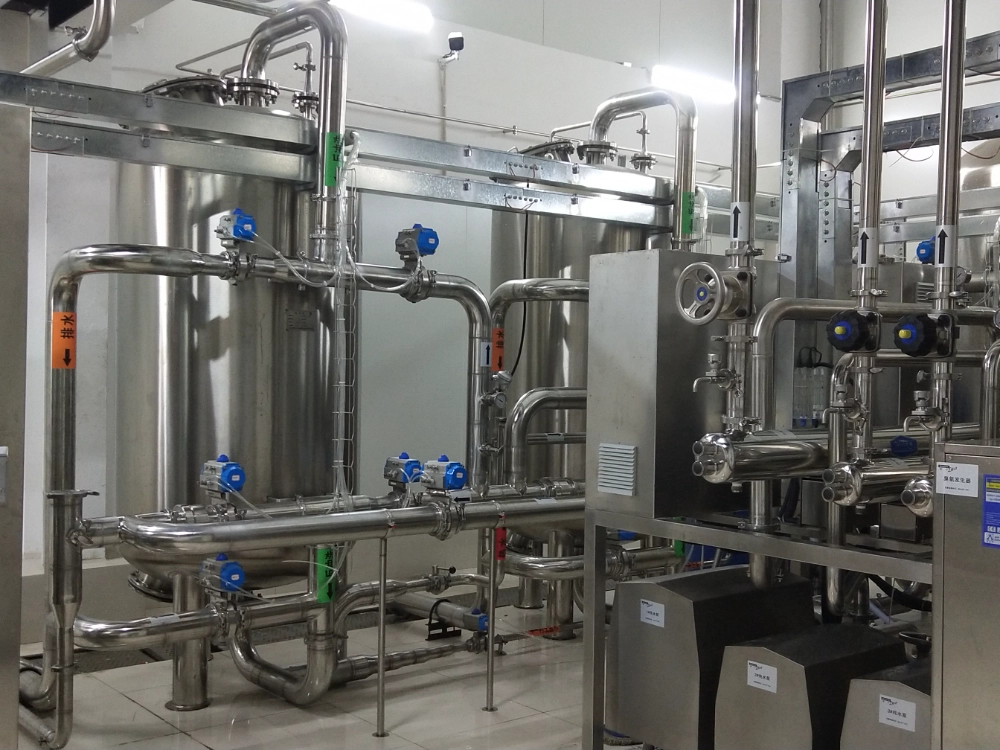
Surveillance en ligne obligatoire
Maintien BPF (bonnes pratiques de fabrication) La conformité dépend des données en temps réel. En continu conductivité en ligne et Carbone organique total (COT) sont placés stratégiquement dans tout le système. Ce flux constant de données permet aux opérateurs de détecter immédiatement les pannes d'équipement ou les tendances négatives avant que la qualité de l'eau ne s'écarte des spécifications, ce qui garantit une intervention rapide et évite l'échec catastrophique de lots de production entiers.
La qualité est le mandat pharmaceutique
La réalisation de Eau purifiée de qualité pharmaceutique est un engagement fondamental en faveur de l'excellence de la fabrication. Il s'agit d'une entreprise complexe qui nécessite une technologie validée (OI, EDI, UV, UF), une adhésion stricte à des normes de qualité et de sécurité. Normes USP, et un contrôle sophistiqué et vigilant du système de distribution. Cet investissement considérable dans la pureté est la garantie directe et non négociable de la qualité, de la stabilité et, en fin de compte, de la sécurité du patient.
Vous êtes prêt à vous assurer que vos installations de BPF répondent aux normes WFI/PW ? Contactez dès aujourd'hui notre équipe d'experts en ingénierie pour obtenir une consultation professionnelle sur la conception et la validation de votre système de traitement des eaux usées de haute pureté. système d'eau pharmaceutique.