The modern technological world—from the microprocessors in your phone to the precision medicines that save lives—relies on a fluid so pure it is often referred to as the “lifeblood” of high-tech industries: Ultrapure water (UPW). But what exactly is this substance, and why is its purity so crucial?
Ultrapure water is essentially purified to a standard that renders it almost entirely free of organic materials, inorganic ions, dissolved gases, non-ionic solids, and suspended particles. Understanding its definition and standards is the first step in appreciating its necessity.
Defining Ultrapure Water: Beyond Distilled Water
When discussing water quality, we must distinguish UPW from common terms like distilled water or deionized (DI) water. While distilled water removes most minerals, it still contains dissolved gases and trace organics. DI water removes almost all ions but may leave behind neutral particles or Total Organic Carbon (TOC).
Ultrapure water is the pinnacle of purification, requiring the removal of contaminants across every measurable category.
Critical Metrics for UPW Standardization
The qualification of ultrapure water is defined by extremely tight specifications, monitored continuously:
- Resistivity : The most common standard is 18.2 MΩ⋅cm at 25∘C. This value indicates that the water has the minimum possible concentration of conductive ions (i.e., the highest purity). Any deviation below this figure signifies the presence of ionic impurities.
- Total Organic Carbon (TOC): TOC measures the amount of carbon derived from organic compounds, which can interfere with sensitive processes like lithography in chip manufacturing. For modern microelectronics, TOC must typically be reduced to below 5 ppb (parts per billion), and often as low as 1 ppb.
- Particulate Matter: Contaminants must be filtered down to sub-micron levels, often below 0.02μm, to prevent physical defects on semiconductor wafers.
The Rigorous Multi-Stage Purification Process
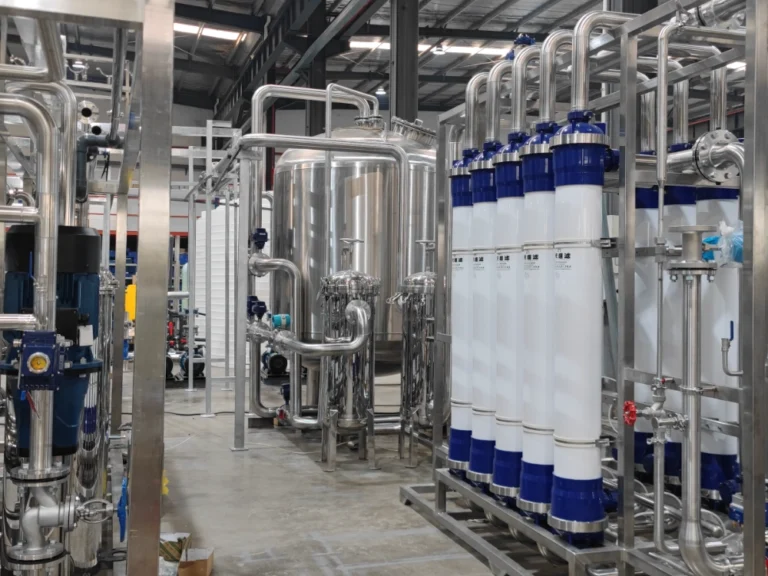
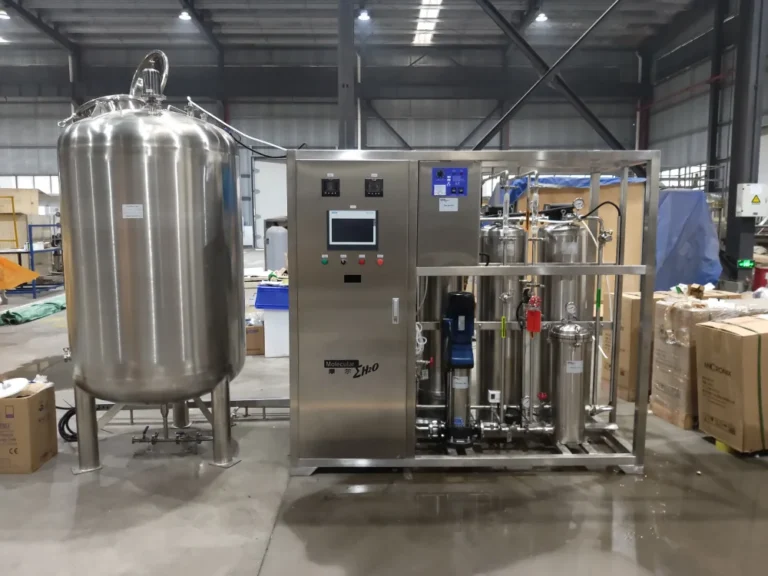
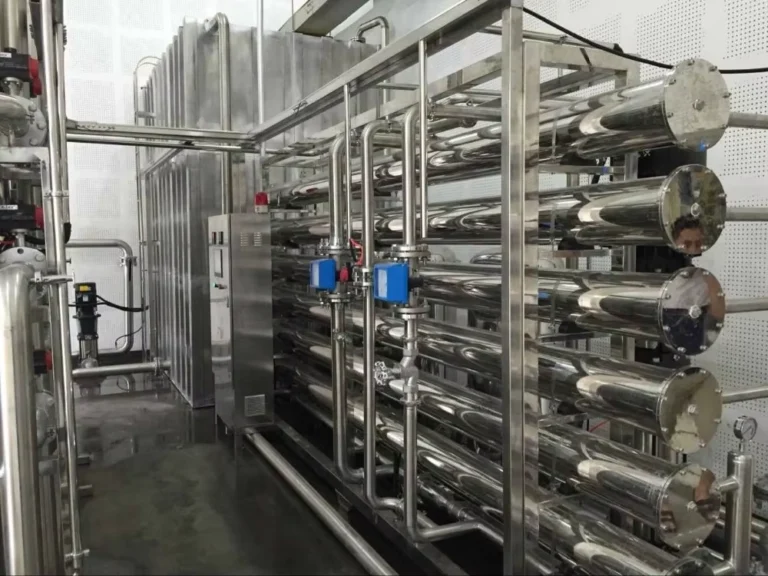
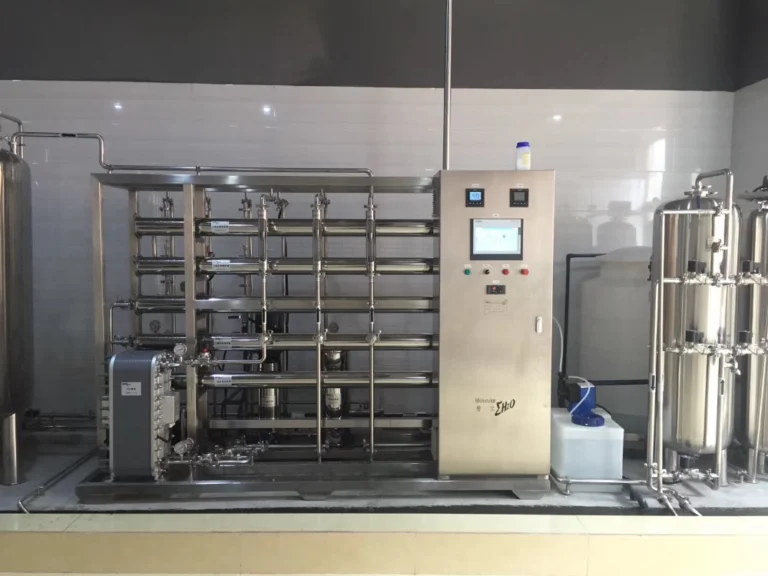
Achieving and maintaining the specifications of ultrapure water requires a highly sophisticated and multi-stage treatment train. No single technology can meet the requirements; instead, multiple processes work in synergy
- Pre-treatment: This stage typically uses sand filtration, activated carbon, and water softening to remove bulk suspended solids and chlorine, protecting the downstream membranes.
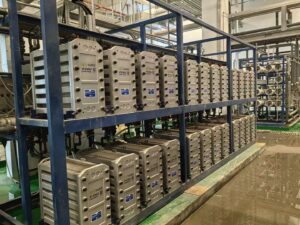
- Primary Purification: The core of purification begins here, usually involving Reverse Osmosis (RO) to reject 99% of dissolved solids, followed by Electrodeionization (EDI) for continuous deionization without the chemical regenerant needed for traditional ion exchange.
- Polishing: This final stage targets remaining trace contaminants. It involves specialized mixed-bed Ion Exchange (IX) vessels to “polish” the resistivity up to 18.2MΩ⋅cm, and powerful UV sterilization/oxidation units to break down residual organic compounds, thus reducing TOC.
- Final Filtration: Absolute-rated membrane filters 0.22μm are used at the point of use to ensure zero particulate contamination before the water touches the product.
Where is Ultrapure Water Indispensable?- Industry Applications
The demand for ultrapure water stems directly from the extreme sensitivity of modern manufacturing processes:
Semiconductor Manufacturing: UPW is the single largest chemical used in a fabrication plant (fab). It is critical for washing silicon wafers between processing steps. A single undetected particle or ion could render a multi-million-dollar chip batch useless, making 18.2 MΩ⋅cm water quality non-negotiable.
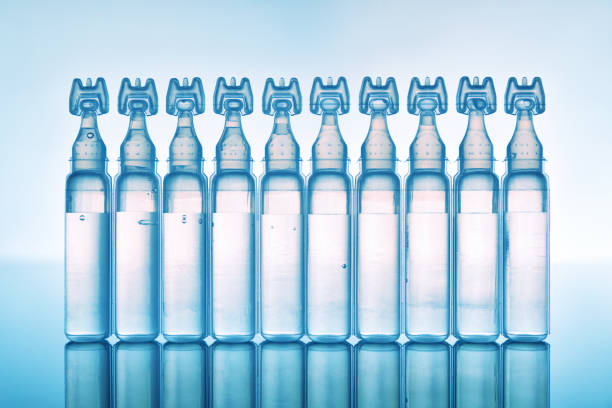
Pharmaceutical & Biotechnology: While not always called UPW, the required standards for Water for Injection (WFI) are very similar, demanding extremely low endotoxin, microbial, and TOC levels to ensure product safety and regulatory compliance.
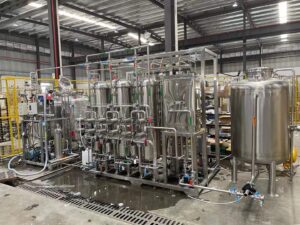
Power Generation: High-pressure steam boilers in power plants require UPW quality boiler feedwater to prevent scale build-up and corrosion on turbines and heat exchange surfaces, ensuring maximum operational efficiency and safety.
Conclusion
Ultrapure water is far more than just “clean” water; it is a meticulously engineered medium essential for pushing the boundaries of technology. Its production is a complex engineering feat that underpins the reliability and quality of semiconductors, pharmaceuticals, and power generation globally.