
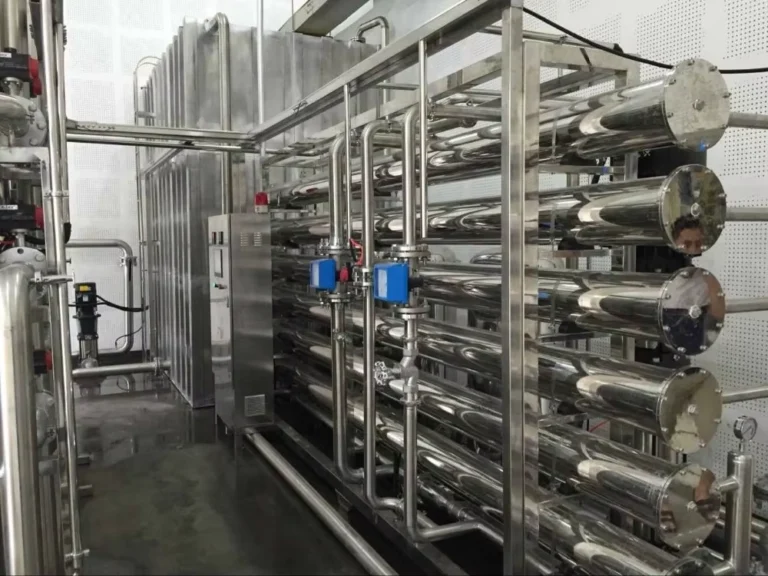
In the landscape of modern industrial and commercial production, water is far more than a simple utility; it is a fundamental raw material whose quality can dictate the success or failure of an entire operation. For decision-makers in the food and beverage, pharmaceutical, and manufacturing sectors, the debate between Distilled Water vs. RO Water is not merely academic—it is a critical choice that impacts long-term operational costs, equipment longevity, and product safety.
While both technologies aim to produce “pure” water, they operate on entirely different physical principles. One uses thermal energy to simulate the Earth’s natural hydrologic cycle, while the other leverages advanced membrane science and mechanical pressure. This comprehensive guide will dissect these two dominant purification methods to help you choose the ideal system for your specific facility requirements.
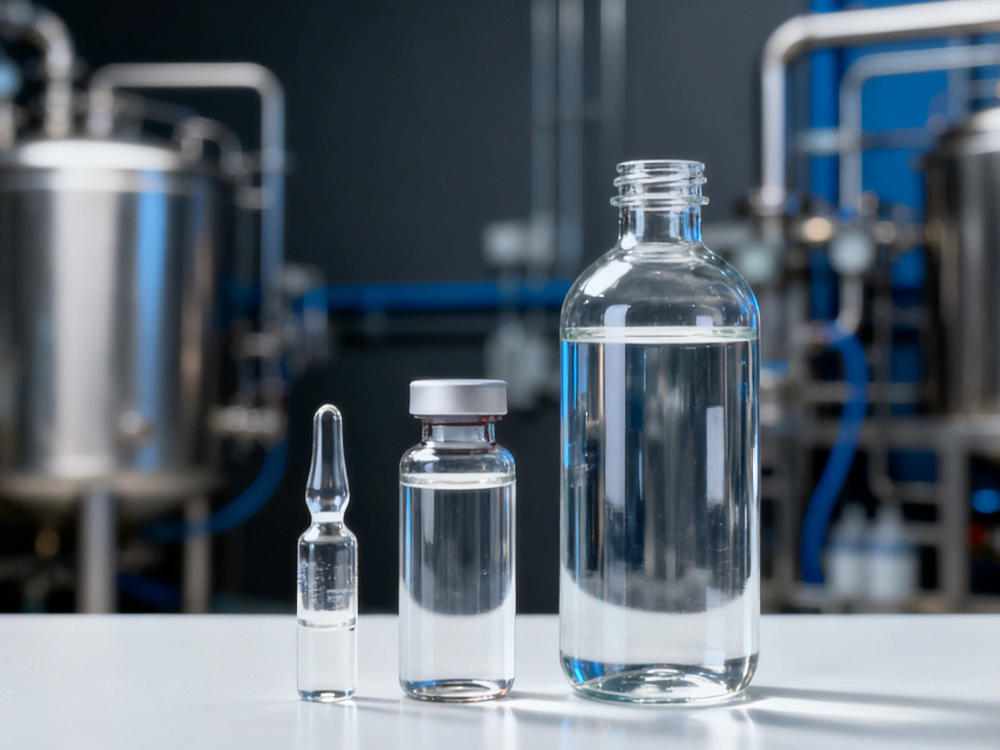
What Is RO Water?
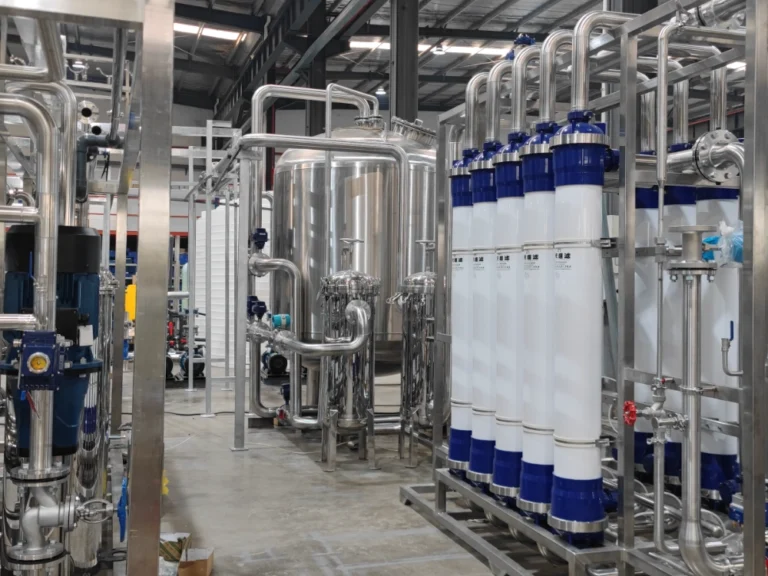
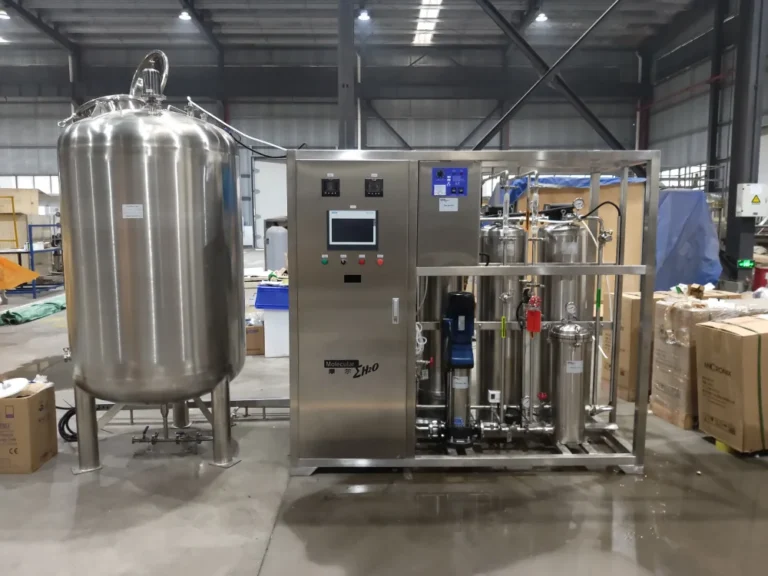
RO Water is created by forcing pressurized water through a semi-permeable membrane. This membrane acts as a molecular sieve, allowing water molecules through while rejecting up to 99% of dissolved solids and contaminants.
Advantages of Reverse Osmosis Water
- Unmatched Energy Efficiency: RO systems operate using mechanical pumps. Compared to the energy required to boil water, RO is vastly more sustainable and cost-effective for medium-to-large-scale operations.
-
High Volume & Continuous Flow: Modern RO units are designed for high throughput. They provide a continuous stream of purified water, making them the industry standard for bottling plants and food processing facilities.
-
Customizable Purity: RO systems are modular. By adding post-treatment stages like EDI (Electro-Deionization), facilities can achieve ultrapure water quality that rivals or exceeds distillation.
Disadvantages of RO Water
-
Brine/Reject Water: RO systems produce a concentrated waste stream (brine) that must be managed. While high-recovery systems can minimize this, they do not achieve 100% water utilization.
-
Membrane Sensitivity: The delicate membranes can be damaged by chlorine or high sediment loads. This necessitates a robust pre-filtration “train” (sediment filters, carbon blocks, and softeners) to ensure long-term performance.
Cost of RO Water
Low Energy Costs: Primarily involves the cost of running a high-pressure pump.
Maintenance Costs: Involves the periodic replacement of pre-filters and the RO membrane itself.
Applications of RO Water
Food & Beverage: Used as a consistent “blank canvas” for bottled water, sodas, and brewing.
Industrial Boiler Feed: Prevents scale and corrosion in high-pressure steam systems.
Commercial Drinking Water: The standard for high-quality ingredient water in restaurants and offices.
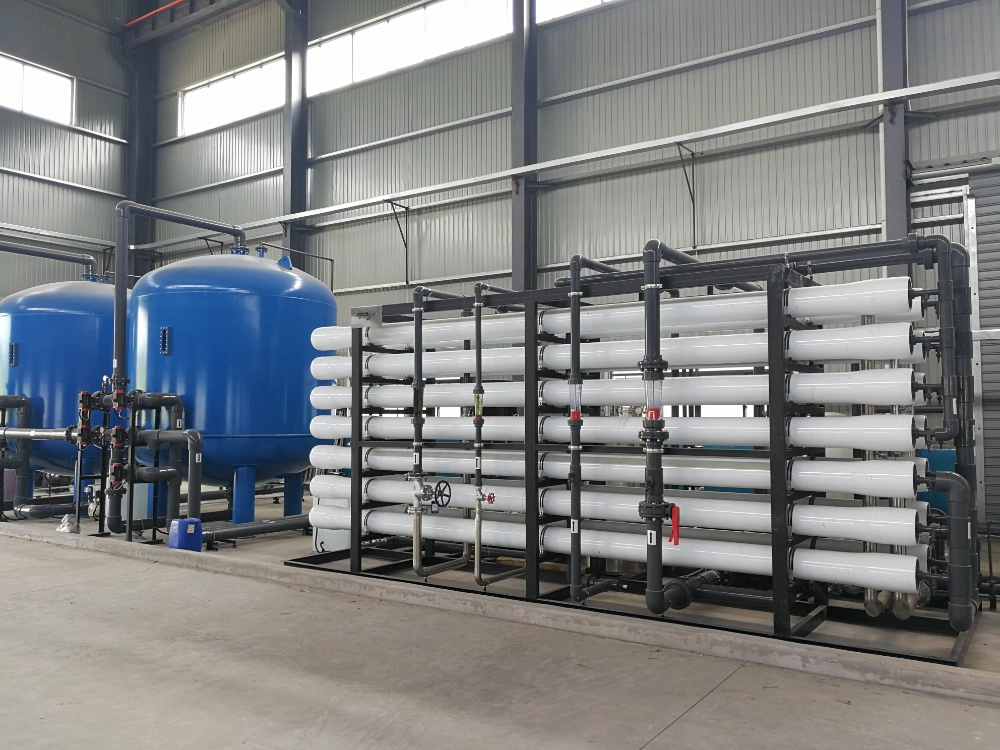
What Is Distilled Water?
Distilled water is produced through a thermal process that mimics the natural hydrologic cycle. By boiling water into steam and then condensing that steam back into a liquid in a clean container, virtually all non-volatile contaminants are left behind.
Advantages of Distilled Water
-
Near-Absolute Purity: Distillation is exceptionally effective at removing non-volatile contaminants. Because the minerals and salts do not evaporate with the water, the resulting effluent often achieves a TDS (Total Dissolved Solids) level of near zero.
-
Guaranteed Biological Sterility: The boiling process serves as a powerful thermal barrier. It effectively kills pathogens, including bacteria, viruses, and cysts, ensuring the water is microbiologically safe for sensitive applications.
-
Process Reliability: Unlike filters that can bypass particles if a tear occurs, distillation is a phase-change process that provides a high level of consistency in water chemistry.
Disadvantages of Distilled Water
-
Time-Intensive Production: Distillation is inherently slow. Because it depends on the physical rate of evaporation and condensation, it cannot provide the high-flow, on-demand volumes required by large industrial production lines.
-
High Maintenance Demands: As water evaporates, the minerals left behind form a hard scale on the heating elements and boiling chambers. This requires frequent chemical descaling and manual cleaning to prevent system failure.
Cost of Distilled Water
High Energy Consumption: It requires significant electrical or thermal energy to boil every gallon of water produced.
Operational Expense (OpEx): Generally has a much higher cost-per-gallon than filtration methods due to energy intensity.
Applications of Distilled Water
Laboratory Research: Used for analytical chemistry and sensitive experiments.
Medical Facilities: Essential for sterilization equipment and specialized medical devices like CPAP machines.
Lead-Acid Batteries: Prevents mineral buildup on battery plates to extend lifespan.
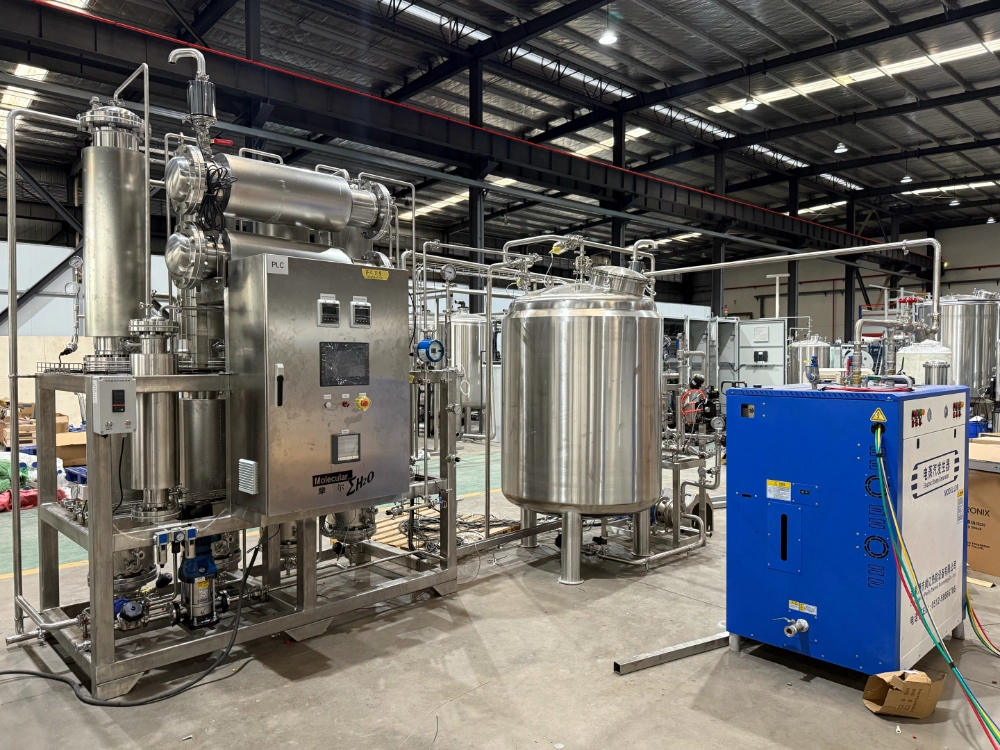
Distilled Water vs. Reverse Osmosis Water
| Feature | Distilled Water | RO Water |
| Purification Method | Thermal (Boiling/Condensing) | Mechanical (Membrane Pressure) |
| Purity Level (TDS) | < 2 ppm (Near Total) | 5–15 ppm (High Purity) |
| Energy Usage | Very High | Low |
| Speed/Volume | Low/Slow | High/Continuous |
| Maintenance | Tank Descaling | Filter/Membrane Replacement |
Which Solution Fits Your Needs?
In the RO Water vs. Distilled Water comparison, the right choice depends on your volume requirements and budget. Distilled Water is best suited for small-scale, ultra-high purity needs like laboratories and medical sterilization. RO Water is the superior choice for industrial, commercial, and beverage applications where high-volume production and low energy costs are paramount.
Get a Professional Water Quality Consultation
Are you ready to optimize your facility’s water treatment? Contact our engineering team today for a custom water analysis and a tailored system quote to ensure your operations are running at peak efficiency.