

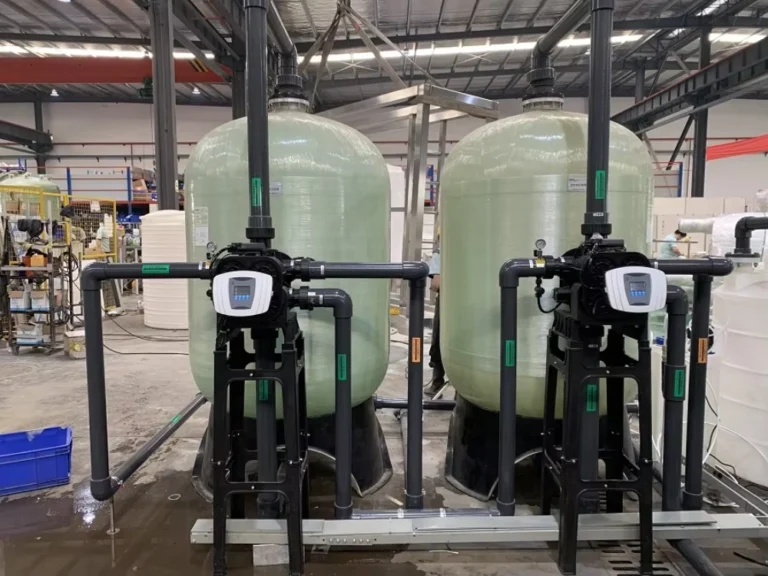
The Engineering Architecture of an Industrial Media Filter
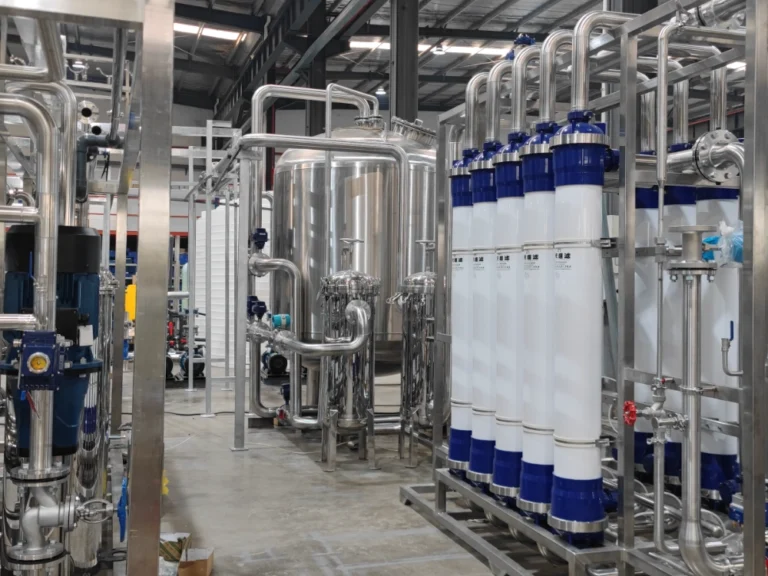
An Industrial Media Filter is a pressure-vessel-based system designed to remove suspended solids, turbidity, and specific impurities through a “Depth Filtration” process. Unlike a simple screen that traps particles on its surface, a media filter uses a deep bed of granular materials to capture contaminants throughout the entire column.
Multi-Layer Depth Loading: Advanced Multi-media Filters utilize layers of varying densities and sizes—typically Anthracite, Silica Sand, and Garnet. This allows larger particles to be trapped at the top while finer sediments are captured in the deeper, more compact layers.
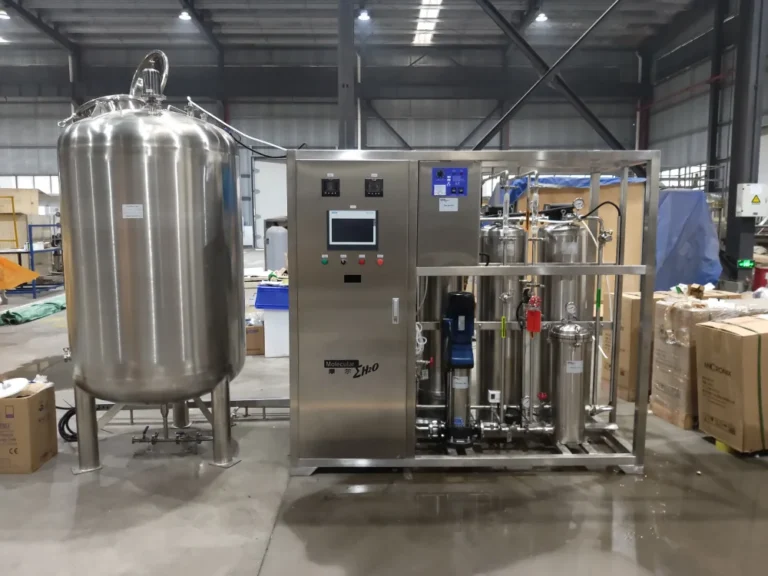
Automated Control Arrays: Modern systems feature PLC-controlled valve nests that manage the Mechanical Filter Backwash cycles automatically, triggered either by pressure differential or pre-set time intervals.
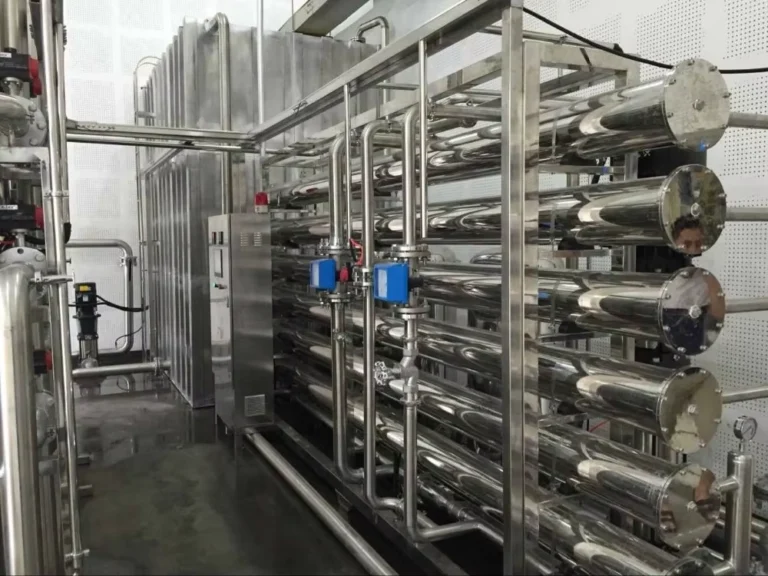
Sanitary Construction Standards: For high-purity industries, vessels are often fabricated from 316L Stainless Steel or high-strength FRP, featuring internal food-grade linings that comply with FDA and FSSC 22000 requirements.
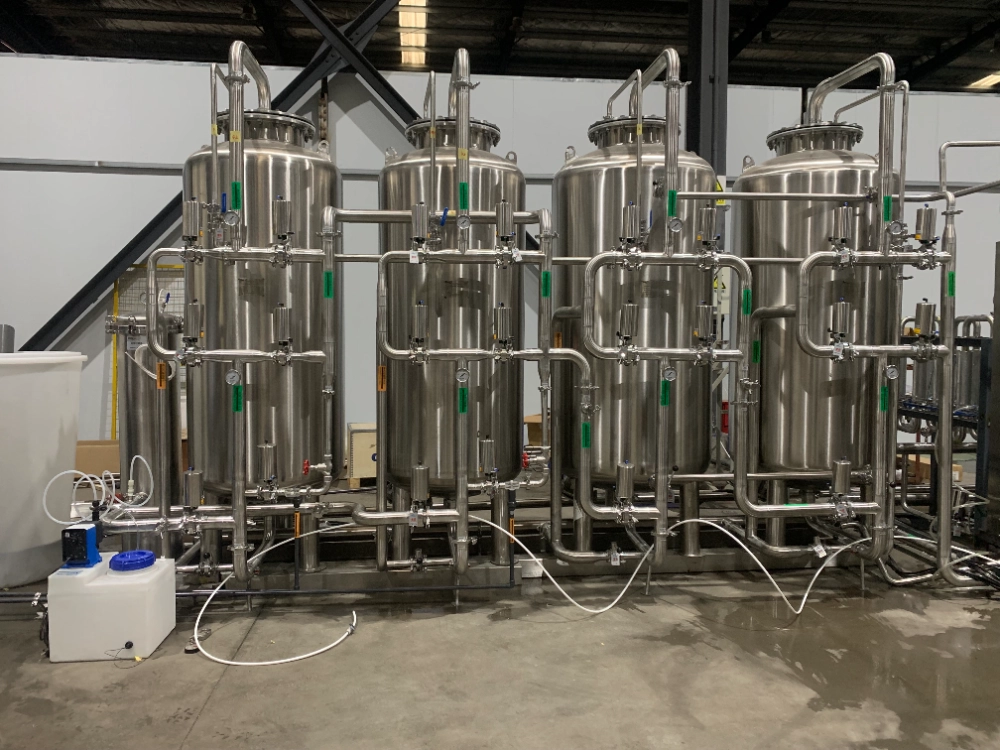
Why Multi-Media Filter Technology Outperforms Standard Alternatives
Choosing a high-specification Multimedia Filter over a basic sand filter or disposable cartridge system offers significant operational superiority.
Enhanced Solids Loading Capacity: Because the entire depth of the bed is utilized, a Mechanical filter can handle much higher Total Suspended Solids (TSS) without clogging, leading to longer run times between cleaning cycles.
Higher Filtration Flux: These systems can operate at higher service flow rates—typically between 10–15 m/h (4–6 gpm/ft²)—while maintaining superior effluent clarity compared to single-media filters.
Superior Membrane Protection: By consistently reducing the Silt Density Index (SDI), a well-configured Mechanical filter serves as the ultimate “shield” for downstream Reverse Osmosis (RO) membranes, preventing premature scaling and biofouling.
How Proper Media Filter Selection Maximizes Your ROI
The true value of an Industrial Mechanical filter is measured by the protection it offers your process and the money it saves your facility over time.
Extended Equipment Lifespan: Proper Media Filter selection can increase the lifespan of expensive RO membranes by 25%–40%, drastically reducing capital replacement costs and system downtime.
Lower Total Cost of Ownership (TCO): Efficient physical filtration reduces the demand for expensive chemical coagulants and flocculants. Furthermore, optimized backwash sequences minimize water waste, directly lowering utility bills.
Brand Reputation & Safety: In the Food & Beverage sector, removing turbidity and off-flavors ensures that your final product tastes exactly as intended, protecting your brand from the risks of product recalls or consumer dissatisfaction.
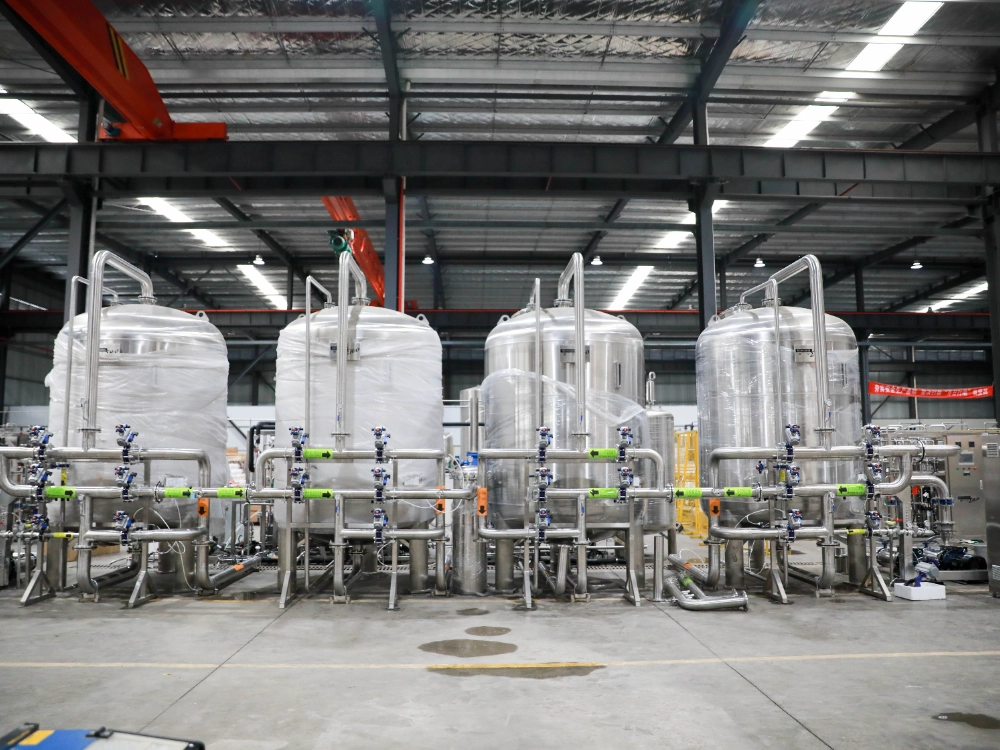
Quantifiable Proof of Media Filter Performance in the Field
We don’t just promise results; we deliver them through data-backed engineering. Our Mechanical filter designs are proven in the most demanding industrial environments.
Turbidity Reduction: Capable of reducing raw water turbidity from >20 NTU to <0.1 NTU consistently.
TSS Removal Efficiency: Our high-performance Multimedia Filters effectively remove suspended solids down to the 5–10 micron range.
Case Study Insight: A major beverage bottling plant recently replaced their aging sand filters with our automated Multi-Media Filter arrays. The result was a 30% decrease in RO membrane cleaning frequency and a documented 15% reduction in overall energy consumption for the pre-treatment skid.
A Step-by-Step Logic for Effective Media Filter Selection
To ensure you choose the ideal Mechanical filter for your specific application, follow this professional 4-step selection framework:
Step 1: Feed Water Characterization
Analyze your raw water for TSS, Turbidity, and Particle Size Distribution. If your water contains high organic content or chlorine, an Activated Carbon Media Filter should be integrated into your treatment train.
Step 2: Determine Required Service Flow (Flux)
For high-purity applications like brewing or dairy production, we recommend a conservative flux of leq 10 m/h. For general utility or cooling tower makeup, a flux of 12–15 m/h is often sufficient to balance performance and footprint.
Step 3: Calculate Backwash Requirements
A filter is only as good as its cleaning cycle. Ensure your facility can provide the required Media Filter Backwash flow rate—typically 35–50 m/h—to achieve a minimum 30% bed expansion. Without proper expansion, the media will eventually calcify or “mud-ball,” rendering the filter useless.
Step 4: Material and Compliance Audit
Verify that all wetted parts of the Mechanical filter—including internals, laterals, and the vessel lining—are compliant with your industry’s specific sanitary standards to prevent secondary contamination.
Partner with Media Filter Experts
Selecting a Media Filter is a critical engineering decision that affects every downstream process in your plant. By focusing on high-quality features and measurable evidence, you ensure long-term stability and a high return on investment.
Are you ready to optimize your water quality?
[Contact our Engineering Team] today for a custom Media Filter performance analysis and a tailored system specification designed for your unique operational needs.