
Le dessalement de l'eau de mer comme solution à la pénurie d'eau
La science du dessalement
A la base, dessalement de l'eau de mer est le processus hautement technique qui consiste à éliminer l'excès de sels et de minéraux de l'eau des océans pour produire de l'eau potable. Il s'agit d'une technologie essentielle car, bien que les océans couvrent plus de 70% de la planète, leur salinité élevée (généralement autour de 35 000 par million, ou ppm) les rend inutilisables pour l'agriculture, l'industrie et la consommation. Les processus de dessalement inverse efficacement le cycle naturel d'accumulation des minéraux, créant ainsi une nouvelle source vitale d'eau de haute qualité, totalement indépendante des fluctuations météorologiques.
Explication du dessalement par osmose inverse (OI)
La méthode dominante et la plus efficace sur le plan énergétique est aujourd'hui la suivante Dessalement par osmose inverse. Ce procédé repose sur un principe clé de la séparation par membrane :
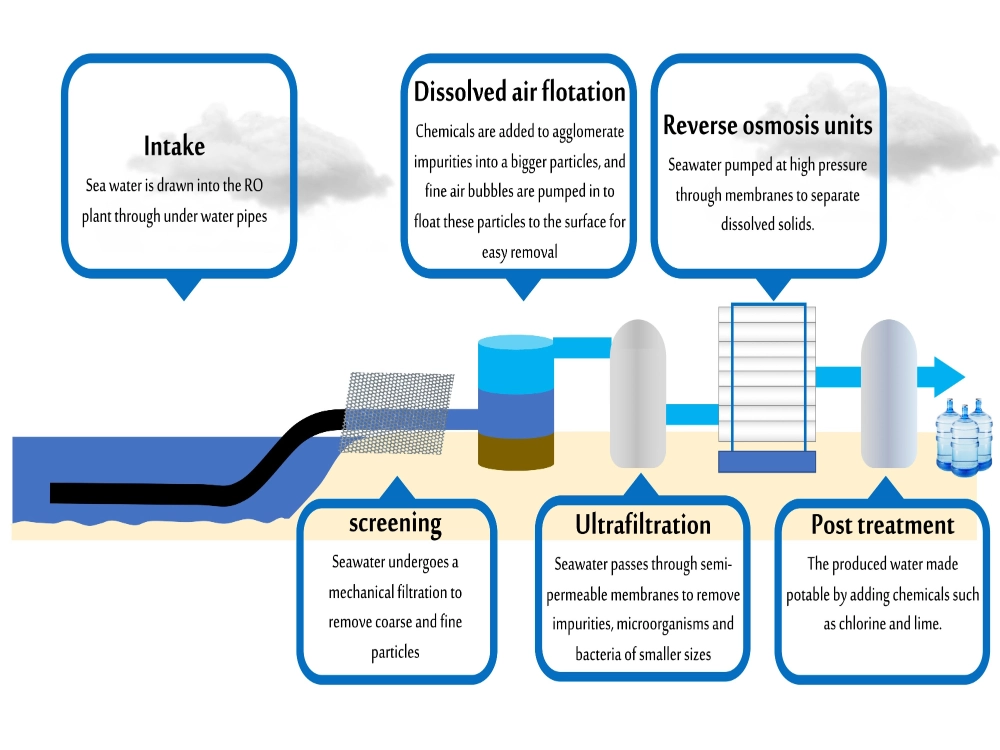
Prétraitement : L'eau de mer est méticuleusement filtrée et traitée chimiquement pour éliminer les grosses particules et les micro-organismes. Il s'agit d'une étape cruciale pour éviter l'encrassement des membranes.
Pressurisation : Une pression extrêmement élevée (souvent supérieure à 1 000 psi) est appliquée à l'eau prétraitée. Cette pression doit vaincre la pression osmotique naturelle créée par la teneur en sel.
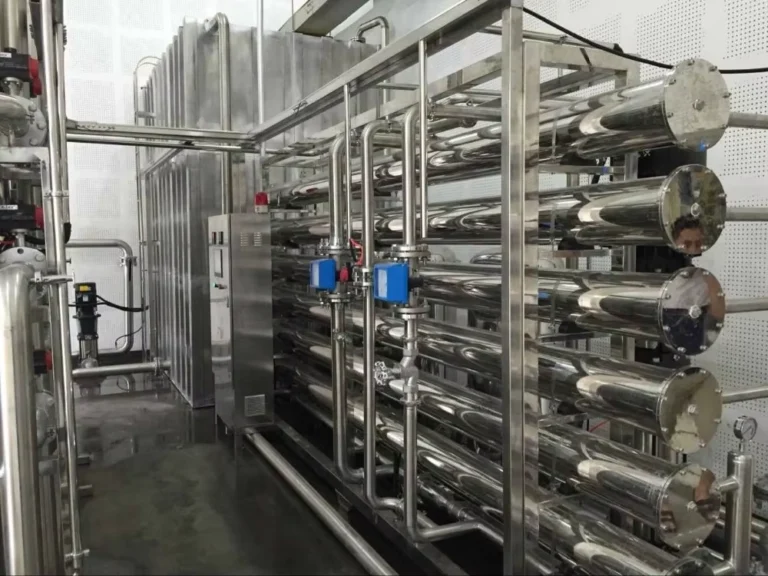
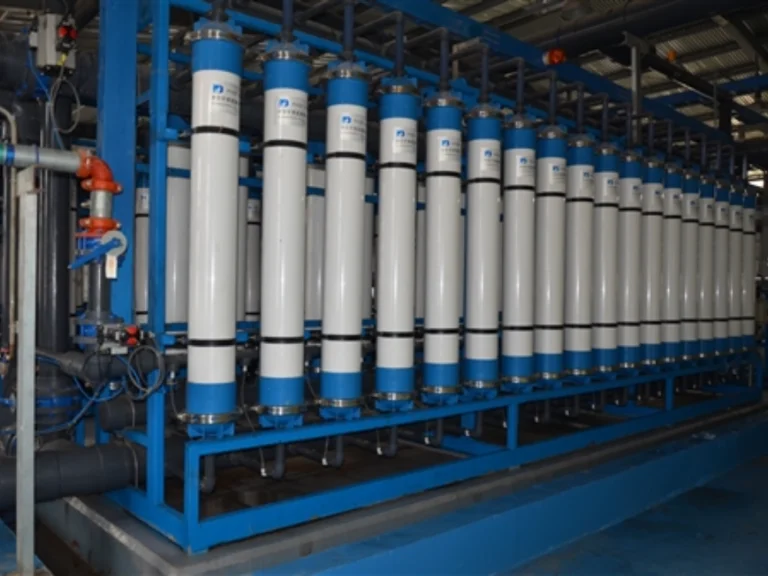
Séparation par membrane : Cette immense pression force les molécules d'eau pure à traverser des membranes semi-perméables spécialisées, tandis que les sels dissous, les métaux lourds et la plupart des contaminants sont physiquement rejetés et laissés sur place.
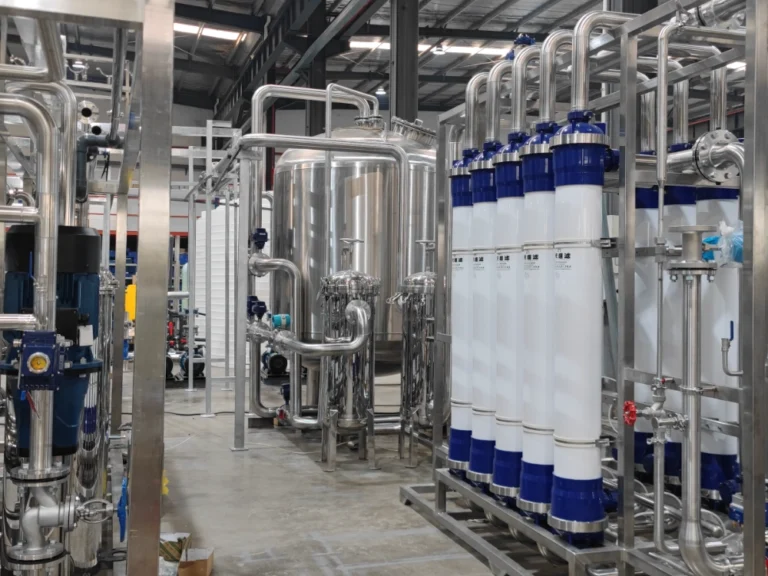
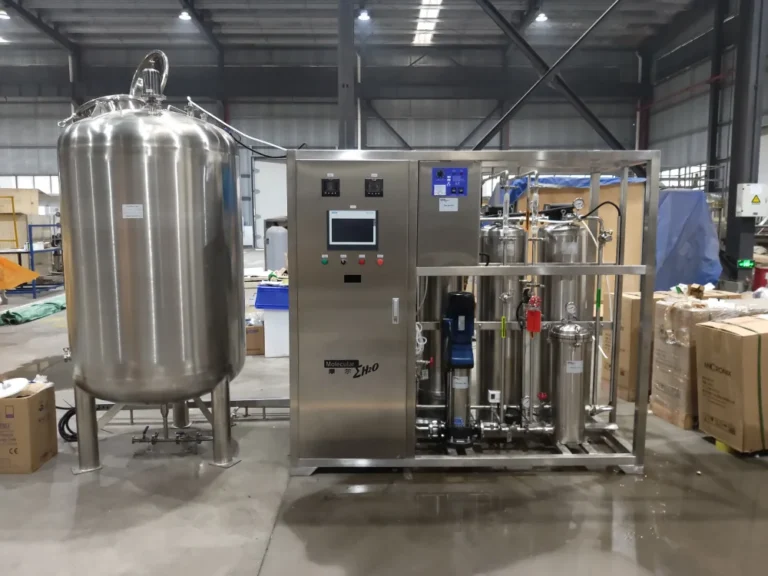
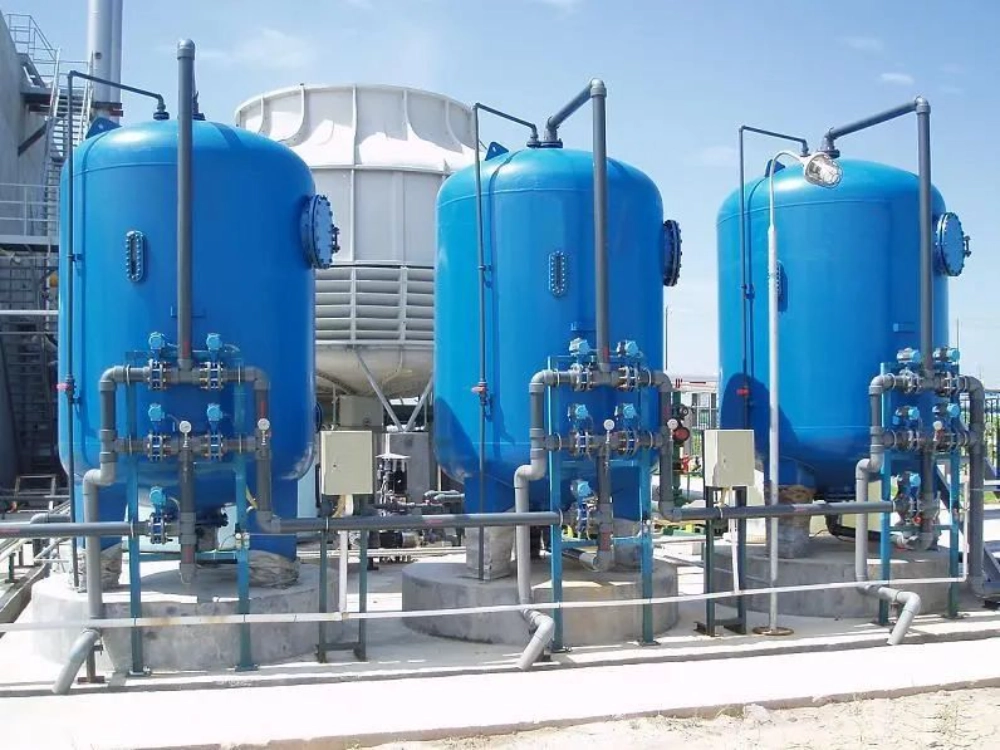
Ce système sophistiqué à haute pression, que vous pouvez voir simplifié dans le diagramme ci-dessous, est l'endroit où se produit l'apport d'énergie primaire, ce qui en fait le point central de toutes les améliorations modernes en matière d'efficacité.
Les avantages de l'exploitation des océans
Bien que les défis soient importants, les avantages offertes par le dessalement sont uniques et essentielles dans un monde où les sources d'eau traditionnelles sont de moins en moins fiables.
Sécurité et fiabilité à l'épreuve de la sécheresse
Contrairement aux réservoirs ou aux sources d'eau souterraine qui sont directement vulnérables à la sécheresse et au changement climatique, l'océan constitue une source d'eau pratiquement inépuisable. illimité source d'approvisionnement. Pour les régions côtières confrontées à un stress hydrique aigu, la construction d'une usine de dessalement offre le nec plus ultra en matière de sécurité de l'eau : une infrastructure fiable, à l'épreuve de la sécheresse, capable de répondre aux pics de demande sans dépendre de la pluie ou de la fonte des neiges, qui se font de plus en plus rares. Cette cohérence se traduit directement par une stabilité économique pour les communautés et les industries.
Production d'eau de haute pureté
Le processus d'OI est incroyablement efficace pour éliminer les contaminants. La qualité de l'eau produite est toujours excellente, dépassant souvent la pureté de l'eau du robinet municipale typique, car les membranes rejettent pratiquement tous les solides dissous. Après un post-traitement de reminéralisation, cette eau de grande pureté n'est pas seulement potable, elle est aussi très appréciée par les industries spécialisées (comme la microélectronique et les produits pharmaceutiques) qui ont besoin d'une eau ultra-pure pour leurs opérations.
Le coût du dessalement de l'eau de mer et les preuves environnementales
Pour parvenir à la durabilité, le dessalement doit surmonter deux obstacles majeurs : l'économie et l'écologie. Voici le preuve derrière le primaire cons de désalinisation:
Énergie et viabilité économique
Historiquement, le coût prohibitif de la coût du dessalement de l'eau de mer était entièrement liée à sa consommation intensive d'énergie. Bien que les installations modernes d'OI aient considérablement réduit ce besoin (beaucoup fonctionnent à moins de 3 kW^3), l'énergie reste la principale dépense d'exploitation. Le coût total de l'eau (y compris l'investissement, l'exploitation et la maintenance) est souvent plus élevé que celui des sources d'eau douce traditionnelles. Cependant, comme le coût de l pas Alors que l'eau augmente en raison d'une pénurie catastrophique, le dessalement devient rapidement le choix le plus économiquement rationnel et le plus durable pour de nombreuses zones côtières.
L'impact environnemental de l'élimination des saumures
La sortie du processus de dessalement n'est pas seulement de l'eau douce, c'est aussi une solution saline très concentrée appelée saumure. La saumure, qui peut également contenir des produits chimiques résiduels provenant du prétraitement, doit être éliminée de manière responsable. Le pompage de cet effluent dense et hyper-salin directement dans l'océan constitue une menace localisée pour les écosystèmes marins. Des stratégies d'atténuation expertes ne sont pas négociables, notamment des émissaires en eaux profondes, des systèmes d'évacuation sophistiqués et des systèmes de traitement des eaux usées. systèmes de diffusion, et le regroupement avec des centrales électriques pour s'assurer que la saumure est rapidement diluée et dispersée afin de minimiser son empreinte environnementale.
Le dessalement est-il durable ?
La réponse à “Le dessalement est-il durable ?” réside dans l'innovation et l'intégration. Les avantages des technologies futures font rapidement pencher la balance du côté de la viabilité :
Parvenir à la durabilité grâce aux percées technologiques
Les progrès technologiques ne cessent de faire baisser les coûts environnementaux et économiques. Dispositifs de récupération d'énergie (DRE), qui récupèrent jusqu'à $95\%$ de l'énergie habituellement gaspillée dans le flux de rejet à haute pression, ont rendu l'usine d'OI moderne très efficace. En outre, l'intégration de les énergies renouvelables (solaire et éolienne) permet de résoudre directement le problème du coût de l'énergie et d'obtenir une production d'eau véritablement nette zéro. Les percées futures dans le domaine des nouveaux matériaux membranaires (comme ceux basés sur la nanotechnologie) promettent des gains d'efficacité encore plus importants, ce qui permettra de réduire encore le coût de l'eau dessalée.
Études de cas mondiales et intégration des politiques
Des pays comme Israël et Singapour ont démontré par expertise et une politique claire que le dessalement est tout à fait viable. Israël tire aujourd'hui plus de $70\%$ de son eau domestique du dessalement, prouvant ainsi qu'il peut assurer une véritable indépendance et sécurité en matière d'eau. Ces études de cas nous enseignent que le dessalement doit être géré non pas de manière isolée, mais comme un élément solide et planifié d'une stratégie globale de gestion de l'eau qui donne la priorité à la conservation, à la réutilisation et à l'efficacité, parallèlement à la production.
Le dessalement : Un outil essentiel, pas une solution miracle
Le verdict final sur dessalement de l'eau de mer est claire : il s'agit d'une technologie essentielle et qui s'améliore rapidement pour lutter contre la pénurie d'eau dans le monde. Alors que le Le dessalement : avantages et inconvénients La production d'électricité est un calcul complexe qui fait intervenir les coûts énergétiques et la gestion de l'environnement, mais l'innovation technologique continue rend le processus plus efficace et plus durable chaque année. Ce n'est pas la seulement mais pour les régions côtières confrontées à un grave péril hydrique, il s'agit d'un élément non négociable d'un avenir sûr.
Vous êtes impliqué dans un projet de gestion de l'eau ou vous êtes curieux de connaître le coût spécifique du dessalement de l'eau de mer pour votre région ? Contact nos experts en traitement de l'eau pour discuter de la faisabilité économique et technique de l'intégration de systèmes de dessalement modernes dans votre portefeuille d'eau local.